

Key Takeaways
- A physical or cognitive disability does not automatically disqualify a person from driving.
- A comprehensive evaluation by a Certified Driver Rehabilitation Specialist (CDRS) must come before any equipment purchase or vehicle modification (Berndt et al., 2022).
- Adaptive equipment ranges from simple grab bars and hand controls to powered wheelchair lifts and voice-activated vehicle systems.
- Occupational therapists lead driver rehabilitation, evaluating the physical, cognitive, and visual demands of driving (Berndt et al., 2022; Langereis et al., 2022).
- When driving is no longer safe, OTs help clients build community mobility plans to preserve independence (Scott et al., 2024).
Never purchase adaptive driving equipment or modify a vehicle before completing a professional driving evaluation. Incorrectly prescribed equipment can create serious safety risks for the driver and other road users (Berndt et al., 2022).
1. What Is Adaptive Driving?
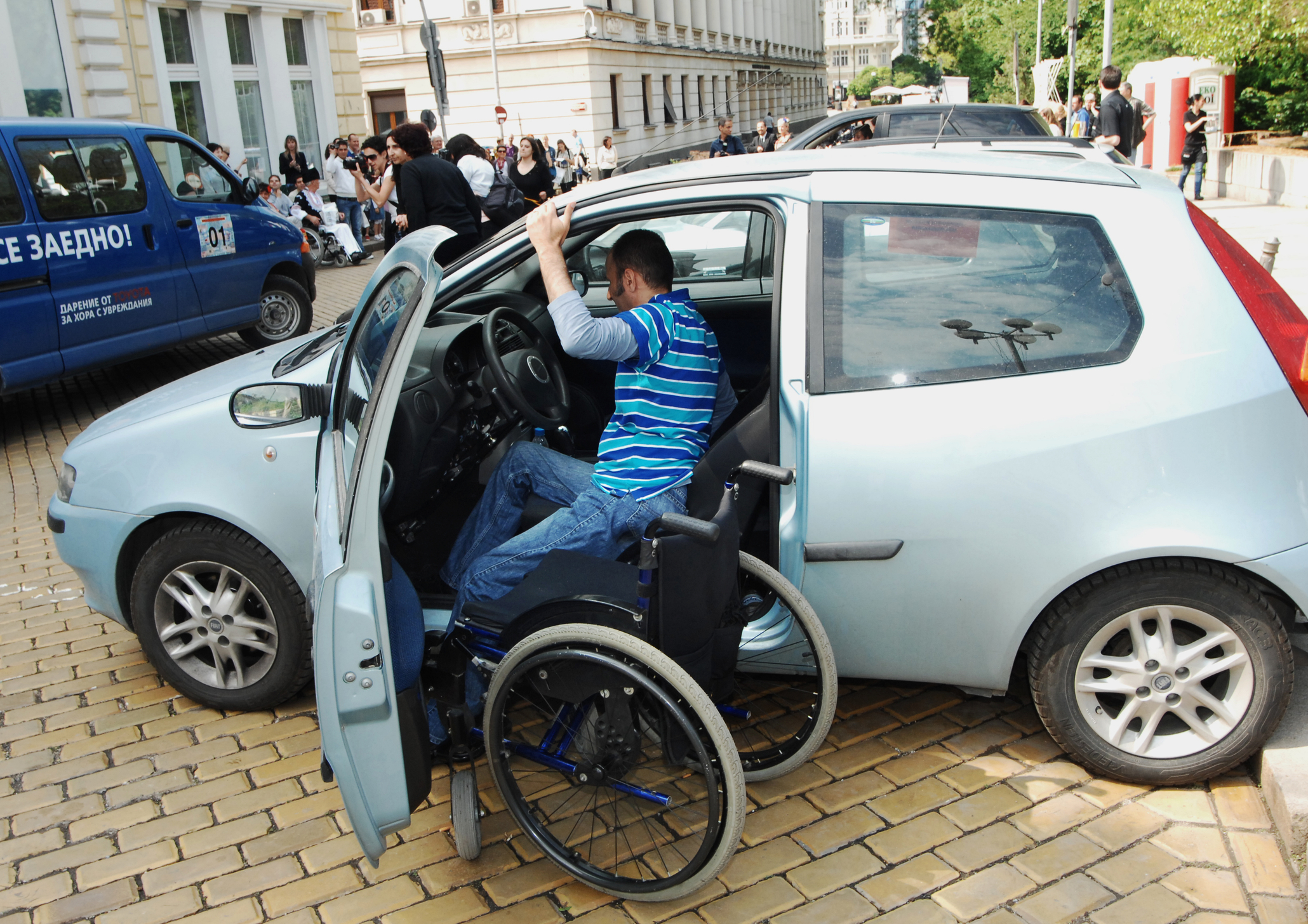
Adaptive driving refers to the use of specialized training, vehicle modifications, and adaptive equipment — devices added to a vehicle to help a person with a disability operate or enter it safely — that allow people with physical, cognitive, or sensory disabilities to drive or ride as passengers. With the right professional evaluation and support, many people who have acquired a disability, or were born with one, can drive safely or return to driving after an injury or illness (Berndt et al., 2022).
Driving is classified by occupational therapists as an instrumental activity of daily living (IADL) — a complex, meaningful task essential to independent living. Research consistently shows that loss of driving privileges is linked to social isolation, depression, reduced employment, and a significant decline in quality of life (Langereis et al., 2022). Adaptive driving programs exist specifically to help people retain or regain that independence whenever it can be achieved safely.
Adaptive driving is not limited to people with severe disabilities. Someone recovering from a rotator cuff surgery, a stroke survivor with mild one-sided weakness, or an older adult experiencing changes in vision may all benefit from an evaluation and targeted adaptive strategies (Devos et al., 2023). The goal is not simply to get someone back in a car — it is to ensure they can do so safely, confidently, and with the right equipment matched to their individual needs.
2. Who Can Benefit?
Adaptive driving evaluation and training may benefit people across a wide range of diagnoses and circumstances. Among individuals who have participated in formal driver rehabilitation programs, physical disabilities are the most common presenting condition (60%), followed by acquired brain injuries (26%) and hearing impairments (14%) (Jeong et al., 2025). Conditions that commonly prompt a referral for driving evaluation include:
- Stroke — affecting motor control, visual fields, or cognition
- Traumatic brain injury (TBI) — affecting reaction time, judgment, or sustained attention
- Spinal cord injury (SCI) — affecting limb use, sensation, or trunk stability
- Multiple sclerosis (MS) — affecting strength, coordination, vision, and fatigue
- Parkinson’s disease — affecting motor control, processing speed, and visual scanning
- Limb loss or limb difference — including amputation at any level
- Cerebral palsy or other congenital (present from birth) neuromuscular conditions
- Low vision or significant visual impairment not correctable by glasses
- Age-related decline — affecting vision, flexibility, and reaction time (Devos et al., 2023)
Both people newly acquiring a disability and those managing a long-term or progressive condition may be candidates. Importantly, research shows that cognitive capacity — including the ability to learn new equipment and adapt to changing road conditions — is often a stronger predictor of driving rehabilitation success than the physical impairment alone (Berndt et al., 2022).
3. Types of Adaptive Equipment
Adaptive driving equipment is always prescribed individually, matched to a person’s specific functional abilities, vehicle type, and driving goals. Equipment is never selected off the shelf without a prior professional evaluation — incorrect prescription is a documented safety risk (Langereis et al., 2022). Common categories include:
Vehicle Entry and Exit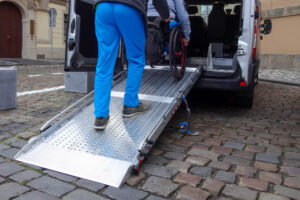
- Power and manual ramps to assist entry into vans and modified vehicles
- Grab bars and assistive straps to support transfers in and out of the vehicle
- Swivel seats and transfer boards for people with limited hip, knee, or trunk mobility
- Powered door openers for those with limited hand or arm function
Wheelchair and Scooter Transport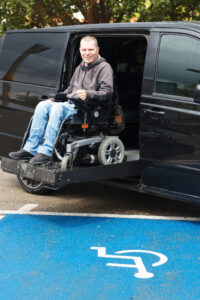
- Manual or power wheelchair lifts for vans
- Roof-mounted carrier systems for power scooters
- Tie-down and securement systems for in-vehicle wheelchair positioning
- Hand-lowering floor systems that allow a person to drive directly from their wheelchair
Primary Driving Controls
- Hand controls (mechanical and electronic) to replace foot pedals for acceleration and braking
- Left-foot accelerator pedals for those with right lower limb impairment
- Modified steering devices including spinner knobs (a knob attached to the wheel for one-handed steering), tri-pins, and amputee rings
- Reduced-effort or zero-effort power steering and braking systems
Secondary Controls and Visibility Aids
- Turn signal and gear shift extensions for limited reach
- Wide-angle mirrors or rear camera systems for people with limited neck range of motion
- Voice-activated or touch-sensitive systems for lights, wipers, and climate controls
- Pedal guards to prevent accidental use of foot pedals when hand controls are installed
Research shows that while clinicians are generally consistent in prescribing primary driving controls, there is meaningful variability in secondary control recommendations — underscoring why equipment prescription requires an experienced, evidence-informed CDRS rather than a general vendor or driving instructor (Langereis et al., 2022).
4. The Driving Evaluation Process
A comprehensive driving evaluation is the essential first step before any equipment is purchased or any vehicle is modified. The evaluation is conducted by a Certified Driver Rehabilitation Specialist (CDRS) and typically consists of two components (Scott et al., 2024):
Clinical (In-Office) Evaluation
The clinical portion examines the physical, visual, and cognitive (thinking and information processing) abilities required for safe driving. This typically includes assessment of:
- Range of motion and strength in the arms, legs, and neck
- Reaction time and coordination
- Visual acuity (sharpness of vision), visual fields (peripheral vision), and depth perception
- Attention, memory, processing speed, and decision-making under real-world demands
Behind-the-Wheel (On-Road) Evaluation
The on-road evaluation takes place in a vehicle equipped with an instructor’s brake and dual safety controls. The CDRS observes actual driving performance across varied traffic conditions, road types, and environments of increasing complexity. Adaptive equipment is often tested and adjusted during this portion (Berndt et al., 2022). The on-road assessment is considered the gold standard in determining fitness to drive — no single off-road test can fully replicate real driving demands (Scott et al., 2024).
Following the evaluation, findings are shared with the client and family, and the CDRS provides a written recommendation. When driving is appropriate, a specific equipment prescription is issued and hands-on training is provided before independent driving resumes. A physician order for “Occupational Therapy Driving Evaluation and Treatment” is typically required to begin (Scott et al., 2024).
📋 For Clinicians
Evidence-based driving clinical decision pathways are now available to help generalist OTs systematically address driving as a routine part of outpatient rehabilitation — including structured guidance on when to screen, which off-road assessments to use, and when to refer to a CDRS (Scott et al., 2024). Commonly used clinical tools prior to on-road evaluation include the Trail Making Test B (TMT-B), Motor-Free Visual Perception Test (MVPT), and Stroke Drivers Screening Assessment (SDSA). Cognitive capacity has been identified as a stronger predictor of driver rehabilitation outcome than physical impairment alone (Berndt et al., 2022). The AOTA OT-DRIVE Resource Guide and the Fitness to Drive Screening (FTDS) Measure are both freely available resources to support practice.
5. The Role of The Therapists
Occupational therapists (OTs) are uniquely prepared to address driving as a complex IADL. The vast majority of certified driver rehabilitation specialists are OTs — reflecting the profession’s depth in evaluating the physical, cognitive, sensory, and psychosocial performance factors that underlie safe driving (Langereis et al., 2022). Driver-trained OTs are considered advanced practitioners, requiring postgraduate-level specialized training because of the clinical complexity and high safety stakes involved (Berndt et al., 2022).
OTs trained in driver rehabilitation provide services across a full continuum of care, including:
- Screening clients for driving fitness as part of routine occupational therapy evaluation
- Conducting clinical assessments of the visual, cognitive, and physical performance components needed for safe driving
- Referring to or personally conducting comprehensive behind-the-wheel evaluations
- Prescribing and training clients in the use of adaptive driving equipment
- Supporting clients and families through the decision of whether to continue or stop driving
- Developing community mobility plans for those who can no longer drive safely
As vehicles become more technologically complex — including the growing availability of semi-automated features such as lane-keeping assist, automatic emergency braking, and adaptive cruise control — OTs and driver rehabilitation specialists are increasingly involved in helping people with disabilities safely evaluate and use these technologies (Classen et al., 2024). However, research from leading US rehabilitation scientists cautions that semi-automated systems alone are unlikely to fully address the mobility needs of older adults or people with significant disabilities, and that hands-on rehabilitation and individualized equipment prescription remain essential (Devos et al., 2023).
While the OT-CDRS leads the driver rehabilitation process, physical therapy (PT) and speech-language pathology (SLP) are often active members of the rehabilitation team. PT contributes by addressing the underlying strength, range of motion, endurance, and trunk stability needed to safely operate a vehicle and transfer in and out — particularly relevant for clients with spinal cord injury, limb loss, or stroke. SLP plays an important role when cognitive-communication deficits are present, as attention, memory, processing speed, and executive function (higher-level thinking and decision-making skills) are among the strongest predictors of safe driving and rehabilitation outcome (Berndt et al., 2022). Research confirms that interprofessional collaboration among OT, PT, and SLP — sometimes called the “rehabilitation trinity” — is considered best practice across rehabilitation settings and is associated with improved patient outcomes and greater efficiency of care (Schwab-Farrell et al., 2024).
👥 For Patients & Families
If you or a family member has experienced an injury, illness, or disability that may affect driving, do not assume driving is no longer possible — and do not assume it is still safe without a professional evaluation. Start by asking your physician or occupational therapist for a referral to a Certified Driver Rehabilitation Specialist (CDRS). Bring a complete list of current medications to the evaluation, as many medications affect reaction time and cognition. Many CDRS programs have adapted vehicles available to test drive before any equipment is purchased. Costs for evaluations and equipment vary; some may be covered through vocational rehabilitation programs, Veterans Affairs (VA) benefits, or private insurance. Ask specifically about coverage options when scheduling your appointment.
6. When Driving May Need to Stop
Not every person who completes a driving evaluation will be cleared to drive. A CDRS may recommend driving cessation (stopping driving permanently or temporarily) when safe vehicle operation cannot be achieved even with adaptive equipment. This is most likely when there is severe cognitive decline affecting judgment and error awareness, significant visual field loss that cannot be compensated for, or conditions causing unpredictable loss of consciousness or motor control (Scott et al., 2024).
The decision to stop driving carries significant emotional weight. For many people, driving represents independence, identity, and social connection — and its loss is associated with depression, social isolation, and decreased participation in daily roles (Langereis et al., 2022). Occupational therapists are well-positioned to counsel clients and families through this transition: acknowledging the loss, helping process the emotional impact, and building a realistic community mobility plan — a structured approach to remaining mobile and connected through public transit, ride services, family coordination, or community transportation programs.
For people with progressive neurological conditions such as Parkinson’s disease or dementia, a single evaluation is rarely sufficient. Regular re-evaluation over time is the recommended approach, allowing the person to continue driving safely for as long as possible while building in a clear process for identifying when driving is no longer safe (Devos et al., 2023).
7. Finding a Certified Specialist
Given the safety stakes and the significant cost of adaptive equipment, working with a credentialed specialist is strongly recommended. The peer-reviewed literature consistently identifies the following organizations as the authoritative bodies for driver rehabilitation credentialing and specialist referral (Classen et al., 2024; Scott et al., 2024):
Association for Driver Rehabilitation Specialists (ADED)
ADED is the primary credentialing body for Certified Driver Rehabilitation Specialists (CDRS) in North America and is referenced throughout the driver rehabilitation research literature as the field’s central professional organization (Classen et al., 2024). Their website includes a searchable directory by location and credential type.
🔗 https://www.aded.net/credentials
American Occupational Therapy Association (AOTA)
AOTA maintains a driving specialist directory and publishes the OT-DRIVE Resource Guide, which provides clinical decision-making tools for both generalist OTs and driving specialists. AOTA’s official position establishes driving and community mobility as a core occupational therapy practice area across the lifespan (Scott et al., 2024).
🔗 AOTA Driving Specialists Directory
AAA Senior Driving
The American Automobile Association (AAA) provides a professional assessment locator for drivers of all ages experiencing medical or age-related changes that may affect driving safety.
🔗 seniordriving.aaa.com — Professional Assessment
🕑 When to Refer for a Driving Evaluation
Consider referring a client for a comprehensive driving evaluation following: stroke, traumatic brain injury (TBI), spinal cord injury, limb loss or significant limb impairment, progressive neurological conditions (MS, Parkinson’s disease, ALS), new onset of seizure disorder, significant visual changes, moderate or severe cognitive decline, or any condition altering reaction time, physical vehicle control, or safety judgment. A physician order for “Occupational Therapy Driving Evaluation and Treatment” is typically required. Generalist OTs should use a structured clinical decision pathway to guide timing of CDRS referral (Scott et al., 2024).
References
- Berndt, A., Hutchinson, C., Tepper, D., & George, S. (2022). Professional reasoning of occupational therapy driver rehabilitation interventions. Australian Occupational Therapy Journal, 69(4), 436–446. https://doi.org/10.1111/1440-1630.12804
- Classen, S., Gelinas, I., Barco, P., Gibson, B., Haffner, E., Jeghers, M., Wandenkolk, I., & Devos, H. (2024). Automated vehicles: Future initiatives for occupational therapy practitioners and driver rehabilitation specialists. OTJR: Occupational Therapy Journal of Research, 44(4), 543–553. https://doi.org/10.1177/15394492241229993
- Devos, H., Carr, D. B., & Akinwuntan, A. E. (2023). Semi-automated vehicles may not solve older drivers’ mobility needs. Journal of the American Geriatrics Society, 71(9), 3010–3013. https://doi.org/10.1111/jgs.18379
- Jeong, Y.-J., Choi, J.-S., Jung, M.-Y., Kim, J.-R., Jeong, Y.-G., Park, K.-Y., Kong, M.-J., & Lee, K.-S. (2025). Determinants of successful driving rehabilitation training in licensed individuals with disabilities. PLOS ONE, 20(4), e0322016. https://doi.org/10.1371/journal.pone.0322016
- Langereis, B., Semeniuk, S., Kristalovich, L., & Mortenson, W. B. (2022). Identifying current driver rehabilitation practices for clients with physical impairments. British Journal of Occupational Therapy, 85(8), 530–540. https://doi.org/10.1177/03080226211067432
- Schwab-Farrell, S. M., Dugan, S., Sayers, C., & Postman, W. (2024). Speech-language pathologist, physical therapist, and occupational therapist experiences of interprofessional collaborations. Journal of Interprofessional Care, 38(2), 253–263. https://doi.org/10.1080/13561820.2023.2287028
- Scott, H. M., Baker, A. M., & Unsworth, C. A. (2024). Evaluation of a driving clinical decision pathway for generalist occupational therapists: Pilot test of practice change. Scandinavian Journal of Occupational Therapy, 31(1), 2423712. https://doi.org/10.1080/11038128.2024.2423712
© TherapyTopics.com — All information is for educational purposes only and does not constitute medical or therapeutic advice. Consult a licensed therapist or physician for evaluation and treatment.