

Key Takeaways
- Malnutrition affects more than half of patients with stroke and independently predicts poor functional outcomes, longer hospital stays, and increased mortality (Liu et al., 2023)
- Adaptive feeding equipment addresses the physical act of self-feeding — weakness, tremor, and limited range of motion — not the swallowing impairment itself
- Occupational therapists are the primary clinicians trained to evaluate self-feeding and recommend adaptive equipment (American Occupational Therapy Association, 2017)
- Evidence for weighted utensils in Parkinson’s-related tremor is mixed — individual trial use is recommended over a single default recommendation (Sabari et al., 2019; Adabi & Ondo, 2024)
- Dysphagia (swallowing difficulty) affects 37–78% of acute stroke survivors and requires evaluation by a speech-language pathologist (Boaden et al., 2021)
- Adaptive cup selection — including nosey cups and flow-controlled lids — should always involve SLP input when dysphagia is a known or suspected concern (Boaden et al., 2021; Lee et al., 2025)
Important
Any concerns regarding feeding, eating, and/or swallowing should be discussed with a medical professional. The information on this page is educational only and is not a substitute for a clinical evaluation or individualized therapy recommendations. If swallowing difficulty is suspected, request an evaluation by a speech-language pathologist and/or physician before changing food textures, cup types, or straw use.
Table of Contents
- Introduction
- Who Evaluates and Recommends Adaptive Feeding Equipment?
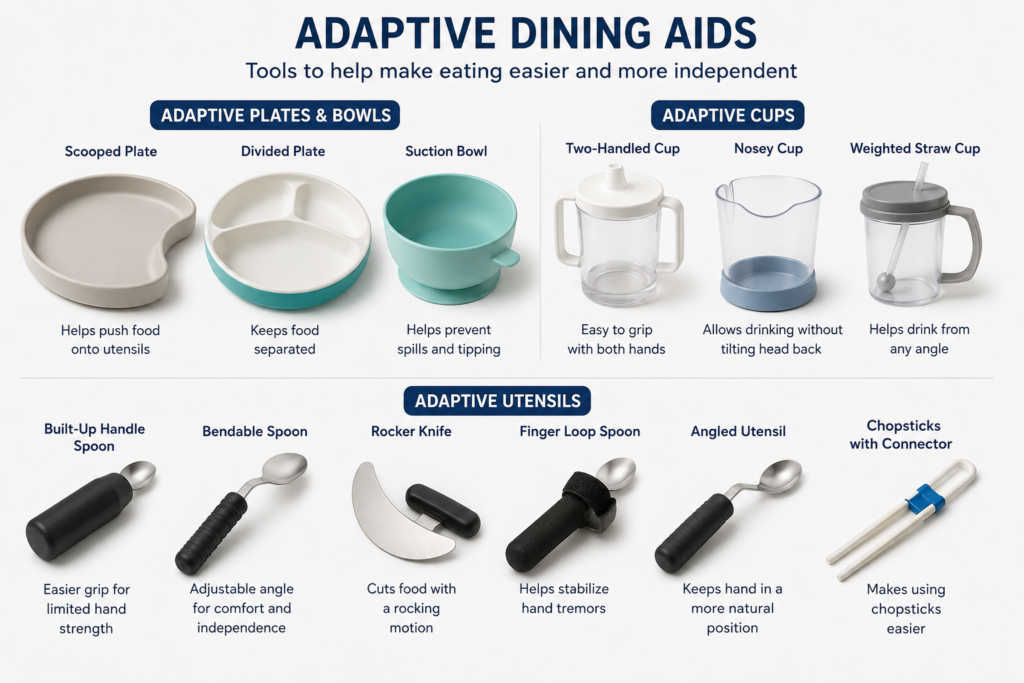
- Adaptive Utensils
- Adaptive Dinnerware
- Adaptive Cups and Drinking Aids
- Positioning and Environmental Modifications
- Swallowing Safety and Dysphagia
- Emerging and High-Tech Solutions
- How to Obtain Adaptive Feeding Equipment
- What Families and Caregivers Can Do
- A Note for Clinicians
- References
1. Introduction
Eating and drinking are things most of us do without a second thought. But for a significant number of people — those living with stroke, Parkinson’s disease, multiple sclerosis, arthritis, spinal cord injury, ALS, cerebral palsy, or the general effects of aging — bringing food and liquid to the mouth can be difficult, exhausting, and at times unsafe.
When these difficulties go unaddressed, the consequences reach well beyond the dinner table. Malnutrition affects more than half of patients with stroke and is an independent risk factor for poor functional recovery, prolonged hospital stays, and increased mortality (Liu et al., 2023). Reduced oral intake is also closely tied to fatigue, depression, and diminished quality of life across many neurological conditions.
Adaptive feeding equipment — modified or specially designed utensils, plates, bowls, and cups — is one of the most practical and immediate tools available for addressing these challenges. Used appropriately, adaptive equipment can restore mealtime independence, reduce caregiver burden, and help a person maintain the social and nutritional value of eating. This page provides an evidence-informed overview of the major categories of adaptive feeding equipment, who is most likely to benefit, what the research actually supports, and how to obtain appropriate recommendations.
For Patients & Families
- Difficulty eating or drinking is not an inevitable part of a neurological diagnosis — it is a treatable functional problem that responds well to the right equipment and strategies
- The right adaptive equipment depends entirely on the individual’s specific impairment — what works for one person may not work for another with the same diagnosis
- An occupational therapy evaluation is the most reliable way to identify the right equipment — purchasing items online without clinical guidance often leads to equipment that does not match the person’s actual needs
- Mealtime independence — even with adaptive equipment — is important for dignity, quality of life, and nutritional intake. The goal of adaptive equipment is to support participation, not replace it
2. Who Evaluates and Recommends Adaptive Feeding Equipment?
Occupational therapists (OTs) are the primary rehabilitation professionals trained to assess self-feeding and recommend adaptive equipment. The American Occupational Therapy Association recognizes feeding, eating, and swallowing as core OT practice areas across the lifespan — from neonatal care through end-of-life settings (American Occupational Therapy Association, 2017). An OT evaluation considers motor function, sensation, cognition, endurance, positioning, and the broader context of mealtimes — including the environment, caregivers, and the person’s own goals and preferences.
Speech-language pathologists (SLPs) address dysphagia (swallowing difficulty) and typically work alongside OTs, dietitians, and physicians on interdisciplinary feeding teams. When a person has both difficulty bringing food to their mouth and difficulty swallowing safely, collaboration between OT and SLP is essential — these are distinct but often co-occurring problems that require different but coordinated interventions.
Dietitians play an important role in monitoring nutritional status, identifying malnutrition risk, and recommending texture-modified diets aligned with SLP dysphagia recommendations. Physicians and neurologists oversee the medical management of underlying conditions that affect feeding function and may refer to the interdisciplinary team when feeding difficulties are identified (Liu et al., 2023).
For Clinicians
- A thorough adaptive feeding evaluation should include upper extremity motor and sensory assessment, functional mealtime observation, a postural and positioning review, and at minimum a swallowing screen. Caregiver capacity and home environment are equally important to address (American Occupational Therapy Association, 2017).
- Equipment recommendations made without direct mealtime observation risk being inappropriate for the individual’s actual impairment pattern — a diagnosis alone is insufficient to guide adaptive equipment selection.
- Self-feeding difficulty and dysphagia are distinct but frequently co-occurring. When both are present, OT and SLP should work in coordination — not in parallel silos.
- Malnutrition screening should be part of every feeding evaluation in neurological populations. Liu et al. (2023) confirmed that malnutrition independently predicts poor functional outcomes and increased mortality in stroke — identifying it early is a clinical priority.
3. Adaptive Utensils
Standard flatware requires a coordinated grip, wrist stability, and controlled arm movement. When any of these are compromised — by weakness, tremor, limited range of motion, or poor coordination — adaptive utensils can significantly reduce the physical demand of self-feeding.
Weighted Utensils
Weighted utensils have heavier handles and are widely used in clinical practice with the rationale that added weight provides proprioceptive feedback (sensory information from the muscles and joints) and dampens tremor. They are most commonly recommended for individuals with Parkinson’s disease (PD) or essential tremor (ET). However, the evidence on their effectiveness is genuinely mixed.
A study published in the American Journal of Occupational Therapy evaluated five adapted utensils — including weighted spoons with standard and built-up handles, a swivel spoon, and an active tremor-cancellation spoon — in individuals with PD-related or essential tremor. Participants preferred the Liftware Steady spoon and the weighted spoon with a standard handle, but there was no statistically significant performance difference between the two preferred devices, and individual preferences varied considerably (Sabari et al., 2019). A 2024 review confirmed that most non-pharmacological adaptive devices for tremor still lack robust published clinical trial data (Adabi & Ondo, 2024).
The clinical implication is clear: because individual responses vary widely, therapists are encouraged to provide trial access to multiple utensil types rather than defaulting to a single recommendation. For some individuals with PD, a lightweight utensil may actually facilitate smoother arm movement than a weighted one.
Built-Up Handle Utensils
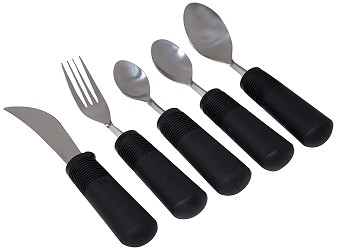
Built-up handle utensils have thicker, often textured handles that reduce the precision grip required for standard flatware. They are well-suited for individuals with arthritis, reduced hand strength, joint pain, or impaired dexterity. The larger handle diameter reduces the pinch force needed, which is particularly helpful in rheumatoid or osteoarthritis where grip can be painful. Handle materials range from soft foam to firm rubber, and foam padding tubes are available to convert standard utensils as a lower-cost option.
Angled and Swivel Utensils

Angled utensils are bent at a fixed angle — or can be manually bent by the user or therapist — to reduce the wrist rotation needed to load and deliver food. Swivel (self-leveling) utensils incorporate a pivoting joint that keeps the bowl or tines level regardless of hand position. These designs benefit individuals with limited pronation and supination (forearm rotation), hemiplegia (one-sided weakness or paralysis), or significant tremor. The swivel mechanism adds cost and can require some force to move, which may be a barrier for people with very limited strength.
Universal Cuffs and Utensil Holders
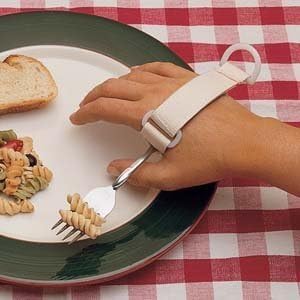
For individuals who cannot grip any utensil — including those with high cervical spinal cord injury, advanced ALS, or severe hemiplegia — universal cuffs provide an important solution. A universal cuff is a fabric or leather strap worn around the palm with a pocket that accepts a standard utensil. Rigid holders work similarly. These allow the person to self-feed without any grasp function and can make the difference between independent and dependent eating.
For Patients & Families
- Weighted utensils are widely available but the research shows they do not work the same way for everyone — have your OT let you trial a few options before purchasing (Sabari et al., 2019)
- Built-up handle utensils are one of the most effective and affordable adaptive utensil options for people with arthritis or reduced hand strength — foam tubing can even be used to adapt existing utensils at very low cost
- Universal cuffs can restore independent self-feeding for people who have no grip function at all — ask your OT whether this option is appropriate if a loved one cannot hold utensils
- Trying equipment during an actual meal — not just in a therapy session — gives the most accurate picture of what works
4. Adaptive Dinnerware
Even with the right utensil, mealtime independence depends on stable dinnerware that accommodates one-handed use or impaired bilateral coordination (the ability to use both hands together).
Scoop Plates and Bowls

Scoop plates and bowls have a raised, curved inner edge that acts as a ramp, making it easier to load food onto a utensil without the opposing hand holding the plate steady. This design is particularly valuable for individuals with hemiplegia, tremor, or one-handed technique. Most scoop plates also include a non-skid base or suction cup feet to prevent sliding on the table.
Plate Guards and Food Bumpers

Plate guards are semi-circular barriers that clip onto the rim of any standard plate, creating a raised edge against which food can be pushed. Unlike scoop plates, guards can be added to existing dishware — useful when a person prefers familiar plates at home or in a care setting. Stainless steel versions are more durable and easier to sanitize than plastic alternatives.
Non-Slip Mats and Suction Bases

Non-slip mats placed under dishes prevent sliding during one-handed scooping. Dycem and similar materials provide high friction on both the tabletop and the underside of the dish. These are often a logical first-line, low-cost intervention before more specialized adaptive plates are pursued — particularly for individuals in wheelchair seating systems where table position may also be a contributing factor.
Partitioned Plates

Divided plates with raised edges between sections help keep food separated — important for individuals with sensory sensitivities who find mixed textures or flavors aversive — while also offering multiple scooping surfaces around the plate’s perimeter. They are commonly used in pediatric feeding programs and in autism-related feeding intervention.
For Patients & Families
- A non-slip mat under the plate is often the simplest and least expensive first step — before purchasing specialized adaptive dinnerware, try a Dycem mat to see how much it helps
- Plate guards can be added to existing familiar dishes — this is often preferable to introducing entirely new dishware, especially for someone with cognitive changes who is comforted by familiar routines
- Scoop plates are most useful for individuals with one-sided weakness or hemiplegia — they allow food to be scooped independently against the raised edge without needing a second hand to stabilize the plate
5. Adaptive Cups and Drinking Aids
Drinking presents different challenges than eating. Standard cups require a reliable grip, wrist extension, and the ability to tip the head back safely — all of which may be compromised by neurological injury, cervical limitations, or swallowing impairment. Cup selection for someone with known or suspected dysphagia should always involve SLP input (Boaden et al., 2021).
Nosey (Cutout) Cups

Nosey cups have a section removed from one side of the rim so the cup can be tipped back without forcing the drinker’s head into cervical extension (tilting the head backward). This is clinically significant: tilting the head backward can worsen swallowing safety in people with oropharyngeal dysphagia (swallowing difficulty in the throat or mouth region), as it alters the relationship between the airway and the food bolus (the mass of chewed food or liquid). Nosey cups are commonly recommended for post-stroke patients, individuals with dysphagia, and those with limited cervical range of motion.
Weighted Cups

Weighted cups add mass to the base, helping stabilize the cup on a tray or table surface and reducing spills associated with tremor during placement. They are commonly recommended alongside weighted utensils as part of a tremor management strategy, though the same caveats about individual variability apply — not every person with tremor benefits equally from weighted equipment.
Cups with Adapted Handles
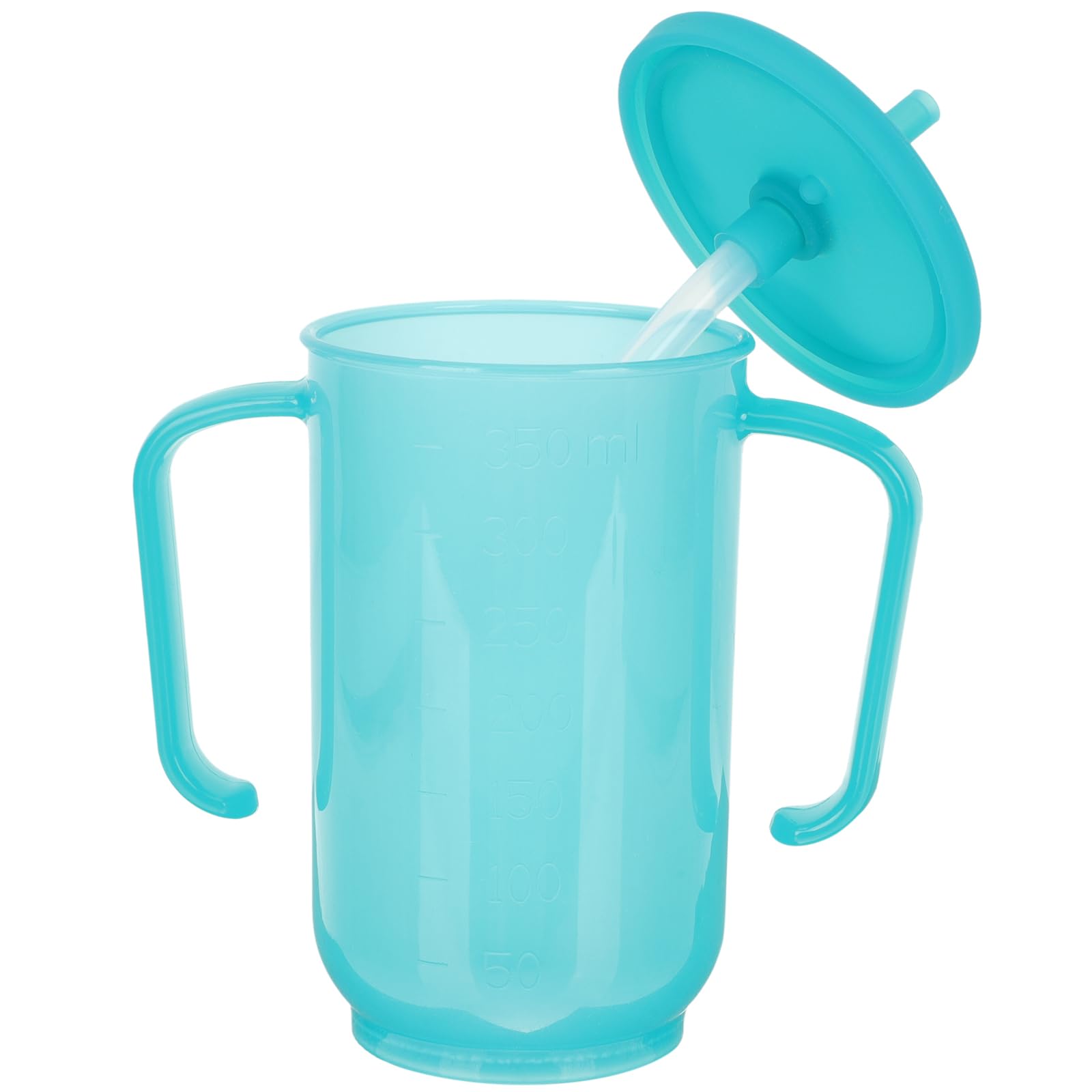
T-handled mugs, two-handled cups, and cups with large-diameter or angled handles accommodate individuals with reduced grip strength, limited range of motion, or single-hand use. Two-handled designs distribute the load across both arms, which can be helpful when grip is limited but bilateral arm movement remains possible.
Spouted Cups and Valve-Controlled Lids
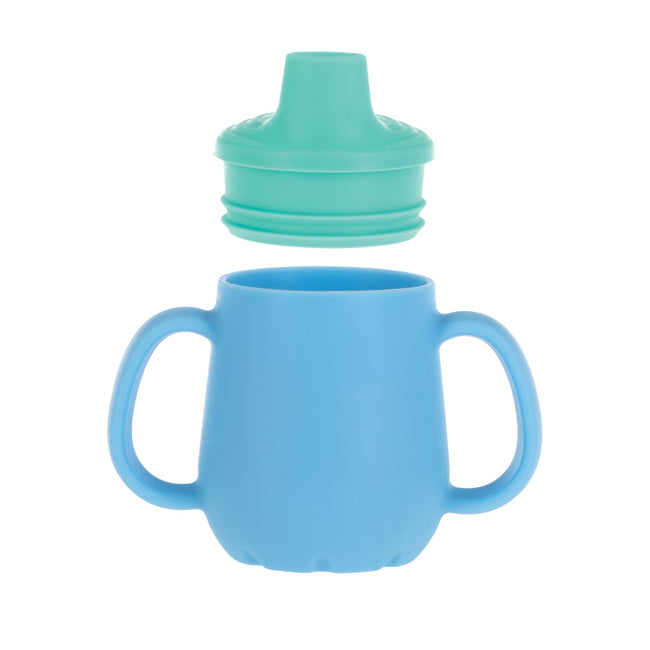
Spouted or valve-controlled lids slow the flow of liquid and prevent spills from the cup before it reaches the mouth — useful for individuals with tremor or impaired lip closure. For individuals with confirmed dysphagia, a slow-flow lid may interact with swallowing mechanics in ways that need to be evaluated clinically. Medical guidance from an SLP is advisable before recommending specific cup features for someone with a known swallowing impairment.
Straws and Long-Handled Straws
Straws reduce the need for arm elevation and head movement during drinking, benefiting individuals with limited shoulder range of motion, fatigue, or frailty. Angled or extra-long straws allow drinking from a cup that remains flat on the table. However, straw drinking is not appropriate for all dysphagia patterns — some presentations of swallowing difficulty are worsened by straw use — and this should always be evaluated by an SLP before routine recommendation (Boaden et al., 2021).
Important Note on Cup Selection and Dysphagia
Cup type, straw use, and liquid flow rate all have direct implications for swallowing safety in people with dysphagia. These decisions should not be made based on convenience or appearance alone. If dysphagia is known or suspected, cup and drinking aid selection must involve SLP evaluation and input — even small changes to how liquid is delivered can significantly affect aspiration (liquid entering the airway) risk (Boaden et al., 2021; Lee et al., 2025).
6. Positioning and Environmental Modifications
Adaptive equipment works best when the person is appropriately positioned at mealtime. Sitting upright with hips at 90 degrees, feet supported, and the trunk stable provides the best biomechanical base for both upper extremity feeding function and safe swallowing. For wheelchair users, footrests, lateral trunk supports, and cushion adjustments often need to be addressed before the focus shifts to hand function and equipment selection.
Table height matters significantly. Ideally, the table surface sits at approximately elbow height when seated, allowing forearms to rest without excessive shoulder elevation. Positioning the plate and cup within easy reach minimizes the arm excursion needed for each bite or sip — reducing fatigue and improving efficiency across the meal.
For individuals with significant upper extremity limitations, a mobile arm support — also called a balanced forearm orthosis — can suspend the arm in space and reduce the effort needed to bring food to the mouth. This device is particularly relevant for individuals with high cervical spinal cord injury, advanced ALS, or severe proximal muscle weakness. Fitting and adjustment requires a trained occupational therapist.
Environmental modifications beyond positioning include adequate lighting, reduced mealtime distractions for individuals with attention or cognitive difficulties, appropriate table surface materials to reduce sliding, and consistent mealtime routines that support cognitive predictability for individuals with dementia or brain injury.
For Clinicians
- A postural assessment should precede adaptive equipment trials. Asymmetric trunk positioning in a wheelchair can produce apparent upper extremity weakness that partially resolves with proper seating support — addressing positioning first may reduce the number of adaptive devices ultimately needed.
- Mealtime observation in the actual eating environment — not just a therapy room — provides information about lighting, distractions, table setup, and caregiver interaction patterns that significantly affect feeding performance and cannot be assessed in a clinical setting.
- Fatigue management is an underaddressed dimension of adaptive feeding — for individuals with MS, ALS, or post-stroke fatigue, pacing strategies, meal timing relative to medications, and portion size adjustments are as important as equipment selection.
7. Swallowing Safety and Dysphagia
Adaptive feeding equipment addresses the mechanics of self-feeding — getting food and liquid to the mouth — but does not treat the swallowing impairment itself. These are related but distinct problems, and it is critically important for patients, caregivers, and clinicians to understand the difference.
Dysphagia is a common complication of neurological conditions. It affects 37–78% of acute stroke survivors — a wide range that reflects variation in how and when swallowing is assessed — and is a leading contributor to aspiration pneumonia, malnutrition, and dehydration in this population (Boaden et al., 2021). A 2025 network meta-analysis of randomized controlled trials found that swallowing rehabilitative exercises combined with traditional dysphagia therapy produced better outcomes than standalone approaches alone, supporting the value of team-based, multimodal dysphagia management (Lee et al., 2025).
International dietary guidelines — including the International Dysphagia Diet Standardisation Initiative (IDDSI) framework — provide a standardized system for modifying food texture and liquid consistency as a compensatory strategy for oropharyngeal dysphagia. These modifications are recommended in multiple clinical practice guidelines for managing swallowing difficulty following stroke and other neurological conditions.
Dysphagia rehabilitation focuses on exercises and behavioral strategies to improve the underlying swallowing physiology — including breath support training, tongue strengthening exercises, the Shaker exercise (head lift exercise targeting hyolaryngeal elevation), chin tuck against resistance, and the Mendelsohn maneuver. This is the SLP’s clinical domain and falls outside the scope of adaptive feeding equipment — though in practice a person often benefits from both adaptive equipment and swallowing rehabilitation simultaneously.
For Patients & Families
- Difficulty getting food to the mouth and difficulty swallowing safely are two different problems — both may be present at the same time but they require different specialists and different solutions
- Never give food or liquid by mouth to someone who has not been cleared by an SLP after a stroke or other neurological event — aspiration (food entering the airway) can occur silently, without obvious coughing, and can cause life-threatening pneumonia (Boaden et al., 2021)
- Coughing during meals, a wet or gurgly voice after eating or drinking, taking much longer to eat than usual, unexplained weight loss, or repeated chest infections are all warning signs of dysphagia that require prompt SLP evaluation
- Swallowing therapy — not just diet modification — can improve the underlying swallowing function over time. Ask the SLP about active swallowing exercises in addition to diet texture modifications (Lee et al., 2025)
For Clinicians
- Dysphagia screening within 24 hours of stroke admission is standard of care and should precede any oral intake — including medications. A validated bedside screening tool should be used before food or liquid is offered (Boaden et al., 2021).
- The IDDSI framework provides standardized terminology for texture modification — using consistent IDDSI levels in clinical documentation, team communication, and patient/caregiver education reduces the risk of diet modification errors across care transitions.
- A 2025 network meta-analysis confirmed that combining rehabilitative swallowing exercises with traditional dysphagia therapy produces better outcomes than either approach alone — dysphagia management should be active and rehabilitative, not solely compensatory (Lee et al., 2025).
- Adaptive cup features — nosey cups, slow-flow lids, straw configurations — directly affect swallowing mechanics and aspiration risk. These should be selected with SLP input, not defaulted to based on convenience or caregiver preference alone.
8. Emerging and High-Tech Adaptive Feeding Solutions
The field of adaptive feeding is expanding with technologies that go beyond passive modification of standard dinnerware.
Active Tremor-Cancellation Devices
Active tremor-cancellation devices — such as the Liftware Steady spoon — use accelerometry (motion sensors) and motorized actuators to counteract tremor movement in real time. In comparative studies, participants preferred these devices alongside standard weighted spoons, though no statistically significant functional advantage was established between the two (Sabari et al., 2019). A review of wearable and mechanical tremor suppression technologies noted the absence of standardized validation procedures across both passive and active device categories — a gap that makes direct comparison difficult (Lora-Millan et al., 2021). These devices are available commercially without a prescription, though their cost is considerably higher than standard adaptive utensils. The 2024 review by Adabi and Ondo reinforced that most non-pharmacological tremor devices continue to lack robust independent clinical trial evidence (Adabi & Ondo, 2024).
Robotic Feeding Devices
Robotic feeding devices — including the Obi Robotic Feeder and the BESTIC Arm — are motorized systems designed for individuals with severe upper extremity limitations who cannot self-feed with any form of adapted utensil. The user selects food portions using a switch or touchpad, and the robotic arm delivers food to the mouth. These devices are most relevant for individuals with high cervical spinal cord injury, advanced ALS, or severe muscular dystrophy — conditions where all grip and arm movement is absent or severely restricted.
AI and Sensor-Based Dysphagia Monitoring
For swallowing monitoring, AI and sensor-based tools are being investigated as a means of detecting unsafe swallow events in real time. A 2025 systematic scoping review found promising results for acoustic and vibratory sensor systems combined with machine learning for classifying dysphagia, with potential applications in telehealth and long-term monitoring settings (Wong et al., 2025). While not yet in routine clinical use, these technologies represent an emerging frontier in dysphagia detection and management.
For Clinicians
- Active tremor-cancellation devices are commercially available but remain poorly validated — the evidence base for passive weighted devices and active cancellation devices is similarly limited, and neither should be recommended with high confidence without individual trial (Sabari et al., 2019; Adabi & Ondo, 2024).
- Robotic feeding devices require training, caregiver support, and appropriate seating — OT involvement in setup, positioning assessment, and switch access evaluation is essential for safe and effective use.
- AI-based dysphagia monitoring tools are in active development — the 2025 Wong et al. scoping review identified promising acoustic and vibratory sensor systems. Clinicians working in stroke and neurological rehabilitation should watch this space for emerging clinical applications (Wong et al., 2025).
9. How to Obtain Adaptive Feeding Equipment
Adaptive feeding equipment can be accessed through several pathways, each with different advantages depending on the individual’s situation, insurance coverage, and clinical needs.
- Occupational therapy evaluation: An OT can document medical necessity, which may support insurance coverage or state assistive technology program funding. The OT can also observe actual mealtime performance and tailor recommendations accordingly — this is the most clinically reliable pathway (American Occupational Therapy Association, 2017)
- Medical supply stores and durable medical equipment vendors: Many adaptive utensils, cups, and plates are available for purchase without a prescription — useful for straightforward needs when a clinical evaluation has already established the appropriate equipment type
- Online retailers: A wide range of products is available through general and specialty retailers. Without clinical guidance, however, there is real risk of selecting equipment poorly suited to the individual’s specific impairment pattern
- Custom fabrication: OTs can sometimes modify or fabricate equipment when commercial options do not meet a person’s unique needs — for instance, custom handle builds or specialized utensil cuffs
Insurance coverage for adaptive feeding equipment varies significantly. Medicare Part B may cover select items with documented medical necessity. Private insurer policies differ considerably. Medicaid waivers and state assistive technology programs can provide additional funding pathways for eligible individuals — an OT social worker or case manager can help navigate these options.
For Patients & Families
- Request an OT evaluation before purchasing adaptive equipment online — a clinical evaluation identifies exactly what is needed and may support insurance coverage for the cost
- Medicare Part B may cover adaptive feeding equipment with documented medical necessity — ask your OT to document the recommendation clearly in terms of medical necessity for insurance purposes
- State assistive technology programs provide low-cost loans and sometimes grants for adaptive equipment — search for your state’s AT program through the AT3 Center (at3center.net)
- Starting with low-cost options first — a non-slip mat, foam tubing for utensil handles, a plate guard — before investing in specialized equipment is a practical approach when a clinical evaluation is not immediately available
10. What Families and Caregivers Can Do
Family members and caregivers play a critical role in supporting mealtime independence and nutritional safety. How a caregiver sets up the meal environment, offers assistance, and responds to feeding difficulties directly affects both the person’s functional performance and their dignity at mealtimes (Liu et al., 2023).
- Set up the environment before the meal: Position the person correctly, place food and drinks within easy reach, ensure adequate lighting, and reduce distractions — particularly for individuals with cognitive impairment or fatigue
- Allow independence first: Give the person time and opportunity to attempt each step of eating independently before offering physical assistance. Encouraging active participation — even when it is slower or messier — supports neuroplastic recovery, preserved dignity, and maintained function
- Follow all SLP and OT recommendations exactly: Texture modifications, cup types, positioning, and utensil recommendations are clinically prescribed for safety — deviating from them, even with good intentions, can increase aspiration risk
- Watch for warning signs: Coughing or choking during meals, a wet or gurgly voice after eating, taking much longer to eat, food falling from the mouth, significant fatigue during meals, or unexplained weight loss should all be reported to the therapy team promptly
- Track nutritional intake: For individuals at malnutrition risk — particularly post-stroke — keeping a simple food and fluid log for a few days can provide valuable information for the dietitian and medical team (Liu et al., 2023)
- Seek caregiver training from the OT and SLP: Both occupational therapists and speech-language pathologists can train caregivers in assisted feeding techniques, how to set up adaptive equipment, positioning strategies, and how to recognize and respond to signs of aspiration
When to Request a Therapy Referral
- Any time a person reports difficulty bringing food to their mouth, managing utensils, or eating independently
- Following a new diagnosis of stroke, Parkinson’s disease, MS, ALS, spinal cord injury, or other neurological condition — before feeding difficulties become entrenched
- When a caregiver is providing significant physical assistance at mealtimes that was not previously needed
- When weight loss, reduced appetite, or food avoidance is observed
- Any concern about coughing, choking, a wet voice after meals, or changes in breathing during or after eating — these warrant SLP referral specifically and urgently (Boaden et al., 2021)
- When a child shows signs of selective eating, sensory-based food refusal, or oral motor developmental delays — early multidisciplinary referral produces the best outcomes in pediatric feeding
- When mealtimes are taking significantly longer than usual or when the person is visibly fatigued by eating
- When a person is discharged from hospital following stroke or neurological illness without a completed OT feeding evaluation
11. A Note for Clinicians
Recommending adaptive feeding equipment is not a catalog exercise. A scoop plate may be ideal for a person with right hemiplegia and entirely inappropriate for someone with bilateral weakness who uses a lap tray. Universal cuffs require intact shoulder and elbow function to be useful. Swivel utensils can frustrate individuals who derive proprioceptive benefit from the resistance of a standard spoon. The best recommendations come from watching a person eat — not from matching a diagnosis to a product category (American Occupational Therapy Association, 2017).
The evidence base for adaptive feeding equipment is more limited than clinicians often assume. For weighted utensils specifically, Sabari et al. (2019), Lora-Millan et al. (2021), and Adabi and Ondo (2024) all reach the same conclusion: individual response variability is high, standardized validation procedures are largely absent, and robust RCT evidence is limited. This does not mean these tools lack value — it means clinical decision-making should be individualized and empirical rather than protocol-driven.
Malnutrition is underidentified in neurological populations. Liu et al. (2023) confirmed that malnutrition independently predicts poor functional outcomes, longer hospital stays, and increased mortality in stroke survivors. Routine nutritional screening — using validated tools such as the MNA (Mini Nutritional Assessment) or MUST (Malnutrition Universal Screening Tool) — should be integrated into every OT and nursing feeding assessment in post-stroke and neurological rehabilitation settings.
Pediatric feeding requires special attention. Selective eating, sensory-based food refusal, and oral motor developmental delays in children warrant early referral and a family-centered, multidisciplinary approach. These presentations should not be assumed to resolve without professional intervention — early referral consistently produces better outcomes than watchful waiting.
Caregiver education is among the highest-yield components of adaptive feeding intervention. Family members and care staff who understand how to set up the eating environment, offer assistance without taking over the task, and recognize early signs of aspiration or nutritional decline extend the impact of clinical intervention into the daily environments where it matters most (Liu et al., 2023).
Related Pages on TherapyTopics
- Stroke Recovery and Rehabilitation — OT, PT, and SLP after stroke, including dysphagia management and ADL retraining
- Parkinson’s Disease — Therapy, exercise, LSVT LOUD, dysphagia, and rehabilitation across disease stages
- Autism Spectrum Disorder — Sensory-based feeding challenges, OT intervention, and caregiver strategies
- Sensory Processing & Integration — Sensory differences affecting eating, food textures, and mealtime participation
- Bathing & Shower Safety — Adaptive equipment and OT assessment for independence in ADLs at home
12. References
- Adabi, K., & Ondo, W. G. (2024). Shaking up essential tremor: Peripheral devices and mechanical strategies to reduce tremor. Tremor and Other Hyperkinetic Movements, 14(1), 55. https://doi.org/10.5334/tohm.930
- American Occupational Therapy Association. (2017). The practice of occupational therapy in feeding, eating, and swallowing. American Journal of Occupational Therapy, 71(Suppl. 2), 7112410015. https://doi.org/10.5014/ajot.2017.716S04
- Boaden, E., Burnell, J., Hives, L., Dey, P., Clegg, A., Lyons, M. W., Lightbody, C. E., Hurley, M. A., Roddam, H., McInnes, E., Alexandrov, A., & Watkins, C. L. (2021). Screening for aspiration risk associated with dysphagia in acute stroke. Cochrane Database of Systematic Reviews, 10(10), CD012679. https://doi.org/10.1002/14651858.CD012679.pub2
- Lee, C.-L., Banda, K. J., Chu, Y.-H., Liu, D., Lee, C.-K., Sung, C.-M., Arifin, H., & Chou, K.-R. (2025). Efficacy of swallowing rehabilitative therapies for adults with dysphagia: A network meta-analysis of randomized controlled trials. GeroScience, 47(2), 2047–2065. https://doi.org/10.1007/s11357-024-01389-5
- Liu, P., Tian, H., Ji, T., Zhong, T., Gao, L., & Chen, L. (2023). Predictive value of malnutrition, identified via different nutritional screening or assessment tools, for functional outcomes in patients with stroke: A systematic review and meta-analysis. Nutrients, 15(14), 3280. https://doi.org/10.3390/nu15143280
- Lora-Millan, J. S., Delgado-Oleas, G., Benito-León, J., & Rocon, E. (2021). A review on wearable technologies for tremor suppression. Frontiers in Neurology, 12, 700600. https://doi.org/10.3389/fneur.2021.700600
- Sabari, J., Stefanov, D. G., Chan, J., Goed, L., & Starr, J. (2019). Adapted feeding utensils for people with Parkinson’s-related or essential tremor. American Journal of Occupational Therapy, 73(2), 7302205120p1–7302205120p9. https://doi.org/10.5014/ajot.2019.030759
- Vishak, M. S., & Ramasamy, K. (2023). Swallowing rehabilitation: Tracing the evolution of assessment and intervention approaches for dysphagia over 30 years. Indian Journal of Otolaryngology and Head & Neck Surgery, 76(2), 2171–2175. https://doi.org/10.1007/s12070-023-04325-9
- Wong, D. W.-C., Wang, J., Cheung, S. M.-Y., Lai, D. K.-H., Chiu, A. T.-S., Pu, D., Cheung, J. C.-W., & Kwok, T. C.-Y. (2025). Current technological advances in dysphagia screening: Systematic scoping review. Journal of Medical Internet Research, 27, e65551. https://doi.org/10.2196/65551
© TherapyTopics.com — All information is for educational purposes only and does not constitute medical or therapeutic advice. Consult a licensed therapist or physician for evaluation and treatment.