

Key Takeaways
- The bathroom is the highest fall-risk room in the home for older adults — falls in the bathroom are more than twice as likely to result in injury compared to falls in other rooms (Colón-Emeric et al., 2024)
- Bathing has the highest prevalence of disability among all self-care activities; difficulty increases from 2.6% at age 70 to 20.8% at age 90 (Levine et al., 2022)
- Permanent grab bars are the most strongly supported bathroom safety modification — they reduce fall risk and improve independence during bathing transfers (Greene et al., 2024)
- Occupational therapists are trained to assess bathing safety and recommend individualized modifications, adaptive equipment, and technique adjustments (Caña-Pino & Pesado-Fernández, 2025)
- Bathing difficulty is associated with increased need for home care services — addressing it early supports aging in place (Rand et al., 2024)
Important
The information on this page is educational only and is not a substitute for a clinical evaluation or individualized therapy recommendations. If you or someone you care for is struggling with bathing safety, speak with a healthcare professional or request an occupational therapy home assessment.
Table of Contents
- Why Bathing Safety Matters
- Who Is at Risk?
- Common Bathroom Hazards
- How Occupational Therapy Helps
- Grab Bars: The Evidence
- Adaptive Equipment for the Bathroom
- Safe Bathing Techniques
- Home Modifications Beyond Grab Bars
- Maintaining Dignity and Independence
- Guidance for Caregivers Assisting with Bathing
- A Note for Clinicians
- References
1. Why Bathing Safety Matters
Bathing is one of the most physically and cognitively complex activities that people perform every day. It requires balance, coordination, strength, flexibility, and sequencing — and it takes place in one of the most hazardous environments in the home. Wet surfaces, slippery tub edges, tight spaces, and the need to transition between sitting and standing make the bathroom uniquely dangerous, particularly for older adults and those with physical or cognitive limitations (Colón-Emeric et al., 2024).
Falls in the bathroom are not just common — they are disproportionately serious. Research shows that bathroom falls are more than twice as likely to result in injury compared to falls in other rooms in the home. Among falls that occur inside the bathroom, approximately 80% occur in or around the bathtub or shower (Colón-Emeric et al., 2024). The consequences of a bathroom fall can include hip fractures, traumatic brain injury, soft tissue injuries, and — particularly for older adults who are unable to get up — prolonged time on the floor, which is itself a medical emergency. See our Fall Prevention page for a broader discussion of fall risk and prevention.
Beyond falls, bathing difficulty affects quality of life, dignity, independence, and the ability to remain at home. Among all self-care activities, bathing has the highest prevalence of disability in older adults — difficulty increases from 2.6% at age 70 to 20.8% at age 90 (Levine et al., 2022). Bathing-related disability is also strongly associated with increased need for home care services, making it a key driver of care costs and nursing home placement (Rand et al., 2024).
The good news is that bathing safety is highly modifiable. The right combination of home modifications, adaptive equipment, technique adjustments, and caregiver training can transform a dangerous bathing situation into a safe and dignified one — often without major renovation or significant cost.
2. Who Is at Risk?
Bathing difficulty and bathroom fall risk increase with age, but many additional factors contribute. Understanding these risk factors helps clinicians and families identify who most needs assessment and intervention (Levine et al., 2022; Colón-Emeric et al., 2024).
Physical factors:
- Reduced balance, coordination, or gait stability
- Lower extremity weakness — particularly difficulty stepping over a bathtub rim
- Reduced flexibility and range of motion
- Orthostatic hypotension (a drop in blood pressure upon standing, causing dizziness)
- Pain that limits movement or weight-bearing
- Neurological conditions including stroke, Parkinson’s disease, and multiple sclerosis
- Post-surgical recovery, particularly after hip or knee replacement
Cognitive factors:
- Dementia or mild cognitive impairment — affecting sequencing, safety judgment, and ability to respond appropriately to hazards. See our Dementia & Alzheimer’s Disease page for more information.
- Impulsivity or reduced insight into one’s own limitations
- Difficulty following multi-step instructions
Environmental factors:
- Absence of grab bars — one of the most modifiable and highest-impact risk factors (Levine et al., 2022)
- A bathtub rather than a walk-in shower — stepping over the tub rim is one of the most hazardous bathing tasks for older adults
- Slippery tub or shower floor without non-slip mat
- Inadequate lighting
- Grab bars or supports in incorrect locations
A key finding from research on bathing safety: even among older adults who have already fallen while bathing or who report challenges with bathing tasks, the majority do not currently have grab bars installed — and many do not perceive that they need them (Levine et al., 2022). This underscores the importance of proactive assessment rather than waiting for an injury to occur.
3. Common Bathroom Hazards
The bathroom contains a concentration of environmental hazards that interact with physical and cognitive vulnerabilities to create fall risk. An occupational therapist conducting a home safety assessment will systematically evaluate each of these (Caña-Pino & Pesado-Fernández, 2025; Colón-Emeric et al., 2024):
In the tub or shower:
- No grab bar or grab bar in the wrong location
- Slippery floor surface — wet tile and enamel surfaces dramatically increase fall risk
- High tub rim requiring a large step to enter and exit
- No shower seat or bath bench — requiring prolonged standing
- Soap and shampoo stored in locations that require reaching, bending, or loss of balance
- Shower controls located so that reaching for them requires loss of support
At the toilet:
- Low toilet height requiring deep knee flexion to sit and significant effort to stand
- No grab bar or support near the toilet
- Rushing to the toilet due to urgency — one of the most common circumstances for bathroom falls
At the sink and vanity:
- Leaning forward to reach the mirror or sink, shifting the center of gravity
- Reaching into low cabinets while standing unsupported
On the floor:
- Wet floor surfaces outside the tub or shower
- Rugs or mats that slip or curl at the edges
- Thresholds between rooms that create a tripping hazard
4. How Occupational Therapy Helps
Occupational therapists (OTs) are the primary clinical specialists for bathing safety assessment and intervention. OT training specifically addresses the intersection of a person’s physical and cognitive abilities with the demands of the task and the features of the environment — making OTs uniquely equipped to evaluate bathing safety and design practical, individualized solutions (Caña-Pino & Pesado-Fernández, 2025).
A comprehensive OT bathing assessment includes:
- Functional observation: Watching the person perform or simulate bathing tasks to identify specific difficulty points and safety risks
- Physical assessment: Balance, strength, flexibility, coordination, and endurance as they relate to bathing demands
- Cognitive assessment: Ability to sequence tasks, respond safely to hazards, and retain instructions
- Environmental assessment: Systematic evaluation of the bathroom for hazards and modification opportunities
- Equipment assessment: Evaluating current and potential use of adaptive equipment
- Caregiver assessment: When assistance is provided, evaluating the safety of current assistance techniques for both the person and the caregiver
Following assessment, OT intervention may include equipment recommendation and training, technique instruction, home modification recommendations, caregiver education, and referral to other disciplines as appropriate. A 2025 systematic review of OT-based multimodal fall prevention interventions confirmed that environmental and equipment-based OT approaches — including bathing safety assessment and modification — produce improvements in safety awareness, fall prevention behavior, and confidence (Caña-Pino & Pesado-Fernández, 2025).
For Patients & Families
- You do not need to have already fallen to benefit from a bathing safety assessment — prevention is always better than responding to an injury
- An OT home visit allows the therapist to see your actual bathroom and make recommendations specific to your space, your abilities, and your preferences
- Medicare covers OT home assessments for homebound patients — ask your doctor for a referral
- Many modifications are inexpensive and can be implemented immediately; others may require a contractor but are worth the investment for safety and independence
5. Grab Bars: The Evidence
Grab bars are the most evidence-based bathroom safety modification available. They reduce fall risk during bathing transfers, improve independence and confidence, and reduce the physical demands of getting in and out of the tub or shower — for adults of all ages and abilities (Levine et al., 2022; Greene et al., 2024).
Despite this, grab bars are frequently absent from home bathrooms — even in the homes of people who have already fallen while bathing or who report significant bathing challenges. A national Canadian survey found that barriers to grab bar installation include cost, concerns about the appearance of the home, difficulty making modifications in rented properties, and — critically — a failure to perceive personal need even when the need objectively exists (Levine et al., 2022).
What the research says about grab bar type and placement:
Not all grab bars are equally effective. Biomechanical research on bathing transfers has produced specific evidence-based guidance (Greene et al., 2024; Rand et al., 2024):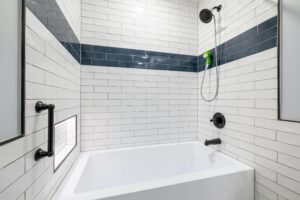
- Vertical wall-mounted grab bar: A permanent vertical grab bar mounted on the side wall of the bathtub — in line with the tub rim — is the most strongly supported configuration for bathing transfers. It supports balance during both entry and exit, accommodates a range of grasp heights, and allows for reactive gripping if balance is lost (Greene et al., 2024).
- Diagonal grab bar: For people who use a bath seat and need support during sit-to-stand transfers, a diagonal bar accommodates the change in grasp height across the movement (Greene et al., 2024).
- Horizontal or back wall bars: Less effective for entry/exit transfers — reaching for a back wall bar requires trunk forward flexion which increases fall risk (Greene et al., 2024).
- Rim-mounted temporary grab bars: An alternative when permanent installation is not feasible (rented property, cost constraints). However, research shows rim-mounted bars create greater postural demands and are rated as less safe by users compared to wall-mounted bars. They should be considered a temporary solution rather than a long-term substitute (Greene et al., 2024).
- Suction cup handholds: Not recommended as a primary bathing safety aid. Research shows significant variability in their performance across different wall surfaces and bathing conditions, and they do not reliably meet loading requirements during a fall recovery scenario (Rand et al., 2024).
Grab bars must be secured into wall studs or with appropriate wall anchors rated for the load — towel bars and toilet paper holders are not substitutes and cannot support body weight (Colón-Emeric et al., 2024).
For Clinicians
- When recommending grab bars, specify location, orientation (vertical vs diagonal), and installation requirements — not just “install grab bars” (Greene et al., 2024).
- A vertical grab bar on the control wall (entry side) of the tub, in line with the tub rim, is supported by the strongest biomechanical evidence for tub exit and entry tasks (Greene et al., 2024).
- Assess whether the patient can realistically install and use the recommended equipment safely and correctly — especially for temporary devices. Suction cup handholds are frequently installed incorrectly by older adults even in controlled settings (Rand et al., 2024).
- Document grab bar recommendations specifically, including the rationale, location, and whether installation has been completed. Follow up at the next visit to confirm correct installation and use.
6. Adaptive Equipment for the Bathroom
Beyond grab bars, a range of adaptive equipment can significantly improve bathing safety and independence. An OT will recommend equipment based on the individual’s specific needs, abilities, and bathroom configuration (Caña-Pino & Pesado-Fernández, 2025; Colón-Emeric et al., 2024).
Tub and shower equipment:
- Tub transfer bench: A bench that spans the tub rim, allowing the person to sit on the outside edge and slide across into the tub without stepping over the rim — one of the most effective ways to eliminate the highest-risk part of bathing for people who cannot safely step over a tub edge
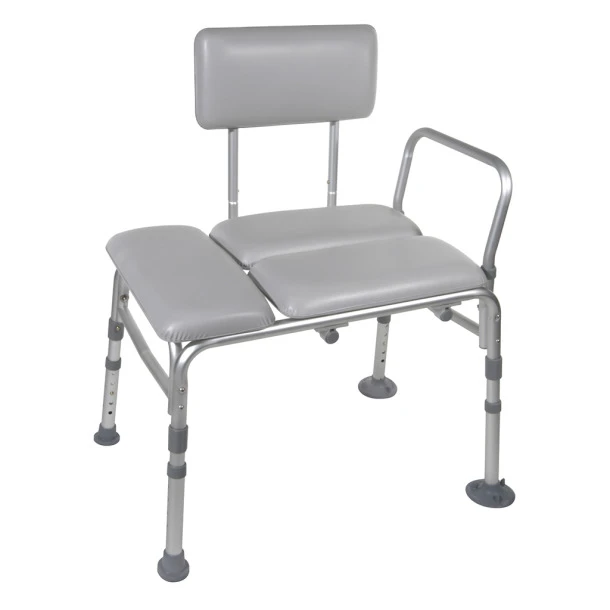
- Shower chair or shower bench: Allows seated bathing in the shower, eliminating the need for prolonged standing and reducing fall risk during washing tasks
- Non-slip bath mat: Placed inside the tub or shower floor — essential for all older adults and those with balance challenges. Must be secured properly and rinsed regularly to maintain suction.
- Handheld shower head: Allows bathing while seated; reduces the need to reach, turn, and move under a fixed spray
- Long-handled bath brush or sponge: Reduces the need to bend and reach, supporting safe bathing for those with limited flexibility or hip precautions
Toilet equipment:
- Raised toilet seat: Reduces the depth of the sit-to-stand transfer, making it safer and easier for those with lower extremity weakness or hip precautions
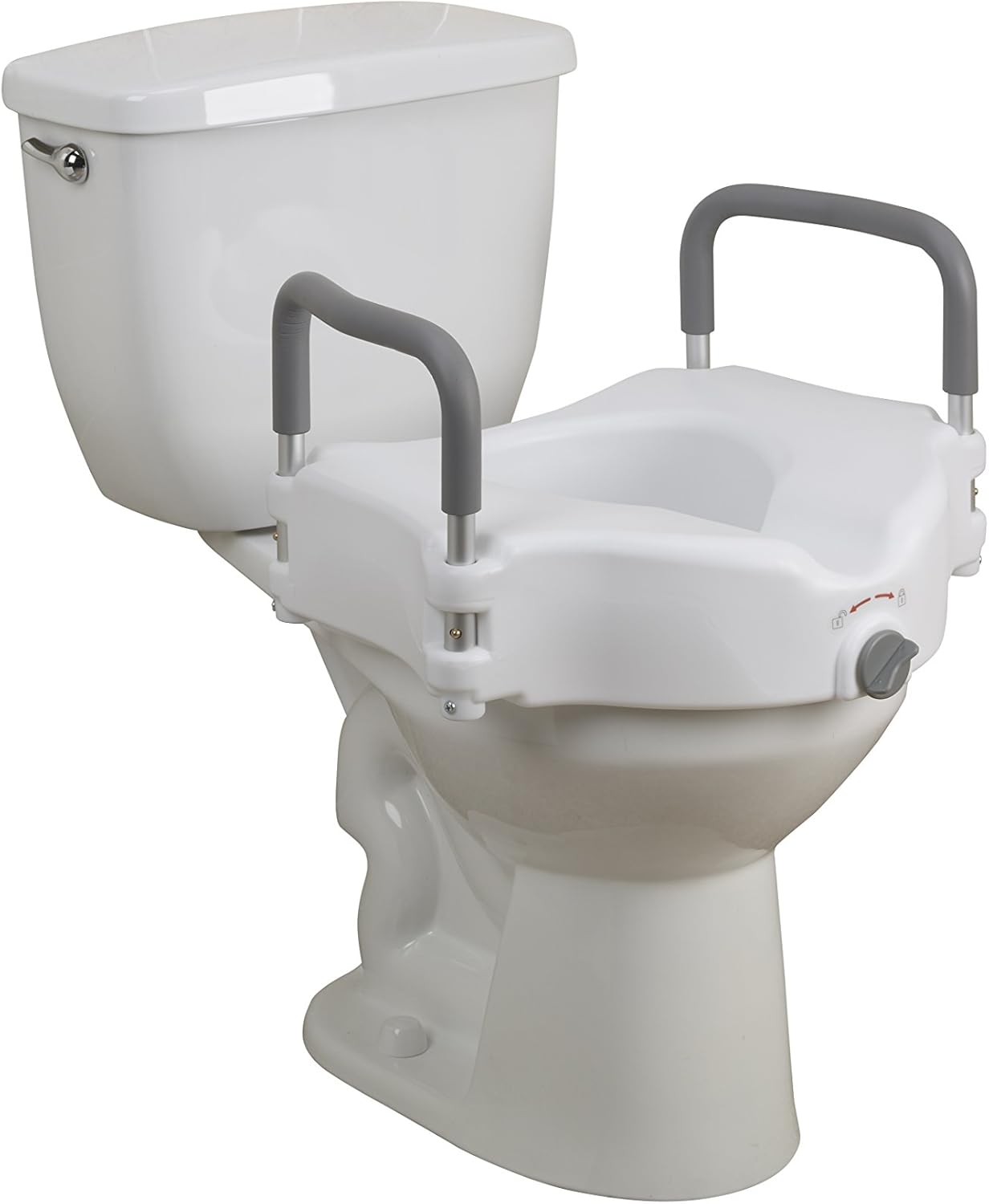
- Toilet safety frame / grab rails: Provides armrests to assist with sit-to-stand, particularly when wall-mounted grab bars are not feasible
- Commode chair: A portable, height-adjustable toilet unit that can be placed at any location — useful when the bathroom is not safely accessible, or for nighttime use to avoid rushing
General bathroom equipment:
- Shower caddy at accessible height: Keeps soap, shampoo, and other items within easy reach without requiring bending or reaching outside a stable base
- Non-slip floor mat outside the tub: Prevents slipping on a wet floor when exiting the tub or shower
- Personal emergency response system: Wearable device that allows the person to call for help if they fall — particularly important for those who live alone
For Patients & Families
- An OT can help you choose the right equipment for your specific situation — not all equipment is appropriate for all people, and the wrong equipment can create new hazards
- Many items such as shower chairs, handheld shower heads, and non-slip mats are available at pharmacies, medical supply stores, and online at relatively low cost
- Tub transfer benches and grab bars may require professional installation — ask your OT or contractor for guidance
- Some adaptive equipment is covered by Medicare Part B or Medicaid as durable medical equipment (DME) with a physician’s order — ask your doctor or OT about coverage
7. Safe Bathing Techniques
Equipment alone is not sufficient — how a person bathes matters as much as what is installed in the bathroom. An occupational therapist can teach safe bathing techniques tailored to the individual’s abilities and environment (Caña-Pino & Pesado-Fernández, 2025).
General safe bathing principles:
- Always use grab bars with a firm, full grip — do not rely on a towel rack, soap dish, or the shower wall for support
- Move slowly and deliberately, especially during transitions such as standing up, stepping over the tub rim, and turning
- Sit down before reaching — avoid leaning or stretching while standing
- Test the water temperature before entering the tub or shower — use your hand, not your foot, and set the water heater to 120°F (49°C) or below to prevent scalding
- Keep all items within easy reach before beginning — reaching outside a stable position is a major cause of bathroom falls
- Never rush — if you feel urgency to get to the toilet, use a commode near the bed at night to avoid the risk of rushing to the bathroom
For tub bathing:
- Use a tub transfer bench if stepping over the rim is difficult — slide across rather than step over
- Lower yourself to sit on the tub edge or bench before swinging your legs in
- Use the grab bar with one hand throughout entry and exit
- Fill the tub before getting in — avoid adjusting water temperature once seated
For shower bathing:
- Use a shower chair or bench to eliminate the need for prolonged standing
- A handheld showerhead with a long hose allows bathing while seated without needing to move under the spray
- Stand facing the shower entry — avoid turning your back to the door when getting in or out
8. Home Modifications Beyond Grab Bars
For individuals with significant mobility limitations or those planning to remain in their home long-term, larger-scale bathroom modifications may be warranted. An OT can assess needs and make referrals to contractors familiar with accessibility modifications (Caña-Pino & Pesado-Fernández, 2025; Colón-Emeric et al., 2024).
High-impact modifications:
- Walk-in or roll-in shower: Eliminating the tub entirely and replacing it with a curbless
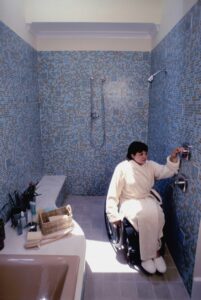 (zero-threshold) walk-in shower removes the single highest-risk element in most bathrooms — the tub entry step. This is the most effective long-term bathing safety modification for older adults and those with significant mobility limitations.
 - Walk-in bathtub: A tub with a side door that allows entry and exit without stepping over a rim. Requires sitting inside while the tub fills and drains — this has implications for time and temperature management.
- Widened doorway: For wheelchair or walker users, a standard bathroom door (typically 24–28 inches) may not be wide enough. Widening to 32–36 inches allows access with a mobility device.
- Lever-style faucet handles: Easier to operate than round knobs for people with arthritis or reduced hand strength
- Improved lighting: Adequate overhead lighting, nightlights for nighttime toilet use, and motion-activated lights significantly reduce bathroom fall risk (Colón-Emeric et al., 2024)
- Contrasting colors: High-contrast toilet seat, grab bars in a color that contrasts with the wall, and contrasting floor-wall boundaries improve visibility for those with low vision
Home modification programs funded through Medicaid waiver programs, Area Agencies on Aging, and some veterans’ services may provide financial assistance for bathroom accessibility modifications — an OT or social worker can help identify available resources in your area.
9. Maintaining Dignity and Independence
Bathing is one of the most intimate daily activities, and difficulty with bathing can profoundly affect a person’s sense of dignity, identity, and self-worth. The goal of all bathing safety interventions is not simply to prevent falls — it is to support the person in bathing as independently, safely, and privately as possible (Levine et al., 2022).
Research on the lived experience of people who have received bathing adaptations shows that improvements in bathing safety and independence have wide-ranging positive effects beyond the bathroom itself. Participants reported greater confidence in leaving the home, reduced fear of falling, improved social engagement, and a restored sense of personal identity and cleanliness that extended to their overall wellbeing (Levine et al., 2022).
Key principles for preserving dignity in bathing support:
- Support what the person can do before stepping in to assist — partial independence is meaningful and worth preserving
- Ask about preferences for bathing routine, products, and timing — respect for personal routine sustains a sense of control
- Ensure privacy as much as possible, even when assistance is needed
- Use the minimum level of assistance necessary — the goal is to support independence, not to take over
- Introduce equipment gradually and with explanation — some people are initially resistant to assistive devices; framing them as tools for independence rather than signs of disability can help
10. Guidance for Caregivers Assisting with Bathing
When a person needs assistance with bathing, the safety of the caregiver matters as much as the safety of the person being cared for. Bathing assistance is physically demanding and carries real injury risk for caregivers — particularly back injury from bending, lifting, and reaching in confined spaces (Caña-Pino & Pesado-Fernández, 2025).
Principles for safe caregiver-assisted bathing:
- Set up before you start: Have all supplies within reach before helping the person into the tub or shower — reaching across a person mid-transfer is unsafe for both of you
- Use equipment: A tub transfer bench, shower chair, and handheld shower head make caregiver-assisted bathing significantly safer and less physically demanding
- Keep your back straight: Bend at the knees, not the waist, when providing hands-on assistance. If the bathroom does not allow safe body mechanics, it needs modification.
- Use a transfer belt (gait belt) if trained: A gait belt around the person’s waist gives you a secure grip during transfers without grabbing clothing
- Know your limits: If a transfer feels unsafe, do not attempt it alone. Ask for help, use a different approach, or request a professional assessment before proceeding.
- Ask an OT to observe: Having an occupational therapist watch a typical assisted bathing routine and provide specific guidance can significantly improve safety for both parties (Caña-Pino & Pesado-Fernández, 2025)
When to Request a Therapy Referral
- When bathing has become difficult, slow, frightening, or unsafe — at any age
- Following a fall in the bathroom — even one without injury
- After any hospitalization, surgery, or illness that has affected strength, balance, or mobility
- When stepping over the bathtub rim feels risky or has led to near-falls
- When a caregiver is needed for bathing assistance and the caregiver’s safety or technique is uncertain
- For people with dementia — bathing is frequently one of the earliest and most challenging ADL difficulties in dementia and warrants specific OT assessment
- When considering bathroom renovation — an OT assessment before renovation ensures modifications match actual clinical needs
- Any time bathing safety is a concern — early referral supports independence and prevents injury
11. A Note for Clinicians
Bathing safety is frequently underassessed in clinical practice despite being one of the highest-risk and most function-limiting activities for older adults and those with physical or cognitive limitations. Asking specifically about bathing difficulty — not just general fall history — is an important part of functional screening (Colón-Emeric et al., 2024; Levine et al., 2022).
The absence of a complaint about bathing does not indicate safety. Research consistently shows that older adults underestimate their own bathing-related fall risk and frequently do not perceive the need for grab bars or other modifications even when they have previously fallen or experienced difficulty while bathing (Levine et al., 2022; Rand et al., 2024). Proactive assessment is more effective than reactive intervention after injury.
Grab bar recommendations should be specific, not general. Specifying bar orientation (vertical vs. diagonal), installation location (entry wall vs. back wall), and surface requirements (stud mounting vs. anchor specifications) is essential to ensuring the recommendation is implemented correctly and safely. Biomechanical research has established that a vertical grab bar mounted on the entry/control wall of the tub provides the most effective support for both proactive balance and reactive fall recovery (Greene et al., 2024).
Temporary bathing aids — particularly suction cup handholds — should be recommended with caution. A controlled study found significant variability in older adults’ ability to install these devices correctly and in their performance under bathing conditions. They may be appropriate as a very short-term bridge, but permanent wall-mounted grab bars remain the standard of care (Rand et al., 2024).
OT referral for bathing safety is appropriate for any patient with bathing difficulty, fall history, post-surgical recovery, or new neurological diagnosis. Medicare covers OT home health services for homebound patients — this is one of the most impactful and underutilized referral pathways available in primary care (Caña-Pino & Pesado-Fernández, 2025).
12. References
- Caña-Pino, A., & Pesado-Fernández, L. (2025). Occupational therapy interventions for fall prevention in older adults: A systematic review of multimodal strategies. Physiologia, 5(3), 33. https://doi.org/10.3390/physiologia5030033
- Colón-Emeric, C. S., McDermott, C. L., Lee, D. S., & Berry, S. D. (2024). Risk assessment and prevention of falls in older community-dwelling adults: A review. JAMA, 331(16), 1397–1406. https://pmc.ncbi.nlm.nih.gov/articles/PMC12224174/
- Greene, R., Levine, I. C., Guay, M., & Novak, A. C. (2024). Biomechanical demands and user preference associated with wall-mounted and rim-mounted grab bars. Canadian Journal of Occupational Therapy, 91(2), 183–193. https://pmc.ncbi.nlm.nih.gov/articles/PMC11088220/
- Levine, I. C., Lau, A., King, E. C., & Novak, A. C. (2022). Consumer perspectives on grab bars: A Canadian national survey of grab bar acceptability in homes. Frontiers in Public Health, 10, 1020078. https://pmc.ncbi.nlm.nih.gov/articles/PMC9618860/
- Rand, M., Pelchat, J., Levine, I. C., Montgomery, R. E., Greene, R. M., King, E. C., Pong, S. M., & Novak, A. C. (2024). Efficacy of installation of temporary bathing transfer aids by older adults. Gerontology & Geriatric Medicine, 10, 23337214241237119. https://pmc.ncbi.nlm.nih.gov/articles/PMC10938608/
© TherapyTopics.com — All information is for educational purposes only and does not constitute medical or therapeutic advice. Consult a licensed therapist or physician for evaluation and treatment.