

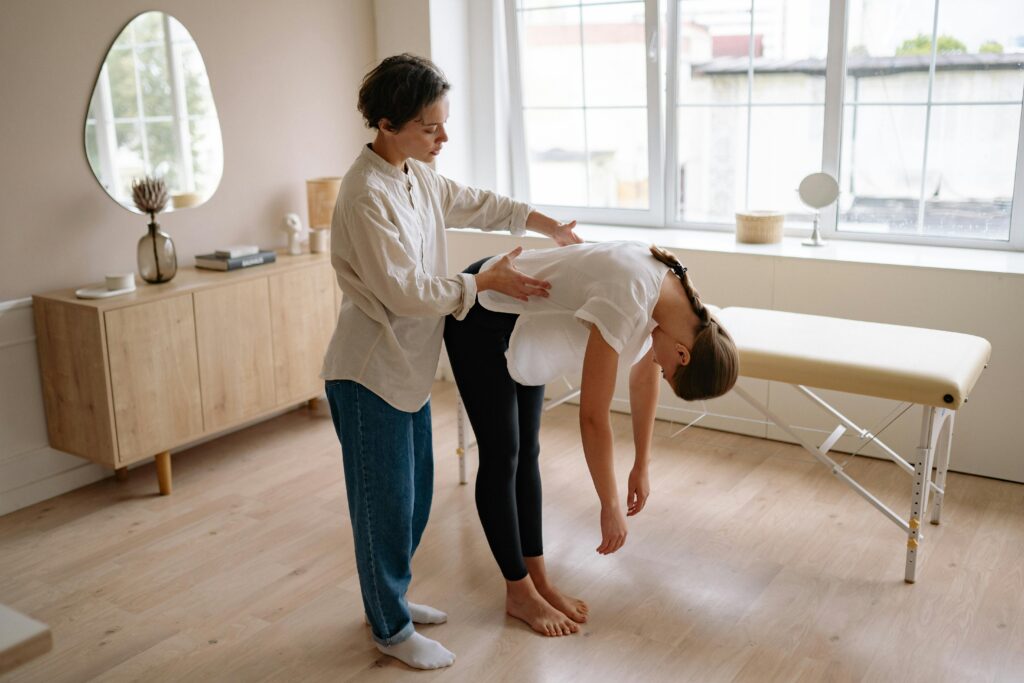
Key Takeaways
- Low back pain is the leading cause of disability worldwide, affecting 619 million people globally in 2020 with projections to exceed 800 million by 2050 (Ferreira et al., 2023)
- Exercise and active rehabilitation are the most evidence-supported first-line treatments for both acute and chronic low back pain (Baroncini et al., 2025; González-Gómez et al., 2025)
- Occupational therapy addresses return to work, ergonomics, activity modification, pacing, and adaptive equipment — reducing lost work time and preventing recurrence (Gari et al., 2023; Kalski et al., 2024)
- Physical therapy through exercise, manual therapy, and education significantly reduces pain and improves function in low back pain (Baroncini et al., 2025; González-Gómez et al., 2025)
- Occupational and psychosocial risk factors — including heavy lifting, awkward postures, and job stress — are among the strongest modifiable predictors of chronic low back pain (Jahn et al., 2023)
- Low back pain has enormous economic consequences globally, with high-income countries bearing the greatest burden in healthcare costs and productivity loss (Fatoye et al., 2023)
- Education combined with exercise produces better outcomes than either approach alone (Migliorini et al., 2025; Liu et al., 2026)
Important
The information on this page is educational only and is not a substitute for clinical evaluation or individualized therapy recommendations. Back pain can have many causes — some requiring urgent medical attention. If you experience back pain with leg weakness, bladder or bowel changes, fever, or pain following trauma, seek medical evaluation immediately.
Table of Contents
- What Is Low Back Pain?
- Types and Causes of Back Pain
- Symptoms and Warning Signs
- Risk Factors
- Who Treats Back Pain?
- Occupational Therapy in Back Pain
- Physical Therapy in Back Pain
- Exercise for Back Pain: What the Evidence Shows
- Self-Management Strategies
- What Patients and Families Can Do
- A Note for Clinicians
- References
1. What Is Low Back Pain?
Low back pain is pain, muscle tension, or stiffness located below the rib cage and above the buttocks, with or without pain radiating into the legs. It is the leading cause of disability worldwide, affecting an estimated 619 million people globally in 2020, and projections suggest this number will exceed 800 million by 2050, driven by aging populations and increasing sedentary behavior (Ferreira et al., 2023).
Approximately 80% of adults will experience at least one significant episode of low back pain in their lifetime. For most, acute episodes resolve within weeks. However, up to 30% of people develop persistent or recurrent pain that significantly impacts function, work capacity, and quality of life (Ferreira et al., 2023; Fatoye et al., 2023).
Low back pain has enormous economic consequences. In high-income countries, it is consistently among the costliest health conditions, accounting for massive direct healthcare expenditure and even greater indirect costs through lost productivity, sick leave, and disability claims (Fatoye et al., 2023).
For Patients & Families
- Low back pain is extremely common; you are not alone. It affects people of all ages and lifestyles (Ferreira et al., 2023)
- Most acute back pain episodes improve significantly within 4 to 6 weeks with appropriate management, bed rest and inactivity actually slow recovery (Baroncini et al., 2025)
- Chronic low back pain is not the same as severe structural damage. Many people with significant imaging findings have little pain, while others with minimal findings experience significant disability (Ferreira et al., 2023)
- Active treatment — staying moving, doing exercise, and engaging in therapy, consistently outperforms passive rest for recovery (Baroncini et al., 2025)
2. Types and Causes of Back Pain
Low back pain is classified by duration and by underlying cause (Ferreira et al., 2023).
By duration:
- Acute: Less than 6 weeks. Most episodes are acute and resolve with appropriate management
- Subacute: 6 to 12 weeks. A critical window where early intervention prevents chronicity
- Chronic: More than 12 weeks. Affects approximately 20% of people with acute low back pain and accounts for the majority of disability and economic burden
By cause:
- Non-specific low back pain (90%): No identifiable structural cause on imaging. The most common type, and the focus of most rehabilitation evidence (Ferreira et al., 2023)
- Disc-related pain: Including disc herniation with nerve root compression causing radiating leg pain, numbness, or weakness
- Spinal stenosis: Narrowing of the spinal canal causing leg pain and weakness with walking, more common in older adults
- Facet joint dysfunction: Degeneration or inflammation of the small joints between vertebrae
- Specific causes (10%): Including fracture, infection, inflammatory arthritis, or malignancy, requiring urgent medical evaluation (Ferreira et al., 2023)
The Global Burden of Low Back Pain
The Global Burden of Disease Study 2021 found that low back pain is the leading cause of years lived with disability worldwide. Its global prevalence increased 60% between 1990 and 2020 and is projected to reach 843 million cases by 2050. The burden is highest in working-age adults (Ferreira et al., 2023).
3. Symptoms and Warning Signs
Common symptoms:
- Localized aching or sharp pain in the lower back, worsened by movement or specific positions
- Muscle stiffness and reduced spinal mobility
- Pain that radiates into the buttocks or upper leg (referred pain)
- Radiating pain below the knee into the foot (radiculopathy/sciatica), with or without numbness, tingling, or weakness
- Pain that worsens with prolonged sitting, standing, or walking
- Difficulty transitioning between positions, rising from a chair, rolling in bed
Warning signs requiring urgent medical evaluation (red flags):
- Bladder or bowel dysfunction, possible cauda equina syndrome, a medical emergency
- Progressive leg weakness or numbness
- Back pain with fever and night sweats, possible infection
- Severe pain following trauma or fall, possible fracture
- Unexplained weight loss with back pain, possible malignancy
- Back pain in individuals with known cancer, osteoporosis, or immunosuppression (Ferreira et al., 2023)
For Patients & Families
- Seek emergency care immediately if back pain is accompanied by loss of bladder or bowel control, this is a medical emergency (Ferreira et al., 2023)
- Radiating pain down the leg does not always mean serious structural damage, but it should be evaluated
- Most low back pain does not require imaging. X-rays and MRIs often show findings in people with no pain, and normal findings in people with significant pain (Ferreira et al., 2023)
4. Risk Factors
Occupational and physical risk factors (Jahn et al., 2023):
- Heavy manual lifting and frequent bending or twisting, among the strongest occupational risk factors
- Prolonged awkward postures, including prolonged sitting, standing, or constrained positions

- Whole-body vibration, particularly in drivers and heavy machinery operators
- Physically demanding occupations — construction, healthcare, agriculture, and warehousing carry highest risk
Individual and psychosocial risk factors (Ferreira et al., 2023):
- Older age — prevalence and disability peak between ages 50 and 55
- Overweight and obesity — increase spinal loading and inflammatory processes
- Physical inactivity — deconditioning of spinal support muscles increases vulnerability
- Smoking — associated with disc degeneration and impaired healing
- Previous low back pain episode — the strongest predictor of future episodes
- Depression, anxiety, job dissatisfaction, and pain catastrophizing — major predictors of transition from acute to chronic pain
5. Who Treats Back Pain?
- Occupational therapy (OT): Ergonomic assessment, activity modification, pacing, return-to-work planning, and adaptive equipment (Gari et al., 2023; Kalski et al., 2024)
- Physical therapy (PT): Exercise prescription, manual therapy, education, movement training, and pain management strategies (Baroncini et al., 2025; González-Gómez et al., 2025)
- Primary care physician: Diagnosis, medication management, imaging decisions, and referral coordination
- Orthopedic surgeon or neurosurgeon: Surgical evaluation for structural causes unresponsive to conservative management
- Pain specialist: Interventional procedures including epidural steroid injections and nerve blocks for refractory cases
- Psychologist: CBT for pain catastrophizing, fear-avoidance, and depression associated with chronic low back pain (Ferreira et al., 2023)
- Occupational medicine physician: Workplace assessment, fitness-for-duty evaluation, and return-to-work coordination (Kalski et al., 2024)
For Clinicians
- International guidelines consistently recommend exercise and self-management education as first-line treatment for non-specific low back pain. Imaging, opioids, and surgery should be reserved for specific indications after adequate conservative management (Ferreira et al., 2023).
- Psychosocial yellow flags — depression, catastrophizing, job dissatisfaction — are as predictive of outcomes as physical findings. Routine screening at initial assessment significantly improves management (Ferreira et al., 2023).
- Early OT referral for occupational and ergonomic assessment significantly reduces sick leave duration and chronic disability risk (Kalski et al., 2024).
6. Occupational Therapy in Back Pain
Occupational therapy addresses the impact of low back pain on work, daily activities, and participation. A 2023 systematic review confirmed that OT interventions for occupational back pain, including ergonomic assessment, activity modification, pacing, and workplace accommodation, significantly reduce pain, improve function, and facilitate return to work (Gari et al., 2023). A 2024 systematic review confirmed that multidisciplinary programs including OT components significantly improve return-to-work rates (Kalski et al., 2024).
- Ergonomic assessment and workplace modification: Workstation assessment and recommendations to reduce spinal loading and postural strain during work tasks (Jahn et al., 2023)
- Activity modification: Recommending how to lift, carry, bend, and sit in ways that protect
 the spine while continuing participation in meaningful activities (Gari et al., 2023)
 - Activity pacing and energy conservation: Teaching strategies that prevent the boom-and-bust cycle of overactivity followed by pain flares (Gari et al., 2023)
- Return to work planning: Graded return-to-work plans, identification of workplace accommodations, and employer liaison (Kalski et al., 2024)
- Adaptive equipment: Lumbar supports, ergonomic tools, reaching aids, and home and workplace equipment that reduce mechanical load (Gari et al., 2023)
- ADL strategies: Techniques for performing dressing, bathing, household tasks, and driving with less pain provocation
- Pain education and self-management: Education on pain neuroscience, the biopsychosocial model, and evidence-based self-management strategies (Gari et al., 2023)
For Patients & Families
- If back pain is affecting your ability to work, ask for an OT referral for ergonomic assessment and return-to-work planning — early intervention significantly reduces sick leave duration (Kalski et al., 2024)
- Learning how to modify the way you do daily tasks — rather than avoiding them entirely — is one of the most important things OT can teach you (Gari et al., 2023)
- Pacing is a skill, not giving in to pain. Ask your OT to help you build a daily routine that balances activity and rest (Gari et al., 2023)
For Clinicians
- A 2023 systematic review confirmed OT interventions including ergonomic assessment, activity modification, and pacing significantly reduce pain and improve function in occupational back pain (Gari et al., 2023). OT referral should be standard for any working-age patient with back pain.
- A 2024 systematic review confirmed significant return-to-work benefits from multidisciplinary programs including OT. Early referral before chronic sick leave becomes established produces the best outcomes (Kalski et al., 2024).
- Occupational risk factors including heavy lifting, awkward postures, and whole-body vibration are among the strongest modifiable predictors of chronic low back pain (Jahn et al., 2023).
7. Physical Therapy in Back Pain
Physical therapy is the cornerstone of conservative low back pain management. A 2025 Level I Bayesian network meta-analysis confirmed that active PT significantly outperforms passive PT for long-term outcomes in chronic low back pain (Baroncini et al., 2025). A 2025 systematic review with meta-analysis found exercise therapy produced significantly greater reductions in pain and disability than manual therapy alone (González-Gómez et al., 2025). A 2025 Level I systematic review confirmed that adding education to physiotherapy significantly improves outcomes compared to PT alone (Migliorini et al., 2025).
- Therapeutic exercise: The most evidence-supported PT intervention. Includes core stabilization, Pilates, yoga, tai chi, walking, and resistance training (Li et al., 2023)
- Manual therapy: Spinal manipulation and mobilization reduce pain and improve mobility as an adjunct to exercise (Baroncini et al., 2025)
- Pain education: Education on pain neuroscience and the biopsychosocial model combined with exercise produces significantly better outcomes than either alone (Migliorini et al., 2025)
- Stabilization and motor control exercises: Targeting deep spinal stabilizers including the multifidus and transversus abdominis (Li et al., 2023)
- Aquatic therapy: Buoyancy-assisted exercise reduces spinal loading for severe or acute presentations (Liu et al., 2026)
- Functional movement training: Addressing movement patterns in lifting, bending, and carrying that contribute to pain and injury risk
- Fall prevention: For older adults with back pain and balance impairment, PT addresses fall risk through balance training
For Patients & Families
- Exercise is not dangerous for low back pain, it is the treatment. Staying active and moving consistently is more effective than rest (Baroncini et al., 2025)
- Pain during gentle exercise is not necessarily a sign of harm. Your PT will teach you how to distinguish acceptable exercise discomfort from warning signs (González-Gómez et al., 2025)
- Consistent home exercise between PT sessions is the most important factor in recovery (Li et al., 2023)
- Ask your PT to explain why each exercise is recommended and how it connects to your recovery, understanding the rationale improves adherence (Migliorini et al., 2025)
For Clinicians
- A 2025 Level I Bayesian network meta-analysis confirmed active PT significantly outperforms passive PT for long-term pain and disability outcomes in chronic low back pain. Active approaches should be primary, with passive modalities as adjuncts only (Baroncini et al., 2025).
- A 2025 systematic review with meta-analysis found exercise therapy produced significantly greater reductions in pain and disability than manual therapy alone in chronic low back pain (González-Gómez et al., 2025).
- A 2025 Level I systematic review confirmed that adding education to physiotherapy significantly improves pain and disability outcomes compared to PT alone (Migliorini et al., 2025). Pain neuroscience education should be routinely integrated into PT for back pain.
8. Exercise for Back Pain: What the Evidence Shows
A 2023 systematic review and network meta-analysis of 75 RCTs involving 5,254 participants found that tai chi, yoga, Pilates, and sling exercise produced the greatest improvements in pain for chronic low back pain. Yoga and core stabilization produced the greatest functional improvements (Li et al., 2023). A 2026 systematic review confirmed Pilates, yoga, and walking reduce pain and improve function in non-specific low back pain (Liu et al., 2026).
- Yoga: Greatest improvements in physical function and significant pain reduction. High adherence and accessibility make it a first-line recommendation (Li et al., 2023)
- Tai chi: Greatest pain reduction of all exercise modalities in network meta-analysis evidence (Li et al., 2023)
- Pilates: Highly effective for pain reduction and functional improvement with strong patient adherence (Li et al., 2023; Liu et al., 2026)
- Core stabilization: Strong evidence for functional improvement. Foundation of most PT exercise programs for low back pain (Li et al., 2023)
- Walking: Simple, accessible, and effective. Reduces pain and improves function with high real-world adherence (Liu et al., 2026)
- Resistance training: Strengthens spinal support musculature and reduces recurrence risk (Baroncini et al., 2025)
- Aquatic exercise: Enables pain-free movement in acute or severe cases through buoyancy-assisted unloading (Liu et al., 2026)
For Clinicians
- Exercise should be prescribed as first-line treatment for non-specific low back pain. All major international guidelines support this position (Ferreira et al., 2023).
- A 2023 network meta-analysis of 75 RCTs found tai chi and yoga produced the largest pain reductions — mind-body approaches should be offered alongside conventional exercise (Li et al., 2023).
- Patient adherence is the strongest predictor of exercise outcomes. Prescribe exercises the patient will actually do and follow up on adherence at every appointment (Migliorini et al., 2025).
9. Self-Management Strategies
- Stay active. Bed rest worsens outcomes. Continue daily activities as tolerated, modifying rather than avoiding them (Baroncini et al., 2025)
- Exercise regularly. Even 15 to 30 minutes of walking, yoga, or gentle exercise daily produces meaningful benefits (Liu et al., 2026)
- Apply heat or cold. Heat relaxes muscle spasm. Cold reduces acute inflammation and post-activity soreness
- Pace activities. Break demanding tasks into smaller segments with rest breaks (Gari et al., 2023)
- Address psychological factors. Pain catastrophizing and fear of movement significantly worsen outcomes. CBT and mindfulness have strong evidence for chronic low back pain (Ferreira et al., 2023)
- Manage weight. Excess body weight increases spinal loading. Even modest weight reduction reduces mechanical stress (Ferreira et al., 2023)
- Quit smoking. Smoking is associated with disc degeneration and impaired healing (Ferreira et al., 2023)
10. What Patients and Families Can Do
- Ask for PT and OT referrals early. Early active rehabilitation within the first 2 to 4 weeks of an acute episode significantly reduces risk of chronicity (Ferreira et al., 2023)
- Exercise daily. Consistency is more important than intensity. Even gentle daily movement produces significantly better outcomes than occasional intensive exercise (Li et al., 2023)
- Stay at work or return early. Modified duties and phased return to work produce better outcomes than extended sick leave for most back pain presentations (Kalski et al., 2024)
- Address mental health. Depression, anxiety, and catastrophizing significantly worsen back pain outcomes and respond to treatment (Ferreira et al., 2023)
- Learn about your pain. Understanding that non-specific low back pain rarely reflects serious structural damage reduces fear and improves function (Migliorini et al., 2025)
When to Request OT or PT Referral
- For any acute back pain episode not improving after 2 to 4 weeks of self-management (Ferreira et al., 2023)
- When back pain is limiting work performance or threatening job retention — OT for ergonomic assessment and return-to-work planning (Kalski et al., 2024)
- When back pain is limiting daily activities including dressing, household tasks, or bathing — OT for activity modification (Gari et al., 2023)
- When radiating leg pain, numbness, or weakness is present — PT evaluation to assess neurological involvement (Ferreira et al., 2023)
- When pain has persisted beyond 6 to 12 weeks — subacute and chronic presentations benefit most from structured PT and OT rehabilitation (Baroncini et al., 2025)
- When fear of movement, activity avoidance, or significant distress is present — PT with pain neuroscience education (Migliorini et al., 2025)
- When balance or fall risk is present alongside back pain — particularly in older adults (Ferreira et al., 2023)
- Before and after any spinal surgery — prehabilitation and post-surgical rehabilitation significantly improve outcomes (Baroncini et al., 2025)
11. A Note for Clinicians
Low back pain is the leading cause of disability globally and one of the most resource-intensive conditions in healthcare systems worldwide. The evidence base for active rehabilitation — exercise, education, OT, and PT — is robust, and all major international guidelines endorse these as first-line treatment. Despite this, passive treatments, imaging, opioids, and surgery remain overused (Ferreira et al., 2023).
A 2025 Level I Bayesian network meta-analysis confirmed that active PT significantly outperforms passive PT for long-term outcomes in chronic low back pain (Baroncini et al., 2025). A 2025 Level I systematic review confirmed that adding education to physiotherapy significantly improves pain and disability outcomes compared to PT alone (Migliorini et al., 2025).
Occupational factors are among the most powerful modifiable determinants of chronic low back pain. A 2023 systematic review confirmed heavy lifting, awkward postures, and whole-body vibration are significant causal risk factors (Jahn et al., 2023). OT referral for occupational assessment should be standard for working patients with back pain. Early OT involvement in return-to-work planning significantly reduces sick leave duration and chronic disability risk (Kalski et al., 2024).
Related Pages on TherapyTopics
- Fall Prevention — Balance assessment and exercise programs for older adults with back pain and balance impairment
- Bathing & Shower Safety — Adaptive equipment and OT strategies for safe ADL performance with mobility limitations
- Osteoarthritis — Often co-occurring with back pain; OT and PT management overlap significantly
- Parkinson’s Disease — Movement and posture rehabilitation with overlapping PT approaches
12. References
- Baroncini, A., Maffulli, N., Manocchio, N., Bossa, M., Foti, C., Schafer, L., Klimuch, A., & Migliorini, F. (2025). Active and passive physical therapy in patients with chronic low-back pain: A level I Bayesian network meta-analysis. Journal of Orthopaedics and Traumatology. https://doi.org/10.1186/s10195-025-00885-4
- Fatoye, F., Gebrye, T., Ryan, C. G., Useh, U., & Mbada, C. (2023). Global and regional estimates of clinical and economic burden of low back pain in high-income countries: A systematic review and meta-analysis. Frontiers in Public Health, 11, 1098100. https://doi.org/10.3389/fpubh.2023.1098100
- Ferreira, M. L., de Luca, K., Haile, L. M., et al. (2023). Global, regional, and national burden of low back pain, 1990–2020, its attributable risk factors, and projections to 2050: A systematic analysis of the Global Burden of Disease Study 2021. The Lancet Rheumatology, 5(6), e316–e329. https://doi.org/10.1016/S2665-9913(23)00098-X
- Gari, D., Alabdulhadi, A. A., Alahmari, A. A., Alsalman, Z. A., & Alshehri, H. S. (2023). Addressing occupational back pain: A systematic review of preventive and therapeutic strategies. Cureus, 15(11), e48744. https://doi.org/10.7759/cureus.48744
- González-Gómez, L., Moral-Munoz, J. A., Rosales-Tristancho, A., Cuevas-Moreno, A., Cardellat-González, M., & Rodríguez-Domínguez, A. J. (2025). Exercise therapy versus manual therapy for the management of pain intensity, disability, and physical function in people with chronic low back pain: A systematic review with meta-analysis. European Journal of Pain. https://doi.org/10.1002/ejp.70090
- Jahn, A., Andersen, J. H., Christiansen, D. H., Seidler, A., & Dalbage, A. (2023). Occupational mechanical exposures as risk factor for chronic low-back pain: A systematic review and meta-analysis. Scandinavian Journal of Work, Environment & Health. https://doi.org/10.5271/sjweh.4114
- Kalski, L., Völkel, L., Häußler, S., & Wolfarth, B. (2024). Efficacy of occupational rehabilitation in return to work for back pain: A systematic literature review. Work, 78(1), 29–43. https://doi.org/10.3233/WOR-230277
- Li, Y., Yan, L., Hou, L., Zhang, X., Zhao, H., Yan, C., Li, X., Li, Y., Chen, X., & Ding, X. (2023). Exercise intervention for patients with chronic low back pain: A systematic review and network meta-analysis. Frontiers in Public Health, 11, 1155225. https://doi.org/10.3389/fpubh.2023.1155225
- Liu, X., Gao, W., Wu, P., Huang, J., Han, J., Xu, X., & Chen, W. (2026). Effects of different exercise interventions on lower back pain: A systematic review and meta-analysis. Frontiers in Physiology. https://doi.org/10.3389/fphys.2025.1694330
- Migliorini, F., Maffulli, N., Schafer, L., Manocchio, N., Bossa, M., Foti, C., Betsch, M., & Kubach, J. (2025). Impact of education in patients undergoing physiotherapy for lower back pain: A level I systematic review and meta-analysis. European Journal of Trauma and Emergency Surgery. https://doi.org/10.1007/s00068-025-02788-9
© TherapyTopics.com — All information is for educational purposes only and does not constitute medical or therapeutic advice. Consult a licensed therapist or physician for evaluation and treatment.