

Key Takeaways
- Dysphagia affects approximately 13% of community-dwelling adults and more than 56% of residents in aged care facilities — making it one of the most prevalent and underdiagnosed conditions in healthcare (Doan et al., 2022; Roberts et al., 2024)
- Oropharyngeal dysphagia is prevalent across hospital, rehabilitation, nursing home, and palliative care settings, with pooled prevalence rates ranging from 29% to 64% depending on the clinical context (Rivelsrud et al., 2023)
- Dysphagia is closely associated with aspiration pneumonia, malnutrition, dehydration, and increased mortality — particularly in hospitalized older adults (Bosch et al., 2023)
- Dysphagia significantly reduces activities of daily living performance, independence, and quality of life in older adults — with a systematic review and meta-analysis confirming a significant association between dysphagia and ADL decline (Xue et al., 2024)
- Behavioural interventions delivered by speech-language pathologists — including swallowing exercises, manoeuvres, and postural strategies — produce significant improvements in swallowing function and aspiration risk in adults with oropharyngeal dysphagia (Speyer et al., 2022; Adzimová et al., 2025)
- Speech-language pathology is the primary discipline for dysphagia assessment and management, but occupational therapy and physical therapy play important supporting roles in adaptive feeding, positioning, and rehabilitation (Ribeiro et al., 2024)
- Post-extubation dysphagia affects a significant proportion of critically ill patients following prolonged intubation, and swallowing rehabilitation significantly reduces dysphagia severity and aspiration pneumonia risk in this population (Chen et al., 2024)
Important
The information on this page is educational only and is not a substitute for clinical evaluation or individualized treatment. Dysphagia can cause serious medical complications including aspiration pneumonia. If you or someone you care for is experiencing difficulty swallowing, coughing during meals, or unexplained weight loss, seek prompt medical and SLP evaluation.
Table of Contents
- What Is Dysphagia?
- Types of Dysphagia
- Causes and Risk Factors
- Signs, Symptoms, and Warning Signs
- Consequences of Untreated Dysphagia
- Who Provides Dysphagia Care?
- Speech-Language Pathology in Dysphagia
- Occupational Therapy in Dysphagia
- Swallowing Rehabilitation: What the Evidence Shows
- What Patients and Families Can Do
- A Note for Clinicians
- References
1. What Is Dysphagia?
Dysphagia is the medical term for difficulty swallowing — a symptom that can range from mild discomfort when swallowing certain textures to a complete inability to safely swallow food, liquids, or medication. It affects people across the lifespan but is particularly prevalent in older adults, people with neurological conditions, and those who have received treatment for head and neck cancer (Ribeiro et al., 2024; Doan et al., 2022).
Dysphagia is one of the most prevalent yet underrecognized conditions in healthcare. A global systematic review and meta-analysis found that the overall prevalence of oropharyngeal dysphagia in adults is approximately 13% in community settings, rising to nearly 37% in hospitals and more than 56% in aged care facilities (Doan et al., 2022; Roberts et al., 2024). Despite this high prevalence, dysphagia frequently goes unidentified and untreated — placing people at significant risk of aspiration pneumonia, malnutrition, and reduced quality of life (Bosch et al., 2023).
Swallowing is a complex neuromuscular process involving more than 30 muscles and multiple cranial nerves. Even small disruptions to the neurological or muscular coordination required for safe swallowing can result in food or liquid entering the airway (aspiration) or remaining in the throat after swallowing (residue) — both of which carry serious health consequences (Speyer et al., 2022).
For Patients & Families
- Dysphagia is a medical condition, not a normal part of aging. Difficulty swallowing always warrants evaluation by a speech-language pathologist (Doan et al., 2022)
- Many people with dysphagia aspirate silently — meaning food or liquid enters the airway without triggering a cough. This is why swallowing difficulties can be dangerous even when there is no obvious choking (Bosch et al., 2023)
- Dysphagia is treatable. Swallowing rehabilitation by a speech-language pathologist produces significant improvements in function and safety in the majority of people with dysphagia (Speyer et al., 2022)
- Early identification and treatment significantly reduces the risk of aspiration pneumonia, which is one of the most serious and potentially fatal consequences of untreated dysphagia (Bosch et al., 2023)
2. Types of Dysphagia
Dysphagia is classified by the phase of swallowing affected and the underlying cause (Ribeiro et al., 2024; Speyer et al., 2022).
By swallowing phase:
- Oropharyngeal dysphagia: Difficulty in the oral or pharyngeal phases of swallowing — including preparing food in the mouth, forming a bolus, initiating the swallow, and moving food through the throat. This is the most common type addressed by SLP rehabilitation and is the focus of most dysphagia research (Ribeiro et al., 2024)
- Esophageal dysphagia: Difficulty in the esophageal phase, where food passes through the esophagus to the stomach. Typically managed medically or surgically rather than through swallowing rehabilitation
By severity:
- Mild dysphagia: Difficulty with specific food textures or thin liquids, minor coughing or throat clearing during meals, prolonged mealtimes
- Moderate dysphagia: Significant restriction of diet texture and liquid consistency, regular coughing or choking during meals, aspiration on some consistencies
- Severe dysphagia: Inability to safely swallow any oral intake, or only tolerating highly modified textures with significant risk of aspiration. May require tube feeding (Rivelsrud et al., 2023)
Silent Aspiration
Silent aspiration — the entry of food or liquid into the airway without any visible sign such as coughing or choking, occurs in a significant proportion of people with neurogenic dysphagia. Because silent aspiration produces no immediate warning sign, it is particularly dangerous and can lead to aspiration pneumonia without the person or caregiver being aware that aspiration is occurring. Instrumental swallowing assessment is essential to identify silent aspiration (Bosch et al., 2023).
3. Causes and Risk Factors
Dysphagia can result from any condition that affects the neurological control, muscular function, or structural integrity of the swallowing mechanism (Ribeiro et al., 2024; Rivelsrud et al., 2023).
Neurological causes — the most common overall:
- Stroke — dysphagia occurs in 40 to 78% of acute stroke patients and is a major cause of post-stroke aspiration pneumonia (Bosch et al., 2023)
- Parkinson’s disease — swallowing difficulties affect the majority of people with Parkinson’s and worsen as the disease progresses
- Dementia — particularly advanced dementia, where swallowing coordination and awareness deteriorate significantly
- Traumatic brain injury — affecting neurological control of the swallowing mechanism
- Multiple sclerosis — dysphagia occurs in a significant proportion of people with MS, particularly those with brainstem involvement
- Amyotrophic lateral sclerosis (ALS) and other motor neuron diseases — progressive dysphagia is a defining feature
- Post-extubation dysphagia, following prolonged mechanical ventilation in critically ill patients (Chen et al., 2024)
Structural and other causes:
- Head and neck cancer and its treatment — surgery, radiation, and chemotherapy all significantly affect swallowing structures and function
- Oesophageal conditions — including stricture, achalasia, and gastroesophageal reflux disease
- Sarcopenic dysphagia — muscle weakness and loss related to aging or malnutrition affecting swallowing musculature
- Presbyphagia — age related changes in swallowing function that increase vulnerability to dysphagia (Doan et al., 2022)
For Patients & Families
- If a family member has had a stroke, ask about swallowing assessment before they eat or drink anything, post-stroke dysphagia is common and frequently causes silent aspiration (Bosch et al., 2023)
- Aging does not inevitably cause dysphagia, but it does increase vulnerability. Swallowing difficulties in older adults are always worth reporting to a doctor or speech-language pathologist (Doan et al., 2022)
- If a family member with Parkinson’s, dementia, or MS is coughing during meals, taking longer to eat, or losing weight unexpectedly, request an SLP swallowing evaluation promptly
4. Signs, Symptoms, and Warning Signs
Dysphagia presents in many ways, and some of the most serious presentations are not immediately obvious. Recognizing the warning signs is critical for timely referral (Ribeiro et al., 2024; Bosch et al., 2023).
Common signs and symptoms:
- Coughing or choking during or after eating or drinking
- A wet, gurgly, or hoarse voice during or after meals
- Sensation of food sticking in the throat or chest
- Prolonged mealtimes — taking significantly longer than usual to eat
- Avoiding certain foods or textures — cutting out harder, chewy, or dry foods
- Drooling or difficulty managing saliva
- Regurgitation of food or liquid through the nose
- Unexplained weight loss or dehydration
- Recurrent chest infections or aspiration pneumonia
- Reduced enjoyment of mealtimes or avoidance of eating socially
Warning signs requiring urgent evaluation:
- Recurrent aspiration pneumonia
- Significant unintentional weight loss
- Complete inability to swallow
- Sudden onset of swallowing difficulty, particularly after stroke or other neurological event (Bosch et al., 2023)
For Patients & Families
- A wet or gurgly voice after eating or drinking is a red flag for aspiration — seek SLP evaluation promptly (Bosch et al., 2023)
- Do not assume that absence of coughing means swallowing is safe. Silent aspiration is common in neurological dysphagia and produces no outward sign (Bosch et al., 2023)
- Recurrent chest infections in a person with a neurological condition may be caused by silent aspiration of food or liquid. SLP evaluation should be part of the workup (Bosch et al., 2023)
- Unexplained weight loss in an older adult may be caused by dysphagia — the person may be eating less because swallowing is difficult or uncomfortable
5. Consequences of Untreated Dysphagia
Untreated dysphagia carries serious health, functional, and quality-of-life consequences. The consequences extend well beyond the swallowing difficulty itself, affecting nutrition, respiratory health, independence, and social participation (Bosch et al., 2023; Xue et al., 2024).
- Aspiration pneumonia: The most serious acute consequence of dysphagia. Caused by food, liquid, or oral bacteria entering the lungs. Aspiration pneumonia is associated with significantly increased mortality in
 hospitalized older adults, a large cohort study found dysphagia was significantly associated with aspiration pneumonia and in-hospital death (Bosch et al., 2023)
 - Malnutrition and dehydration: Difficulty swallowing leads to reduced oral intake — people with dysphagia often eat and drink less to avoid discomfort or fear, leading to progressive malnutrition and dehydration
- ADL decline and loss of independence: A 2024 systematic review and meta-analysis confirmed a significant association between dysphagia and decline in activities of daily living in older adults — dysphagia is not only a swallowing problem but a functional problem with broad implications for independence (Xue et al., 2024)
- Social isolation: Mealtimes are central social activities. Dysphagia — with its restrictions on food textures, fear of choking in public, and requirement for modified diets, significantly affects social participation, enjoyment of meals, and quality of life (Ribeiro et al., 2024)
- Depression and anxiety: Fear of choking, loss of the pleasure of eating, dependence on others, and social withdrawal associated with dysphagia significantly increase rates of depression and anxiety
- Prolonged hospital stay and increased healthcare costs: Dysphagia in hospitalized patients is associated with significantly longer hospital stays and increased healthcare utilization (Bosch et al., 2023)
For Clinicians
- A large cohort study found that dysphagia in hospitalized patients was significantly associated with aspiration pneumonia and in-hospital mortality after controlling for confounders (Bosch et al., 2023). Routine dysphagia screening at hospital admission is warranted for all patients at risk.
- A 2024 systematic review and meta-analysis confirmed a significant association between dysphagia and ADL decline in older adults (Xue et al., 2024). Dysphagia assessment should be routinely integrated into functional assessments of older adults in all care settings.
- Dysphagia prevalence in aged care facilities is 56% by pooled meta-analysis (Roberts et al., 2024). Routine dysphagia screening on admission to aged care, and at regular intervals thereafter, should be standard clinical practice.
6. Who Provides Dysphagia Care?
- Speech-language pathology (SLP): The primary discipline for dysphagia assessment, diagnosis, and rehabilitation. SLP conducts clinical and instrumental swallowing assessments and delivers evidence-based swallowing rehabilitation (Speyer et al., 2022; Adzimová et al., 2025)
- Occupational therapy (OT): Addresses the functional and daily living aspects of dysphagia — including adaptive feeding equipment, positioning, meal setup, feeding assistance strategies, and the impact of dysphagia on independence and participation (Xue et al., 2024)
- Physician: Medical management of the underlying cause of dysphagia, referral for instrumental assessment, and management of complications including aspiration pneumonia and malnutrition
- Dietitian: Nutritional assessment and management, texture-modified diet planning, and enteral nutrition support where oral feeding is insufficient or unsafe
- Physiotherapy/respiratory therapy: Management of respiratory complications including aspiration pneumonia, respiratory muscle strengthening, and positioning for swallowing safety
- Nursing: Implementation of dysphagia management plans at mealtimes, medication administration in safe forms, oral hygiene, and monitoring for signs of aspiration
- Gastroenterologist: Management of esophageal dysphagia and other structural causes requiring endoscopic or surgical intervention
For Clinicians
- Dysphagia management is most effective when delivered by a coordinated multidisciplinary team. SLP, OT, dietitian, nursing, and medical management working together produce significantly better outcomes than any single discipline working in isolation (Ribeiro et al., 2024).
- Oral hygiene is a critically underutilized component of aspiration pneumonia prevention in people with dysphagia. Nursing-led oral hygiene programs significantly reduce aspiration pneumonia rates in high-risk populations (Bosch et al., 2023).
7. Speech-Language Pathology in Dysphagia
Speech-language pathology is the primary discipline for dysphagia assessment and management. SLPs are trained to evaluate all phases of swallowing, identify the nature and severity of the swallowing impairment, and deliver evidence-based rehabilitation (Speyer et al., 2022; Adzimová et al., 2025).
A 2022 systematic review and meta-analysis of behavioural interventions for oropharyngeal dysphagia, incorporating only RCTs, confirmed that SLP-delivered swallowing interventions significantly improve swallowing outcomes in adults with oropharyngeal dysphagia. A 2025 systematic review and meta-analysis further confirmed significant effects of swallowing maneuvers, exercises, and postural strategies as standalone interventions in the behavioral management of oropharyngeal dysphagia (Speyer et al., 2022; Adzimová et al., 2025).
SLP assessment of dysphagia includes:
- Clinical swallowing evaluation (CSE): Bedside assessment of oral motor function, swallowing trials with various textures and liquid consistencies, and identification of clinical signs of aspiration risk (Speyer et al., 2022)
- Videofluoroscopic swallowing study (VFSS/modified barium swallow): Radiological assessment
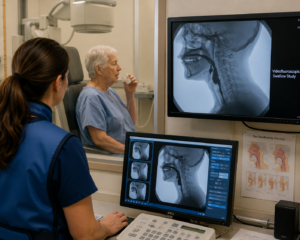 of all phases of swallowing in real time, the gold standard for identifying aspiration and pharyngeal residue (Speyer et al., 2022)
 - Fiberoptic endoscopic evaluation of swallowing (FEES): Direct visualization of the pharynx and larynx during swallowing using a flexible endoscope — allows assessment at the bedside without radiation exposure
SLP interventions for dysphagia include:
- Swallowing exercises: Targeted exercises to strengthen and coordinate the muscles involved in swallowing — including tongue strengthening, the Shaker exercise (head lifting), the Mendelsohn manoeuvre, and effortful swallow techniques. A 2025 systematic review and meta-analysis confirmed significant treatment effects from exercise-based interventions (Adzimová et al., 2025)
- Swallowing manoeuvres: Specific techniques used during swallowing to improve airway protection and bolus clearance — including the supraglottic swallow, supersupraglottic swallow, and Mendelsohn manoeuvre (Adzimová et al., 2025)
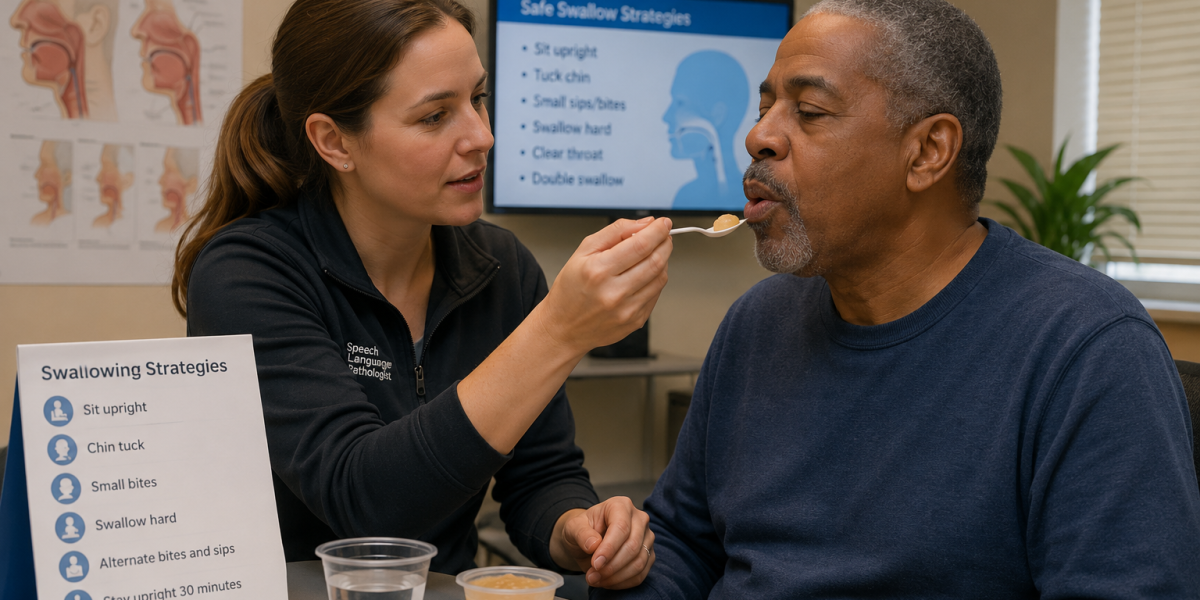
- Postural strategies: Positioning techniques — including chin tuck, head rotation, and side-lying — that redirect bolus flow and reduce aspiration risk during swallowing (Adzimová et al., 2025)
- Dietary texture modification: Recommending modified food textures and thickened liquids according to the IDDSI (International Dysphagia Diet Standardisation Initiative) framework to enable safer oral intake
- Thermal-tactile stimulation: Cold or textured stimulation to the anterior faucal pillars to facilitate swallow initiation in neurogenic dysphagia
- Neuromuscular electrical stimulation (NMES): Electrical stimulation to swallowing musculature used as an adjunct to exercise-based rehabilitation in some dysphagia populations
- Caregiver and family training: Teaching family members and care staff safe feeding techniques, positioning strategies, signs of aspiration, and appropriate diet texture preparation
- Prehabilitation: For head and neck cancer patients, SLP delivers pre-treatment swallowing exercise programs that protect swallowing function during radiation therapy
For Patients & Families
- SLP swallowing assessment is not painful or invasive. The clinical bedside assessment involves watching you swallow small amounts of food and liquid of varying textures (Speyer et al., 2022)
- Swallowing exercises work — but they require consistent daily practice. Your SLP will teach you the specific exercises for your swallowing problem. Doing them daily produces significantly better outcomes (Adzimová et al., 2025)
- A modified texture diet is not a punishment — it is a safety measure. Your SLP will work with you and your dietitian to ensure your modified diet is nutritious, appetizing, and appropriate for your swallowing function
- Caregiver training from SLP is essential. The techniques used to support safe swallowing at mealtimes need to be consistently applied by everyone who assists with feeding
For Clinicians
- A 2022 systematic review and meta-analysis of RCTs confirmed that SLP-delivered behavioural interventions significantly improve swallowing outcomes in adults with oropharyngeal dysphagia (Speyer et al., 2022). Dysphagia rehabilitation referral should be standard for any patient with identified or suspected oropharyngeal dysphagia.
- A 2025 systematic review and meta-analysis confirmed significant treatment effects from swallowing maneuvers, exercises, and postural strategies as standalone interventions (Adzimová et al., 2025). The evidence base for behavioral swallowing rehabilitation has strengthened substantially and should inform clinical practice guidelines.
- Post-stroke dysphagia management is among the best-evidenced areas in SLP practice. A 2023 Bayesian network meta-analysis confirmed significant superiority of multiple non-pharmacological interventions over standard care for post-stroke dysphagia (Zhu et al., 2023).
8. Occupational Therapy in Dysphagia
Occupational therapy addresses the functional and daily living consequences of dysphagia — focusing on how swallowing difficulties affect the person’s ability to eat, drink, and participate in mealtimes independently and safely. While SLP leads swallowing assessment and rehabilitation, OT plays a critical role in the adaptive, environmental, and equipment dimensions of dysphagia management (Xue et al., 2024).
Key areas of OT contribution to dysphagia management include:
- Adaptive feeding equipment: OT assesses and prescribes adaptive utensils, plates, cups,
 and feeding aids that support safe and independent eating despite swallowing difficulties, tremor, weakness, or limited hand function. This includes weighted utensils, angled spoons, non-spill cups, plate guards, and dysphagia cups designed to control liquid flow rate
 - Positioning and seating: OT assesses and optimizes the person’s seating and positioning for mealtimes — ensuring upright posture, appropriate head and neck alignment, and supported trunk position that maximizes swallowing safety and efficiency
- Mealtime environment modification: OT modifies the mealtime environment to reduce distraction, minimize cognitive load during eating, and support focused, safe swallowing — particularly important for people with cognitive impairment and dysphagia
- Feeding assistance and caregiver training: OT trains caregivers in safe feeding assistance techniques — including pacing, bite size, positioning, monitoring for signs of aspiration, and responding to choking
- ADL assessment and intervention: A 2024 systematic review confirmed dysphagia is significantly associated with ADL decline in older adults (Xue et al., 2024). OT addresses the broader functional impact of dysphagia — including meal preparation, grocery shopping for appropriate foods, and maintaining independence in self-feeding
- Cognitive and behavioral strategies: For people with dementia or cognitive impairment and dysphagia, OT develops strategies to support safe swallowing behaviors — including structured mealtime routines, appropriate food presentation, and strategies to manage distraction and food refusal
- Home assessment and modification: OT assesses the home kitchen and dining environment for safety and accessibility, recommending modifications that support safe meal preparation and eating with dysphagia
For Patients & Families
- If your family member is struggling to feed themselves safely, or if mealtimes have become stressful or unsafe, ask for an OT referral alongside SLP. OT addresses the practical, equipment, and positioning aspects of mealtime safety
- Sitting upright at 90 degrees with feet supported and head in a neutral position is the safest swallowing posture for most people. Ask your OT or SLP to advise on the best positioning for your specific situation
- Adaptive feeding equipment from OT can make a significant difference to independence and safety at mealtimes — weighted utensils, angled spoons, and dysphagia cups are all practical tools that help
- Never rush someone with dysphagia during mealtimes. Pacing, small bites, alternating food and liquid, and checking that each swallow is complete before the next bite all reduce aspiration risk
9. Swallowing Rehabilitation: What the Evidence Shows
The evidence base for dysphagia rehabilitation has strengthened substantially in recent years, with multiple high-quality systematic reviews and meta-analyses confirming significant treatment effects from SLP-delivered behavioural interventions (Speyer et al., 2022; Adzimová et al., 2025; Zhu et al., 2023; Chen et al., 2024).
A 2022 systematic review and meta-analysis incorporating only RCTs found that behavioural swallowing interventions — including exercises, manoeuvres, and dietary modifications — produced significant improvements in swallowing outcomes in adults with oropharyngeal dysphagia (Speyer et al., 2022). A 2025 systematic review and meta-analysis confirmed significant effects of swallowing manoeuvres, exercises, and postural strategies as standalone interventions (Adzimová et al., 2025). A 2023 Bayesian network meta-analysis found that multiple non-pharmacological interventions — including traditional swallowing training, neuromuscular electrical stimulation, and acupuncture-assisted therapy — were significantly superior to standard care for post-stroke dysphagia (Zhu et al., 2023).
Evidence-supported interventions for dysphagia:
- Swallowing exercises: Tongue strengthening, Shaker exercise, Mendelsohn manoeuvre, effortful swallow — all with evidence from RCTs for specific dysphagia populations (Adzimová et al., 2025)
- Postural strategies: Chin tuck, head rotation, and side-lying — evidence-supported compensatory strategies that reduce aspiration risk during swallowing (Adzimová et al., 2025)
- Traditional swallowing training: The most consistently supported intervention for post-stroke dysphagia in network meta-analysis (Zhu et al., 2023)
- Neuromuscular electrical stimulation (NMES): Significant evidence in select populations as an adjunct to exercise-based rehabilitation (Zhu et al., 2023)
- Swallowing rehabilitation for post-extubation dysphagia: A 2024 systematic review and meta-analysis confirmed that swallowing therapy significantly reduces dysphagia severity, time to oral intake, and aspiration pneumonia risk in critically ill patients with post-extubation dysphagia (Chen et al., 2024)
- Dietary texture modification: IDDSI-based texture modification combined with patient and caregiver education reduces aspiration risk and supports adequate nutritional intake (Rivelsrud et al., 2023)
For Clinicians
- A 2025 systematic review and meta-analysis confirmed significant treatment effects from swallowing manoeuvres, exercises, and postural strategies as standalone interventions for oropharyngeal dysphagia (Adzimová et al., 2025). These interventions should be core components of dysphagia rehabilitation programs.
- A 2023 Bayesian network meta-analysis of non-pharmacological interventions for post-stroke dysphagia found traditional swallowing training and NMES to be the most effective approaches compared to standard care (Zhu et al., 2023). Evidence-based treatment selection should be guided by available systematic review evidence for specific dysphagia populations.
- A 2024 systematic review and meta-analysis confirmed that swallowing rehabilitation significantly reduces dysphagia severity, time to oral intake, and aspiration pneumonia risk in critically ill patients with post-extubation dysphagia (Chen et al., 2024). Routine SLP swallowing screening and rehabilitation should be standard in ICU settings for patients with prolonged intubation.
10. What Patients and Families Can Do
- Recognize the warning signs and seek evaluation promptly. Coughing during meals, a wet voice, unexplained weight loss, or recurrent chest infections in someone with a neurological condition all warrant SLP evaluation (Bosch et al., 2023)
- Request SLP evaluation early. Early identification and treatment of dysphagia significantly reduces the risk of aspiration pneumonia, malnutrition, and functional decline (Speyer et al., 2022)
- Follow swallowing recommendations consistently. Texture-modified diets, thickened liquids, and positioning recommendations are prescribed for safety. Deviating from them — even occasionally — significantly increases aspiration risk
- Do swallowing exercises daily. Swallowing rehabilitation requires consistent daily practice to produce and maintain improvements. Treat swallowing exercises with the same commitment as physical rehabilitation (Adzimová et al., 2025)
- Maintain good oral hygiene. Regular teeth brushing, denture cleaning, and oral care significantly reduces the bacterial load in the mouth and the severity of aspiration pneumonia if aspiration does occur (Bosch et al., 2023)
- Make mealtimes safe and calm. Avoid rushing, ensure appropriate positioning, take small bites, alternate food and liquid, and allow adequate time for swallowing between each mouthful
- Ask for OT assessment for mealtime equipment and positioning. Adaptive feeding equipment and optimal seating position from OT significantly support safe and independent eating
When to Request SLP or OT Referral
- Any coughing, choking, or wet voice during or after eating or drinking — SLP evaluation (Speyer et al., 2022)
- Following stroke, traumatic brain injury, or other acute neurological event — SLP swallowing screening before oral feeding begins (Bosch et al., 2023)
- Progressive neurological conditions — Parkinson’s disease, dementia, ALS, MS — routine SLP monitoring as the disease progresses
- Before and during head and neck cancer treatment — SLP prehabilitation and ongoing dysphagia monitoring (Adzimová et al., 2025)
- Following prolonged mechanical ventilation in ICU, SLP screening for post-extubation dysphagia (Chen et al., 2024)
- Unexplained weight loss, dehydration, or recurrent chest infections, SLP evaluation to rule out dysphagia as a contributing cause
- When mealtimes are becoming difficult, unsafe, or stressful — OT for adaptive equipment, positioning, and mealtime strategies (Xue et al., 2024)
- When self-feeding independence is declining — OT for adaptive equipment assessment and caregiver training
- At admission to aged care — routine dysphagia screening by SLP given prevalence of 56% in this population (Roberts et al., 2024)
11. A Note for Clinicians
Dysphagia is one of the most prevalent and consequential conditions managed across healthcare settings, yet it remains significantly underidentified and undertreated. Pooled meta-analytic evidence confirms dysphagia prevalence of 13% in community settings, 37% in hospitals, and 56% in aged care facilities (Doan et al., 2022; Rivelsrud et al., 2023; Roberts et al., 2024). Despite this, routine dysphagia screening is not universally implemented across these settings.
The consequences of untreated dysphagia are severe. Dysphagia is significantly associated with aspiration pneumonia, in-hospital mortality, malnutrition, ADL decline, and reduced quality of life (Bosch et al., 2023; Xue et al., 2024). These consequences are largely preventable through timely identification and evidence-based rehabilitation.
The evidence base for dysphagia rehabilitation is robust and growing. Systematic reviews and meta-analyses confirm significant treatment effects from swallowing exercises, manoeuvres, postural strategies, and combined approaches (Speyer et al., 2022; Adzimová et al., 2025; Zhu et al., 2023; Chen et al., 2024). SLP-delivered swallowing rehabilitation should be standard of care for identified oropharyngeal dysphagia across all clinical settings.
OT contributes a distinct and important role in dysphagia management through adaptive feeding, positioning, cognitive and mealtime strategies, and ADL support. Given the confirmed association between dysphagia and ADL decline (Xue et al., 2024), routine OT involvement alongside SLP in dysphagia management is warranted — particularly in aged care, neurology, and oncology settings.
Related Pages on TherapyTopics
- Adaptive Feeding — OT-led adaptive feeding equipment, positioning, and mealtime strategies for adults with swallowing and self-feeding difficulties
- Stroke Recovery — Post-stroke dysphagia is one of the most common and serious consequences of stroke, requiring prompt SLP evaluation
- Parkinson’s Disease — Dysphagia affects the majority of people with Parkinson’s and is a leading cause of aspiration pneumonia in this population
- Traumatic Brain Injury — Dysphagia is common following TBI and requires integrated SLP and OT management
- Multiple Sclerosis — Dysphagia is frequently underrecognized in MS and warrants routine screening in brainstem or advanced MS
- Cancer Rehabilitation — Head and neck cancer produces some of the most complex dysphagia presentations requiring intensive SLP intervention
- Dementia & Alzheimer’s Disease — Dysphagia is nearly universal in advanced dementia and requires specialist SLP and OT management
12. References
- Adzimová, S., Speyer, R., Cordier, R., Windsor, C., Korim, Ž., & Tedla, M. (2025). Evaluating behavioural interventions for oropharyngeal dysphagia in adults: A systematic review and meta-analysis of swallowing manoeuvres, exercises, and postural techniques. Journal of Clinical Medicine, 14(20), 7180. https://doi.org/10.3390/jcm14207180
- Bosch, G., Comas, M., Domingo, L., Guillen-Sola, A., Duarte, E., Castells, X., & Sala, M. (2023). Dysphagia in hospitalized patients: Prevalence, related factors and impact on aspiration pneumonia and mortality. European Journal of Clinical Investigation, 53(4), e13930. https://doi.org/10.1111/eci.13930
- Chen, L., Liu, C., Yuan, M., Yin, X., Niu, S., Tang, J., Chen, H., Xiong, B., & Feng, X. (2024). Interventions for postextubation dysphagia in critically ill patients: A systematic review and meta-analysis. Dysphagia, 39(6), 1013–1024. https://doi.org/10.1007/s00455-024-10695-1
- Doan, T.-N., Ho, W.-C., Wang, L.-H., Chang, F.-C., Thanh Nhu, N., & Chou, L.-W. (2022). Prevalence and methods for assessment of oropharyngeal dysphagia in older adults: A systematic review and meta-analysis. Journal of Clinical Medicine, 11(9), 2605. https://doi.org/10.3390/jcm11092605
- Ribeiro, M., Miquilussi, P. A., Gonçalves, F. M., Taveira, K. V. M., Stechman-Neto, J., Nascimento, W. V., Miranda de Araujo, C., Deliga Schroder, A. G., Massi, G., & Santos, R. S. (2024). The prevalence of oropharyngeal dysphagia in adults: A systematic review and meta-analysis. Dysphagia, 39(2), 163–176. https://doi.org/10.1007/s00455-023-10608-8
- Rivelsrud, M. C., Hartelius, L., Bergström, L., Løvstad, M., & Speyer, R. (2023). Prevalence of oropharyngeal dysphagia in adults in different healthcare settings: A systematic review and meta-analyses. Dysphagia, 38(1), 76–121. https://doi.org/10.1007/s00455-022-10465-x
- Roberts, H., Lambert, K., & Walton, K. (2024). The prevalence of dysphagia in individuals living in residential aged care facilities: A systematic review and meta-analysis. Healthcare, 12(6), 649. https://doi.org/10.3390/healthcare12060649
- Speyer, R., Cordier, R., Sutt, A.-L., Remijn, L., Heijnen, B. J., Balaguer, M., Pommée, T., McInerney, M., & Bergström, L. (2022). Behavioural interventions in people with oropharyngeal dysphagia: A systematic review and meta-analysis of randomised clinical trials. Journal of Clinical Medicine, 11(3), 685. https://doi.org/10.3390/jcm11030685
- Xue, W., He, X., Su, J., Li, S., & Zhang, H. (2024). Association between dysphagia and activities of daily living in older adults: A systematic review and meta-analysis. European Geriatric Medicine, 15(6), 1555–1571. https://doi.org/10.1007/s41999-024-00999-8
- Zhu, H., Deng, X., Luan, G., Zhang, Y., & Wu, Y. (2023). Comparison of efficacy of non-pharmacological interventions for post-stroke dysphagia: A systematic review and Bayesian network meta-analysis. BMC Neuroscience, 24, 53. https://doi.org/10.1186/s12868-023-00825-0
© TherapyTopics.com — All information is for educational purposes only and does not constitute medical or therapeutic advice. Consult a licensed therapist or physician for evaluation and treatment.