
Key Takeaways
- Stroke affects approximately 795,000 Americans annually — roughly 610,000 of those are first-time events (Martin et al., 2024)
- Approximately 87% of strokes are ischemic (clot-related); 13% are hemorrhagic (bleeding-related) (Martin et al., 2024)
- Stroke is the primary cause of acquired long-term disability in the United States (Martin et al., 2024)
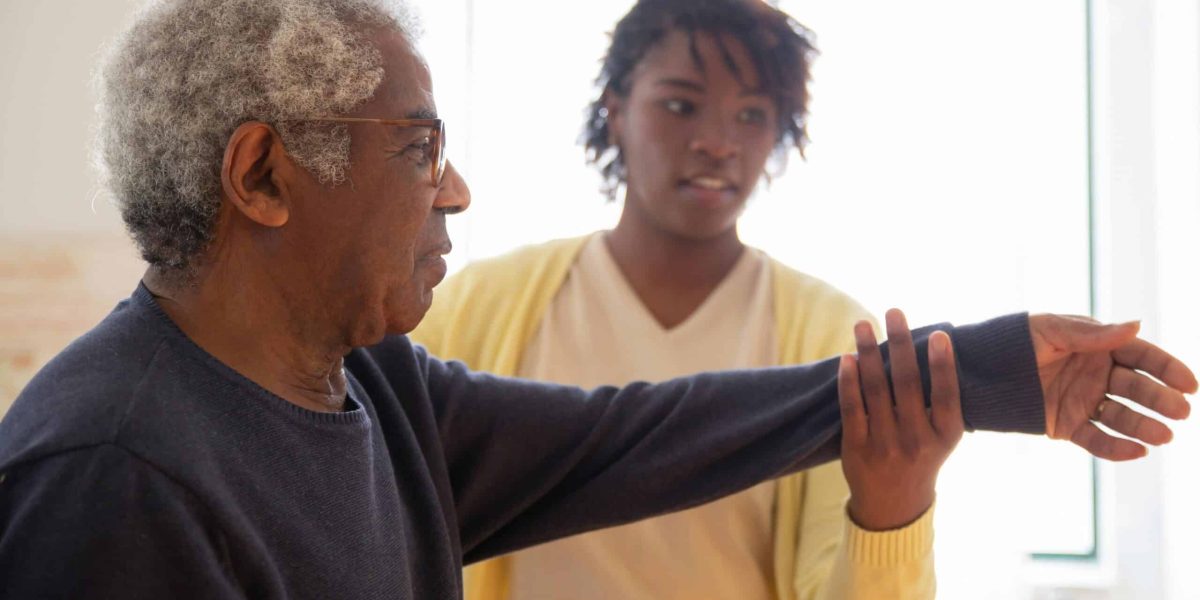
- Upper extremity hemiparesis affects approximately 80–85% of stroke survivors acutely (Tang et al., 2024)
- Dysphagia (swallowing difficulty) affects 37–78% of acute stroke survivors and is a leading cause of aspiration pneumonia (Boaden et al., 2021)
- Post-stroke depression affects approximately 27% of survivors and is associated with poorer functional recovery (Liu et al., 2023)
- Neuroplasticity — the brain’s capacity to reorganize — is the biological basis for stroke recovery and continues for years post-stroke (Aderinto et al., 2023)
- Early initiation of multidisciplinary rehabilitation — OT, PT, and SLP — is one of the strongest predictors of functional recovery after stroke
Important
The information on this page is educational only and is not a substitute for a clinical evaluation or individualized rehabilitation plan. If you or someone you care for has experienced a stroke, speak with your physician or neurologist about a referral to occupational therapy, physical therapy, and speech-language pathology as soon as possible — early rehabilitation produces the best outcomes.
Table of Contents
- What Is Stroke?
- Types of Stroke and Neurological Impact
- Neuroplasticity: The Foundation of Recovery
- The Stroke Rehabilitation Team
- Occupational Therapy After Stroke
- Physical Therapy After Stroke
- Speech-Language Pathology After Stroke
- Post-Stroke Depression and Emotional Recovery
- Supporting Recovery at Home: Guidance for Caregivers
- What Families Can Do
- A Note for Clinicians
- References
1. What Is Stroke?
Stroke is defined as an acute disruption of cerebral blood flow due to either ischemic occlusion (a clot blocking an artery supplying the brain) or hemorrhagic rupture (a blood vessel bursting within or around the brain). It is the fifth leading cause of death and the primary cause of acquired long-term disability in the United States (Martin et al., 2024).
According to the American Heart Association, approximately 795,000 Americans experience a stroke each year, with roughly 610,000 of those being first-time events. Approximately 87% of all strokes are ischemic in origin, while the remaining 13% are hemorrhagic (Martin et al., 2024).
The consequences of stroke vary widely depending on the location and extent of brain injury, but commonly include motor impairments, cognitive deficits, communication disorders, dysphagia (swallowing difficulty), and reduced independence in activities of daily living (ADLs). For survivors and their families, navigating the rehabilitation process can be overwhelming — but evidence clearly shows that early, intensive, multidisciplinary rehabilitation significantly improves outcomes (Martin et al., 2024; Murrell et al., 2021).
This page provides an evidence-based overview of stroke rehabilitation across occupational therapy (OT), physical therapy (PT), and speech-language pathology (SLP). It is intended to help patients, caregivers, and families understand what to expect from the rehabilitation process, what each discipline contributes, and how to support recovery at home.
2. Types of Stroke and Neurological Impact
Understanding the type of stroke that has occurred is important for both prognosis and rehabilitation planning. The two main types — ischemic and hemorrhagic — differ in cause, severity, and typical recovery pattern (Martin et al., 2024).
Ischemic stroke accounts for approximately 87% of all strokes. It occurs when a blood clot obstructs an artery supplying the brain, cutting off oxygen and causing brain cell death in the affected area. Depending on which cerebral territory is affected, survivors may present with hemiplegia or hemiparesis (one-sided weakness or paralysis), hemisensory loss (reduced sensation on one side), aphasia (language impairment), hemispatial neglect (unawareness of one side of space), or visual field deficits (Martin et al., 2024).
Hemorrhagic stroke accounts for approximately 13% of strokes and results from rupture of a blood vessel within or around the brain. While less common, hemorrhagic strokes tend to produce more severe initial deficits and carry higher mortality rates. Survivors frequently present with significant motor, cognitive, and behavioral impairments requiring intensive, long-term rehabilitation (Martin et al., 2024).
Transient ischemic attack (TIA) — sometimes called a mini-stroke — produces stroke-like symptoms that resolve within 24 hours. TIA is a medical emergency and a strong predictor of future stroke. Anyone experiencing TIA symptoms should seek immediate emergency care.
Recognizing Stroke — Act FAST
- F — Face drooping: Is one side of the face drooping or numb? Ask the person to smile — is it uneven?
- A — Arm weakness: Is one arm weak or numb? Ask the person to raise both arms — does one drift downward?
- S — Speech difficulty: Is speech slurred, strange, or hard to understand?
- T — Time to call 9-1-1: If any of these signs are present, call 9-1-1 immediately. Every minute counts — faster treatment means less brain damage.
3. Neuroplasticity: The Foundation of Recovery
Recovery from stroke is made possible by neuroplasticity — the brain’s inherent capacity to reorganize neural pathways in response to experience, repetition, and practice. When stroke damages one region of the brain, neuroplasticity allows other regions to take over some of its functions, rebuilding connections and restoring abilities that were lost (Aderinto et al., 2023).
A 2023 narrative review confirmed that repetitive, task-specific practice is the primary driver of cortical remapping and functional recovery after stroke. Critically, the review also confirmed that neuroplasticity continues for months to years post-stroke — meaning meaningful recovery remains possible well beyond the acute phase and the traditional “six-month window” that was historically cited as the limit of recovery (Aderinto et al., 2023).
This has important clinical and personal implications. Every therapy session, every practice repetition at home, and every effort to attempt a task independently contributes to neuroplastic recovery. The brain is not static after stroke — it is actively rewiring, and the quality and quantity of practice directly influence how much rewiring occurs (Aderinto et al., 2023).
For Patients & Families
- Recovery does not stop at six months — neuroplasticity continues for years, and people continue to make meaningful gains in the chronic phase of stroke (Aderinto et al., 2023)
- Repetition matters — the more a movement or skill is practiced, the stronger the neural pathways supporting it become
- Attempting tasks independently — even imperfectly — drives more neuroplastic change than having someone do the task for you
- If your loved one has plateaued, request a re-evaluation — a change in approach, intensity, or setting can reignite progress
4. The Stroke Rehabilitation Team
Effective stroke rehabilitation requires a coordinated, multidisciplinary team because stroke affects nearly every domain of human function — movement, communication, cognition, swallowing, mood, and independence in daily life. No single discipline can address all of these areas alone (Martin et al., 2024; Murrell et al., 2021).
- Occupational therapy (OT): Restores independence in activities of daily living, upper extremity function, cognitive performance, home safety, and community reintegration
- Physical therapy (PT): Addresses mobility, strength, balance, gait, and fall prevention
- Speech-language pathology (SLP): Evaluates and treats communication disorders (aphasia, dysarthria), cognitive-communication impairments, and swallowing dysfunction (dysphagia)
- Neurology/physiatry: Medical management of the stroke, spasticity, seizures, and coordination of the rehabilitation plan
- Rehabilitation nursing: ADL support, medication management, bowel and bladder care, and patient and family education during inpatient rehabilitation
- Neuropsychology: Comprehensive cognitive and psychological assessment and treatment of post-stroke cognitive and emotional disorders
- Social work: Discharge planning, community resource coordination, caregiver support, and insurance navigation
Rehabilitation takes place across a continuum of settings — from the acute hospital, to inpatient rehabilitation facilities, to skilled nursing facilities, to outpatient clinics, to home health, and finally to community-based programs. The setting changes as the survivor’s needs and abilities evolve, but the multidisciplinary team approach remains constant throughout (Murrell et al., 2021).
5. Occupational Therapy After Stroke
Occupational therapists play a central role in stroke rehabilitation, focusing on restoring the ability to perform meaningful daily activities — from self-care and meal preparation to driving and returning to work. A 2021 scoping review confirmed that OT interventions significantly improve ADL performance, upper extremity function, and community reintegration outcomes in adult stroke survivors (Murrell et al., 2021).
Upper Extremity Rehabilitation
Upper extremity (UE) hemiparesis is one of the most common and disabling consequences of stroke, affecting approximately 80–85% of survivors in the acute phase (Tang et al., 2024). OT interventions for UE recovery include:
- Constraint-Induced Movement Therapy (CIMT): A high-intensity intervention in which the unaffected arm is restrained to force use of the affected limb, supported by strong evidence for improving motor function and cortical reorganization
- Task-Specific Training: Repetitive practice of functional arm and hand tasks — reaching, grasping, writing — to drive neuroplastic change (Aderinto et al., 2023)
- Neuromuscular Electrical Stimulation (NMES): Applied to weakened muscles to facilitate motor re-education and reduce spasticity
- Splinting and Positioning: Used to prevent contracture (permanent shortening of muscle), manage spasticity, and maintain joint alignment
- Mirror Therapy: Using visual feedback from the unaffected limb to stimulate neural pathways for the affected limb
Activities of Daily Living (ADL) Retraining
A core OT focus is restoring independence in self-care tasks including dressing, bathing and shower safety, grooming, toileting, and meal preparation. OTs use a combination of remediation (restoring the underlying skill), compensation (teaching alternative methods), and adaptation (modifying the task or environment) to maximize functional independence (Murrell et al., 2021).
Cognitive Rehabilitation
Stroke frequently causes deficits in attention, memory, executive function (planning and problem-solving), and visuospatial processing (understanding where objects are in space). OTs address these through structured cognitive retraining, compensatory strategy training — such as use of calendars, checklists, and alarms — and environmental modifications to support safe daily function.
Home Assessment and Modification
Prior to discharge, OTs conduct comprehensive home assessments to identify safety hazards and recommend modifications — including grab bar installation, removal of fall hazards, adaptive equipment, and ramp access — to support safe community reintegration (Murrell et al., 2021).
For Patients & Families
- OT should start as soon as the person is medically stable — often within 24–48 hours of admission — even if it begins with simple bed exercises and sitting balance
- OT continues after hospital discharge — in inpatient rehabilitation, outpatient clinics, or home health — and should not stop simply because insurance limits have been reached if functional goals remain
- Ask your OT specifically about home modifications before discharge — grab bars, ramps, and adaptive equipment can make the difference between safe independent living and needing around-the-clock assistance
- Practicing the skills learned in OT sessions at home every day is essential — repetition at home is what drives neuroplastic recovery between sessions (Aderinto et al., 2023)
For Clinicians
- CIMT has the strongest evidence base for upper extremity motor recovery in stroke survivors with at least minimal wrist and finger extension — confirm eligibility before recommending (Tang et al., 2024).
- Task-specific training should be high-repetition and functionally meaningful to the individual survivor — generic exercise without occupational context produces inferior neuroplastic outcomes (Aderinto et al., 2023).
- Home assessment before discharge is a high-yield intervention — falls in the first 6 months post-discharge are common and often preventable with appropriate environmental modification and adaptive equipment (Murrell et al., 2021).
- Cognitive assessment is essential at every stage — stroke-related cognitive deficits are frequently underidentified and significantly affect rehabilitation participation and ADL safety.
6. Physical Therapy After Stroke
Physical therapists focus on restoring mobility, strength, balance, and gait following stroke. PT intervention begins in the acute phase with bed mobility and sitting balance, progressing through standing, transfers, ambulation, and stair negotiation as the survivor’s capacity allows.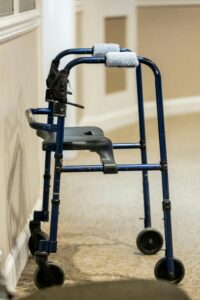
Gait Retraining
Impaired gait is among the most significant functional consequences of stroke, affecting independence, safety, and community participation. Evidence-based PT gait interventions include:
- Body Weight Supported Treadmill Training (BWSTT): Partial unweighting via a harness allows early gait practice before full weight-bearing capacity is restored
- Functional Electrical Stimulation (FES): Applied to the peroneal nerve to address foot drop — one of the most common post-stroke gait deviations — improving walking speed and reducing fall risk
- Robotic-Assisted Gait Training: Emerging evidence supports the use of robotic exoskeletons for high-repetition gait practice in survivors with moderate to severe impairment
- Overground Gait Training: Task-specific walking practice in varied environments, progressing to community distances and uneven terrain to prepare for real-world participation
Balance and Fall Prevention
Stroke survivors face a significantly elevated fall risk due to impaired balance, reduced proprioception (sense of body position), and gait instability. PT balance interventions include progressive static and dynamic balance training, perturbation training, and dual-task practice — doing two things simultaneously, which reflects real-world demands. Fall prevention strategies including home hazard assessment and assistive device prescription are coordinated with OT.
Spasticity Management
Post-stroke spasticity — involuntary muscle stiffness and resistance to movement — affects approximately 25–43% of survivors between two weeks and three months following stroke, and is associated with significantly higher healthcare costs and reduced ADL independence (Anupindi et al., 2024; Zeng et al., 2021). PT interventions include prolonged stretching, splinting, positioning, and coordination with medical management such as botulinum toxin (Botox) injections when indicated.
For Patients & Families
- Walking ability is one of the most important goals for most stroke survivors — ask your PT specifically what the plan is for gait retraining and what you can practice at home between sessions
- Spasticity is neurological — not stubbornness or lack of effort. If your loved one’s affected limb feels stiff or resistant to movement, report this to the PT and physician promptly — early treatment produces better outcomes (Anupindi et al., 2024)
- Fall prevention should begin in the hospital — ask the PT about assistive devices, footwear recommendations, and home modifications before discharge
- PT does not end at discharge — outpatient PT for gait, balance, and strength can continue to produce gains for months and years after stroke (Aderinto et al., 2023)
For Clinicians
- Spasticity management requires a coordinated approach — PT stretching and positioning alone are insufficient for moderate-severe spasticity. Early referral for botulinum toxin consideration is appropriate when functional limitation is present (Anupindi et al., 2024; Zeng et al., 2021).
- Gait speed is a highly sensitive functional outcome measure in stroke — the 10-Meter Walk Test and 6-Minute Walk Test provide objective baseline and progress data that should be documented at each episode of care.
- Dual-task training — walking while performing a cognitive task — more closely replicates real-world demands and should be incorporated once basic gait safety is established.
- Fall risk assessment should be performed and documented at every transition of care — hospital discharge, rehabilitation discharge, and outpatient initiation.
7. Speech-Language Pathology After Stroke
Speech-language pathologists (SLPs) address communication, cognitive-communication, and swallowing disorders following stroke — three areas that profoundly affect quality of life, safety, and rehabilitation participation.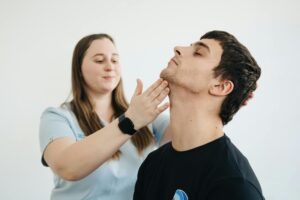
Aphasia
Aphasia is an acquired language disorder affecting the ability to speak, understand spoken language, read, and write. It is a common and disabling consequence of stroke affecting the left hemisphere of the brain. Evidence-based SLP treatment approaches include semantic feature analysis (a structured word-finding technique), constraint-induced language therapy (intensive, massed practice of verbal communication), and supported communication training — all shown to improve language outcomes. Aphasia does not affect intelligence — it affects the ability to use and understand language.
Dysarthria
Dysarthria is a motor speech disorder resulting from weakness or incoordination of the speech musculature, affecting the clarity and intelligibility of speech. SLP interventions include breath support training, articulation exercises, rate control strategies, and augmentative and alternative communication (AAC) — such as communication boards or speech-generating devices — when needed to support functional communication.
Dysphagia
Dysphagia (swallowing difficulty) affects 37–78% of acute stroke survivors — one of the widest prevalence ranges in the stroke literature, reflecting variation in screening methods and timing of assessment (Boaden et al., 2021). The consequences of untreated dysphagia include aspiration pneumonia (food or liquid entering the airway and lungs), malnutrition, dehydration, and significantly increased mortality risk. SLP evaluation using clinical bedside assessment and instrumental studies such as the modified barium swallow (MBS) study is essential to determine the nature and severity of swallowing dysfunction and guide safe oral intake. Early dysphagia screening within 24 hours of hospital admission is recommended as standard of care (Boaden et al., 2021).
For Patients & Families
- Aphasia does not mean the person has lost their intelligence or personality — they know what they want to say but the language system has been damaged. Patience, time, and a calm environment make communication easier
- Never give food or liquid by mouth to a stroke survivor who has not been cleared by an SLP — aspiration (food entering the airway) can occur silently without coughing and can cause life-threatening pneumonia (Boaden et al., 2021)
- AAC devices — from simple picture boards to high-tech speech-generating devices — can restore meaningful communication for people with severe aphasia or dysarthria. Ask the SLP about options.
- Communication practice at home matters — talking with your loved one, reading aloud, and using supported communication strategies taught by the SLP all contribute to language recovery
For Clinicians
- Dysphagia screening within 24 hours of admission is standard of care and should precede any oral intake — including medications. A validated bedside screening tool (e.g., GUSS, Toronto Bedside Swallowing Screening Test) should be used (Boaden et al., 2021).
- Silent aspiration — aspiration without a reflexive cough — occurs in a significant proportion of stroke survivors with dysphagia. Clinical bedside assessment alone may miss silent aspirators; instrumental assessment (MBS or FEES) is indicated when clinical findings are equivocal.
- Aphasia is frequently underdiagnosed in cognitively impaired or minimally verbal survivors — distinguish aphasia from dysarthria and cognitive-communication disorder, as they require different SLP treatment approaches.
- Post-stroke cognitive-communication impairments — affecting attention, memory, and executive function in the context of communication — are common after right hemisphere stroke and should be assessed even when primary language appears intact.
8. Post-Stroke Depression and Emotional Recovery
Post-stroke depression (PSD) is one of the most common and most undertreated consequences of stroke. Approximately 27% of stroke survivors develop depression following their stroke, and PSD is strongly associated with poorer rehabilitation participation, slower functional recovery, reduced quality of life, and increased mortality (Liu et al., 2023).
PSD is not simply an understandable sadness about having had a stroke — it is a neurobiological condition resulting from both the psychological impact of the event and the direct neurological effects of brain injury on mood-regulating circuits. It is a medical condition that responds to treatment, and it should be identified and addressed as part of the rehabilitation plan (Liu et al., 2023).
Signs of post-stroke depression include persistent low mood, tearfulness, withdrawal from therapy or social interaction, loss of motivation, sleep disturbance, loss of appetite, and feelings of hopelessness. These signs should be reported to the medical team promptly — not normalized as an expected part of stroke recovery.
Treatment approaches for PSD include antidepressant medication, individual and group psychotherapy, exercise — which has the strongest non-pharmacological evidence for improving mood — and social engagement. Peer support programs connecting stroke survivors with others who have had similar experiences are increasingly recognized as effective (Liu et al., 2023).
For Patients & Families
- Post-stroke depression is a medical condition — not a character weakness or a sign of giving up. It is common, treatable, and should be reported to the care team (Liu et al., 2023)
- Watch for signs of depression in your loved one — withdrawal, loss of motivation, persistent sadness, and refusal to participate in therapy are all warning signs that warrant prompt attention
- Caregivers are also at high risk for depression and burnout — your mental health matters too. Seek support through caregiver programs, counseling, or respite services
- Social connection, meaningful activity, and regular exercise are powerful mood supports — help your loved one stay engaged with people and activities that matter to them, even in modified forms
9. Supporting Recovery at Home: Guidance for Caregivers
Family caregivers play an indispensable role in stroke recovery. The quality and consistency of support at home — implementing therapy recommendations, encouraging active participation, and monitoring for complications — directly influences functional outcomes. Research consistently shows that caregiver involvement in the rehabilitation process is one of the strongest predictors of successful community reintegration after stroke (Murrell et al., 2021; Aderinto et al., 2023). 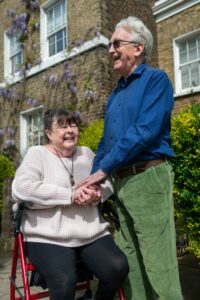
Key caregiving principles include:
- Encourage active participation: Allow the survivor to attempt tasks independently before offering assistance. The effort of attempting movement — even imperfect movement — drives neuroplastic recovery. Doing tasks for the person may feel kind but slows their recovery (Aderinto et al., 2023)
- Establish consistent routines: Predictable daily schedules support cognitive rehabilitation, reduce confusion and fatigue, and create regular opportunities for skill practice
- Implement home recommendations: Follow through on home modification and adaptive equipment recommendations from OT and PT. These are not optional extras — they are clinically essential for safety and independence (Murrell et al., 2021)
- Monitor for depression: Post-stroke depression affects approximately 27% of survivors (Liu et al., 2023). Report persistent sadness, withdrawal, or loss of motivation to the medical team promptly — do not normalize these signs
- Attend therapy sessions when possible: Observing therapy allows caregivers to learn the techniques, reinforce strategies at home, and ask questions directly of the therapist
- Practice therapy exercises at home: The repetition of exercises and functional tasks between sessions is what drives neuroplastic recovery — a single therapy session is not enough on its own
- Prioritize your own wellbeing: Caregiver burnout is common and directly affects the quality of care provided. Seek support through caregiver education programs, counseling, and respite services
For Patients & Families
- The American Stroke Association (stroke.org) offers stroke survivor and caregiver resources, support groups, and educational programs at no cost
- Stroke support groups — in person and online — connect survivors and families with others who understand their experience and can share practical strategies
- Home health services including OT, PT, and SLP can be delivered in your home after hospital discharge — ask your discharge planner about eligibility, particularly if the survivor is homebound
- If a family member has had a stroke and has not yet received a full evaluation by OT, PT, and SLP, speak with their physician or neurologist today — it is never too late to request rehabilitation services
10. What Families Can Do
Family involvement is consistently identified as one of the strongest predictors of successful stroke recovery. Families who are informed, engaged, and consistent in their support at home make a measurable difference in rehabilitation outcomes (Murrell et al., 2021; Aderinto et al., 2023).
- Act immediately after stroke onset: Call 9-1-1 at the first sign of stroke symptoms. Every minute of delayed treatment results in further brain damage. The clot-busting medication tPA must be given within hours of symptom onset to be effective.
- Ask for multidisciplinary rehabilitation early: If OT, PT, and SLP evaluations have not been initiated within the first 48 hours of hospitalization, ask the care team why and advocate for early referral
- Attend discharge planning meetings: Understand the discharge plan, what services are being arranged, and what your role will be at home before your loved one leaves the hospital
- Follow through on all therapy recommendations: Home exercise programs, adaptive equipment, medication schedules, dietary modifications for dysphagia, and follow-up appointments are all part of the rehabilitation plan — not optional
- Keep a recovery journal: Track therapy goals, progress, setbacks, medication changes, and questions for appointments. This helps the care team make informed decisions and helps you notice progress that might otherwise feel slow
- Know the signs of complications: Recurrent stroke, aspiration pneumonia, deep vein thrombosis, pressure injuries, and post-stroke seizures are all possible complications. Know what to watch for and when to seek emergency care
- Plan for the long term: Most stroke recovery occurs in the first 3–6 months but continues for years. Plan for ongoing outpatient therapy, community reintegration, and adaptive support as needs evolve over time
When to Request a Therapy Referral
- Immediately following stroke — rehabilitation should begin within 24–48 hours of medical stabilization
- If OT, PT, or SLP have not been ordered in the hospital, ask the physician or neurologist for referrals
- At every care transition — hospital to rehabilitation facility, rehabilitation to home, home to outpatient
- When a survivor in the chronic phase (more than 6 months post-stroke) feels functional goals have not been fully achieved — request a re-evaluation. Recovery does not stop at an arbitrary time point (Aderinto et al., 2023)
- When swallowing difficulties are present or suspected — dysphagia screening is urgent and should occur before any oral intake (Boaden et al., 2021)
- When spasticity is affecting limb function, hygiene, or causing pain — early referral for PT and medical management produces better outcomes (Anupindi et al., 2024)
- When post-stroke depression is suspected — report to the medical team and request a psychology or psychiatry referral (Liu et al., 2023)
- When driving is a goal — OT driver rehabilitation evaluation is essential before returning to driving after stroke
- When returning to work is a goal — vocational rehabilitation evaluation and OT work hardening may be appropriate
11. A Note for Clinicians
Stroke rehabilitation is most effective when initiated early, delivered at high intensity, and coordinated across disciplines throughout the recovery continuum. The evidence base supporting multidisciplinary stroke rehabilitation is among the strongest in rehabilitation medicine — and the gap between what the evidence supports and what patients actually receive remains clinically significant (Murrell et al., 2021; Martin et al., 2024).
Neuroplasticity is the mechanism underlying all stroke recovery interventions. The key clinical implications are that recovery is driven by repetition, task-specificity, and active engagement — not passive modalities. Therapy sessions should be as high in repetition and as functionally meaningful as possible. Every session is an opportunity to drive cortical remapping (Aderinto et al., 2023).
Post-stroke depression is significantly underidentified and undertreated in clinical practice. A 2023 systematic review and meta-analysis confirmed a prevalence of approximately 27% — yet many survivors are not screened systematically and fewer still receive treatment. PSD directly impairs rehabilitation participation and functional recovery — identifying and treating it is not a secondary concern (Liu et al., 2023).
Spasticity management requires a coordinated, proactive approach. Post-stroke spasticity affects 25–43% of survivors and carries significant functional and economic consequences (Anupindi et al., 2024; Zeng et al., 2021). Early identification, consistent stretching and positioning, and timely referral for botulinum toxin when functional limitation is present are all supported by evidence. Waiting until spasticity is severe before intervening allows preventable contracture and functional loss to develop.
Caregiver education and training is among the highest-yield interventions available in stroke rehabilitation. Survivors who return home with informed, skilled caregivers who understand how to support active participation — rather than enabling learned helplessness — achieve better functional outcomes. Building structured caregiver training into every discharge plan is both evidence-based and clinically efficient (Murrell et al., 2021).
Related Pages on TherapyTopics
- Fall Prevention — Balance assessment, home hazard reduction, and evidence-based exercise programs for older adults
- Bathing & Shower Safety — Grab bars, adaptive equipment, and OT assessment for independence at home
- Dementia & Alzheimer’s Disease — Memory, cognition, ADL support, and caregiver training across all stages
- Traumatic Brain Injury (TBI) — Cognitive, behavioral, and functional rehabilitation following TBI
- Adaptive Feeding — Feeding therapy, adaptive equipment, and strategies for swallowing and eating challenges
- Pain Management — OT, PT, and CBT approaches to chronic pain across neurological and musculoskeletal conditions
- Cognitive Rehabilitation and Brain Health — Memory, attention, and executive function strategies after stroke
- Home Modification and Safety — Room-by-room safety assessment and modifications for returning home after stroke
12. References
- Aderinto, N., AbdulBasit, M. O., Olatunji, G., & Adejumo, T. (2023). Exploring the transformative influence of neuroplasticity on stroke rehabilitation: A narrative review. Annals of Medicine and Surgery, 85(9), 4425–4432. https://doi.org/10.1097/MS9.0000000000001137
- Anupindi, V. R., Danchenko, N., Bhatt, D. L., Lansberg, M. G., Broderick, J., Messe, S. R., Sethi, P., & Levy, P. (2024). Treatment patterns and healthcare costs among patients with stroke and spasticity: A 2-year longitudinal study. Neurology and Therapy, 14, 263–282. https://doi.org/10.1007/s40120-024-00692-9
- Boaden, E., Burnell, J., Hives, L., Dey, P., Clegg, A., Lightbody, C. E., & Roddam, H. (2021). Screening for dysphagia after acute stroke. Cochrane Database of Systematic Reviews, 10(10), CD012679. https://doi.org/10.1002/14651858.CD012679.pub2
- Liu, L., Xu, M., Marshall, I. J., Wolfe, C. D., Wang, Y., & O’Connell, M. D. (2023). Prevalence and natural history of depression after stroke: A systematic review and meta-analysis of observational studies. PLOS Medicine, 20(3), e1004200. https://doi.org/10.1371/journal.pmed.1004200
- Martin, S. S., Aday, A. W., Almarzooq, Z. I., Anderson, C. A. M., Arora, P., Avery, C. L., Baker-Smith, C. M., Barone Gibbs, B., Beaton, A. Z., Boehme, A. K., Commodore-Mensah, Y., Currie, M. E., Elkind, M. S. V., Evenson, K. R., Generoso, G., Heard, D. G., Hiremath, S., Johansen, M. C., Khan, S. S., … American Heart Association Council on Epidemiology and Prevention Statistics Committee and Stroke Statistics Subcommittee. (2024). Heart disease and stroke statistics: A report of US and global data from the American Heart Association. Circulation, 149(8), e347–e913. https://doi.org/10.1161/CIR.0000000000001209
- Murrell, J. E., Pisegna, J. L., & Juckett, L. A. (2021). Implementation strategies and outcomes for occupational therapy in adult stroke rehabilitation: A scoping review. Implementation Science, 16(1), 105. https://doi.org/10.1186/s13012-021-01178-0
- Tang, Q., Yang, X., Sun, M., He, M., Sa, R., Zhang, K., Zhu, B., & Li, T. (2024). Research trends and hotspots of post-stroke upper limb dysfunction: A bibliometric and visualization analysis. Frontiers in Neurology, 15, 1449729. https://doi.org/10.3389/fneur.2024.1449729
- Zeng, H., Chen, J., Guo, Y., & Tan, S. (2021). Prevalence and risk factors for spasticity after stroke: A systematic review and meta-analysis. Frontiers in Neurology, 11, 616097. https://doi.org/10.3389/fneur.2020.616097
© TherapyTopics.com — All information is for educational purposes only and does not constitute medical or therapeutic advice. Consult a licensed therapist or physician for evaluation and treatment.