

Key Takeaways
- Activities of daily living (ADLs) are the basic self-care tasks a person needs to function independently, including bathing, dressing, eating, and mobility.
- Instrumental activities of daily living (IADLs) are more complex tasks such as cooking, managing medications, and handling finances that support independent living in the community.
- ADL and IADL difficulty affects up to one-third of older adults worldwide and is a leading reason people receive occupational therapy, physical therapy, and home health services.
- Occupational therapy is the primary discipline for ADL and IADL assessment and intervention, with strong evidence across stroke, dementia, Parkinson’s disease, cerebral palsy, and other conditions.
- Assessment tools such as the Functional Independence Measure (FIM), Barthel Index, Katz ADL Scale, and Lawton IADL Scale help clinicians measure function, track progress, and guide treatment planning.
- Early intervention, caregiver training, adaptive equipment, and environmental modification all improve long-term outcomes and support aging in place.
Important
ADL and IADL difficulties are among the most common reasons older adults, stroke survivors, and people with chronic conditions are referred to occupational therapy. If you or someone you care for is struggling with daily tasks, an occupational therapist can assess function, identify barriers, and create an individualized plan to restore independence.
Table of Contents
1. What Are ADLs and IADLs?
Activities of daily living (ADLs) are the basic tasks a person performs every day to care for themselves and maintain their health. They are often divided into two categories: basic ADLs and instrumental ADLs.
Basic ADLs (sometimes called personal ADLs or BADLs) include the core self-care tasks that most people perform independently:
- Bathing and showering
- Dressing and undressing
- Grooming and personal hygiene
- Eating and feeding
- Toileting and continence management
- Functional mobility and transfers (for example, moving from bed to chair)
Instrumental ADLs (IADLs) are more complex activities that require a higher level of physical and cognitive function. They allow a person to live independently in the community:
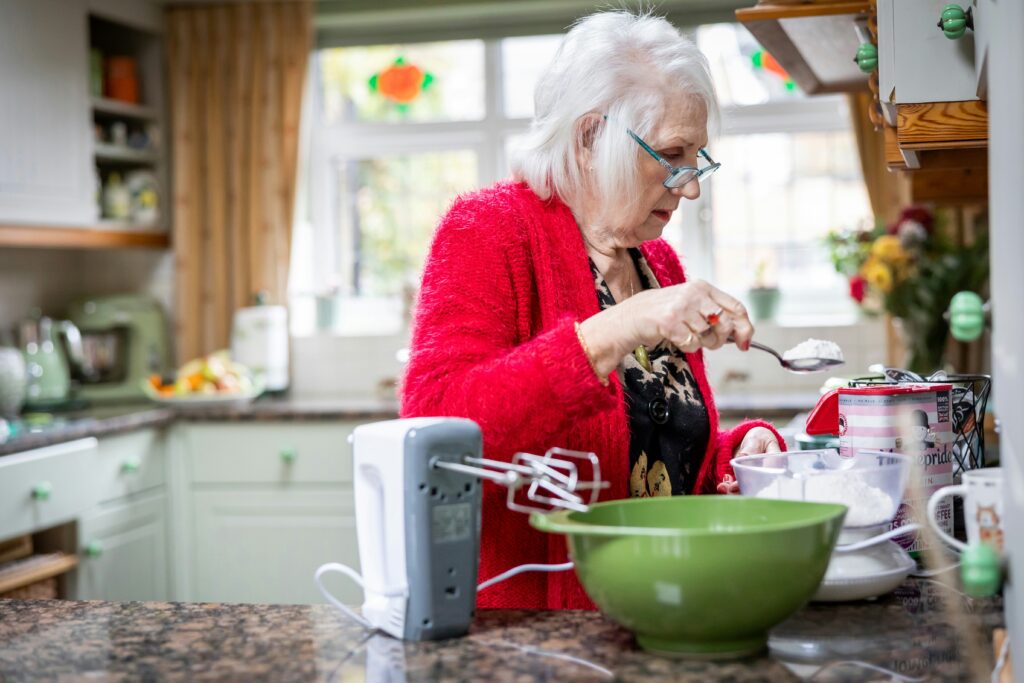
- Meal preparation and cooking
- Managing medications
- Handling finances and paying bills
- Shopping for groceries and household items
- Using the telephone or other communication devices
- Housekeeping and laundry
- Transportation and driving
- Managing home maintenance
IADL difficulties typically develop before basic ADL limitations, making them an important early signal of declining function (Amlak et al., 2025). The ability to perform both categories of tasks is a core measure of independence, functional health, and quality of life across the lifespan.
2. Why ADL Function Matters
A person’s ability to perform ADLs and IADLs is one of the most widely used indicators of health, independence, and need for care. Difficulty with these tasks is strongly linked to hospital admissions, nursing home placement, increased caregiver burden, and reduced quality of life.
ADL function is a central outcome measure in rehabilitation. Across conditions including stroke, traumatic brain injury (TBI), Parkinson’s disease, dementia, multiple sclerosis (MS), and cerebral palsy, improvement in ADL performance is a primary goal of occupational therapy and interdisciplinary rehabilitation (Vásquez-Carrasco et al., 2025a). When people can perform daily tasks independently, they are more likely to remain in their homes, maintain social connections, and experience better mental health outcomes.
IADL performance is also closely tied to cognitive function. Research consistently shows that IADL decline often precedes a diagnosis of mild cognitive impairment (MCI) or dementia, making it a useful screening indicator in clinical settings (Vásquez-Carrasco et al., 2024).
For clinicians, ADL and IADL status informs discharge planning, level-of-care decisions, and therapy frequency. For patients and families, it directly shapes what kind of support is needed at home.
3. Who Is Affected
ADL and IADL difficulty affects people of all ages but is most prevalent in older adults and people living with chronic conditions or disabilities.
A 2025 global systematic review and meta-analysis found that ADL disability affects a substantial proportion of adults aged 60 and older worldwide, with IADL difficulty affecting an even larger share of the older adult population (Amlak et al., 2025). In the United States alone, approximately one in four adults over the age of 65 experiences some form of functional limitation (Redzovic et al., 2023).
Conditions most commonly associated with ADL and IADL difficulty include:
- Stroke — one of the leading causes of ADL disability in adults; up to 75% of stroke survivors have some functional limitation in the acute phase
- Dementia and Alzheimer’s disease — IADL decline is often the earliest sign of cognitive impairment
- Parkinson’s disease — progressive motor symptoms affect dressing, hygiene, and mobility
- Traumatic brain injury (TBI) — cognitive, behavioral, and physical changes all affect daily function
- Multiple sclerosis (MS) — fatigue, spasticity, and vision changes impact ADL independence
- Cerebral palsy (CP) — motor and cognitive impairments affect ADL function from childhood
- Osteoarthritis — joint pain and stiffness limit dressing, bathing, and household tasks
- Orthopedic injuries and post-surgical recovery — temporary or lasting limitations in transfers, mobility, and self-care
Children with developmental conditions including autism spectrum disorder (ASD), cerebral palsy, and sensory processing differences also receive occupational therapy targeting ADL skills appropriate to their developmental stage (Fernandez-Cardenas et al., 2025).
4. Assessment Tools
Standardized assessment tools allow therapists to measure a person’s current level of ADL and IADL function, identify specific areas of difficulty, track progress over time, and justify the need for continued therapy services.
A 2025 scoping review of ADL and IADL assessment tools used in home health occupational therapy identified a wide range of validated measures appropriate for adults across diagnostic groups (McNichols et al., 2025). The most commonly used tools include the following.
Functional Independence Measure (FIM) — One of the most widely used rehabilitation assessments worldwide. The FIM rates 18 items across self-care, sphincter control, transfers, locomotion, communication, and social cognition. Scores range from 18 (total assistance) to 126 (complete independence). It is used across inpatient rehabilitation, acute care, and skilled nursing settings.
Barthel Index — A 10-item scale measuring independence in feeding, bathing, grooming, dressing, bowel and bladder control, toilet use, transfers, mobility, and stair climbing. Total scores range from 0 to 100. A 2024 reliability study of the modified Barthel Index confirmed strong inter-rater and intra-rater reliability (Watanabe et al., 2024), supporting its continued use as a practical and accurate ADL measure in clinical and home settings.
Katz ADL Scale — A six-item tool assessing bathing, dressing, toileting, transferring, continence, and feeding. Widely used in geriatric and home health settings for its simplicity and brevity.
Lawton IADL Scale — An eight-item scale measuring more complex daily tasks including telephone use, shopping, food preparation, housekeeping, laundry, transportation, medication management, and finances. Commonly paired with the Katz ADL Scale for a complete picture of functional status.
Canadian Occupational Performance Measure (COPM) — A client-centered interview tool that identifies occupational performance issues most important to the individual. Rather than a fixed task list, the COPM captures the person’s own priorities across self-care, productivity, and leisure. It was a primary outcome measure in the 2025 stroke OT systematic review, where it showed significant improvement following OT intervention (Vásquez-Carrasco et al., 2025a).
Assessment of Motor and Process Skills (AMPS) — An observational tool that evaluates the quality of ADL performance by rating motor and process skills during standardized tasks. Requires certified rater training.
For Clinicians
Tool selection should match the setting, population, and purpose. The FIM and Barthel Index are most appropriate for inpatient and skilled nursing settings. The Katz and Lawton scales are efficient for geriatric screening in home health or outpatient settings. The COPM is ideal when a client-centered, goal-directed approach is the priority. When documenting for Medicare and other payers, ensure your chosen tool has established reliability and validity for your patient population. The 2025 scoping review by McNichols et al. provides a detailed reference for validated assessment options across home health diagnoses.
5. The Role of Occupational Therapy
Occupational therapists (OTs) are the primary rehabilitation professionals for ADL and IADL assessment and intervention. OT training specifically addresses the complex interaction between a person’s physical, cognitive, and environmental factors and their ability to perform meaningful daily tasks.
A 2025 AJOT scoping review of home-based OT interventions for community-dwelling older adults found that 54 studies documented a wide range of effective approaches, including direct ADL and IADL training, environmental modifications, provision of adaptive equipment, and structured community programs such as CAPABLE (Community Aging in Place — Advancing Better Living for Elders) and Reablement (Saito et al., 2025a).
For stroke survivors, OT practice guidelines published by the American Occupational Therapy Association (AOTA) provide strong recommendations for task-oriented training, balance training, and cognitive strategy use to improve ADL and functional mobility outcomes across the continuum of care (Hildebrand et al., 2023). A 2025 systematic review with meta-analysis confirmed that OT interventions significantly improved ADL performance as measured by the COPM in middle-aged and older adults with chronic stroke (Vásquez-Carrasco et al., 2025a).
OT interventions for ADL difficulty typically include:
- Task-specific training — practicing the actual activities the person needs to perform, in the context where they occur
- Adaptive equipment — tools such as grab bars, long-handled sponges, dressing aids, weighted utensils, and built-up handles that reduce the physical demand of tasks
- Compensatory strategies — modified techniques that allow a person to complete tasks despite physical or cognitive limitations
- Environmental modification — reorganizing the home or workspace to reduce barriers and improve safety
- Cognitive rehabilitation — memory strategies, routines, and cueing systems that support IADL performance in people with cognitive impairment
- Energy conservation — pacing techniques and activity modification for people with fatigue-related conditions such as MS, heart failure, or cancer
In pediatric practice, OT targets the ADL skills appropriate to the child’s age and developmental level. A 2025 systematic review and meta-analysis found that OT-based interventions including virtual reality, task-oriented training, and sensory integration significantly improved gross motor function and ADL independence in children with cerebral palsy (Fernandez-Cardenas et al., 2025).
6. Physical Therapy and Speech-Language Pathology
While OT takes the lead role in ADL and IADL intervention, physical therapy (PT) and speech-language pathology (SLP) make critical contributions in an interdisciplinary rehabilitation team.
Physical therapy addresses the motor and mobility foundations that underlie ADL function. PT interventions for strength, balance, gait, and transfer training directly improve the physical capacity needed for tasks such as bathing, dressing, and moving around the home. In stroke rehabilitation, balance training in inpatient settings has strong evidence for improving ADL and functional mobility outcomes (Hildebrand et al., 2023). PT is also central to fall prevention, which directly protects a person’s ability to maintain ADL independence at home.
Speech-language pathology addresses the communication and swallowing functions that intersect with ADL performance. Dysphagia (swallowing difficulty) is an ADL — specifically, feeding and eating — and SLP intervention is the primary treatment. Cognitive-communication disorders following stroke, TBI, or dementia also affect the ability to manage IADLs such as medication management, finances, and safe use of appliances. SLPs provide direct intervention and compensatory strategies to address these functional limitations.
Effective ADL rehabilitation typically involves close collaboration among OT, PT, and SLP, with each discipline contributing to a shared functional goal: supporting the person to perform the daily tasks that matter most to them.
7. Intervention Strategies
Evidence-based intervention for ADL and IADL difficulty draws on several well-established approaches. The best outcomes typically come from combining strategies tailored to the individual’s goals, diagnosis, and living situation.
Task-Oriented and Occupation-Based Training
Training that uses real activities in real environments produces better transfer and generalization than exercise alone. Practicing the actual task — dressing in the person’s bedroom, cooking in their kitchen — is more effective than simulated practice in a clinical setting. This approach is supported across multiple conditions and settings (Saito et al., 2025a; Hildebrand et al., 2023).
Cognitive Interventions for IADL Performance
For people with mild cognitive impairment or early dementia, cognitive rehabilitation strategies can help maintain IADL independence. A 2024 systematic review found that leisure-focused OT interventions improved both ADL performance and cognitive function in middle-aged and older adults with MCI, with effects on memory, executive function, and daily task performance (Vásquez-Carrasco et al., 2024). External memory aids, structured routines, and errorless learning are commonly used strategies.
Home Modification and Adaptive Equipment
Environmental modifications reduce the gap between a person’s functional capacity and the demands of their home. Grab bars in bathrooms, raised toilet seats, non-slip mats, lever door handles, and kitchen organization changes are among the most common and effective modifications. Adaptive equipment such as dressing aids, weighted utensils, and reacher grabbers allow people to complete tasks they could not perform unaided. OTs are specifically trained to assess the home environment and recommend modifications matched to the individual’s needs.
Caregiver Training
Teaching family members and caregivers how to assist with ADLs safely — without over-assisting — is an important intervention outcome. Proper transfer techniques, safe bathing assistance, and cuing strategies for IADLs all reduce caregiver injury and help maintain the person’s own participation and dignity in daily tasks.
Community and Group Programs
Structured programs such as CAPABLE, Lifestyle Redesign, and Reablement have strong evidence for improving ADL and IADL performance in community-dwelling older adults. These multicomponent programs combine OT home visits, nursing, and sometimes PT to address physical, cognitive, and environmental barriers to independence.
8. Supporting Caregivers
Family members and informal caregivers play a central role in supporting ADL function, particularly for older adults, people with dementia, and individuals recovering from stroke or injury. The demands of ADL caregiving — assisting with bathing, transfers, toileting, and medication management — are physically and emotionally taxing, and caregiver burnout is a significant risk when support is inadequate.
Occupational therapists routinely include caregiver education as part of ADL intervention. Key areas include:
- Safe body mechanics for transfers and physical assistance
- How to cue and encourage without over-assisting, which preserves the person’s functional capacity
- Adaptive equipment use and home modification strategies
- Energy conservation for caregivers themselves
- When and how to escalate care needs to a professional
Supporting caregivers improves outcomes for both the person receiving care and the caregiver. Research consistently shows that family caregiver involvement in rehabilitation planning leads to better ADL outcomes and longer community tenure for people with stroke, dementia, and other conditions (Saito et al., 2025a).
For Patients and Families
If daily tasks like bathing, dressing, cooking, or managing medications are becoming difficult, that is a signal to talk to a doctor or request an occupational therapy evaluation. OT can be provided in the home, in outpatient clinics, in hospitals, and in skilled nursing facilities. An evaluation will identify exactly where the difficulty lies — whether it is physical, cognitive, environmental, or a combination — and a plan can be made to address it. You do not have to wait until things become unmanageable to ask for help. Early intervention produces better outcomes.
Related pages on TherapyTopics:
- Bathing and Shower Safety — Safe bathing techniques, grab bar placement, and adaptive equipment
- Fall Prevention — Balance assessment, home hazard reduction, and exercise programs for older adults
- Adaptive Feeding — Adaptive equipment, dysphagia management, and safe eating strategies
- Adaptive Driving — Vehicle modifications and driver rehabilitation
9. When to Seek Help
ADL and IADL difficulties are not an inevitable or untreatable part of aging or disability. Many people regain substantial independence with the right rehabilitation interventions, adaptive equipment, and environmental supports.
When to Request an Occupational Therapy Evaluation
- Increasing difficulty or new problems with bathing, dressing, grooming, eating, or mobility
- Recent fall or fear of falling that is limiting daily activity
- Discharge from a hospital or rehabilitation facility with ongoing functional limitations
- Cognitive changes that are affecting medication management, cooking, finances, or other IADLs
- A family member or caregiver reporting that the person needs increasing assistance with daily tasks
- A new diagnosis (stroke, TBI, Parkinson’s, MS, CP, dementia) with anticipated functional impact
- Post-surgical recovery where self-care activities are restricted or limited
- A child not meeting expected self-care milestones for their developmental age
OT evaluations can be requested through a physician referral, directly through a home health agency, or via self-referral in states with direct access. PT and SLP referrals should be considered when mobility, balance, swallowing, or communication also affect daily function.
For Clinicians: Referral Guidance
Refer to occupational therapy when ADL or IADL limitations are affecting safety, independence, or quality of life. Include functional status information in the referral — standardized scores from the FIM, Barthel Index, or Katz Scale help the OT prioritize assessment and align with payer documentation requirements. For home health referrals, specify whether environmental assessment and home modification recommendations are needed in addition to direct ADL intervention. When cognitive impairment is a factor, specify whether IADL assessment (medication management, cooking safety, financial management) is a priority area.
References
Amlak, B. T., Getinet, M., Getie, A., Kebede, W. M., Tarekegn, T. T., & Belay, D. G. (2025). Functional disability in basic and instrumental activities of daily living among older adults globally: A systematic review and meta-analysis. BMC Geriatrics, 25(1), 413. https://doi.org/10.1186/s12877-025-06056-8
Fernandez-Cardenas, D., Sánchez-Gomez, C., Vásquez-Carrasco, E., Hernandez-Martinez, J., Pérez-Cárcamo, J., Sandoval, C., Valdés-Badilla, P., Carmine-Peña, E., Lorca, C., & Fernández-Rodríguez, E. (2025). Effectiveness of occupational therapy-based intervention on gross motor function and independence in activities of daily living in children with cerebral palsy: A systematic review with meta-analysis. Journal of Clinical Medicine, 14(21), 7624. https://doi.org/10.3390/jcm14217624
Gibson, E., Koh, C. L., Eames, S., Bennett, S., Scott, A. M., & Hoffmann, T. C. (2022). Occupational therapy for cognitive impairment in stroke patients. Cochrane Database of Systematic Reviews, 2022(3), CD006430. https://doi.org/10.1002/14651858.CD006430.pub3
Hildebrand, M. W., Geller, D., & Proffitt, R. (2023). Occupational therapy practice guidelines for adults with stroke. American Journal of Occupational Therapy, 77(5), 7705397010. https://doi.org/10.5014/ajot.2023.077501
McNichols, C., Martin, C., Capps, M., Blankenship, E., & Reynolds, S. (2025). Assessments evaluating activities of daily living and instrumental activities of daily living for adults receiving home health occupational therapy services: A scoping review. Archives of Physical Medicine and Rehabilitation. https://doi.org/10.1016/j.apmr.2025.01.252
Redzovic, S., Vereijken, B., & Bonsaksen, T. (2023). Aging at home: Factors associated with independence in activities of daily living among older adults in Norway — a HUNT study. Frontiers in Public Health, 11, 1215417. https://doi.org/10.3389/fpubh.2023.1215417
Saito, Y., Kikuchi, Y., Sawada, T., & Tomori, K. (2025a). Occupational therapy intervention for improvement of activity and participation in home rehabilitation for community-dwelling older adults: A scoping review. American Journal of Occupational Therapy, 79(6), 7906205070. https://doi.org/10.5014/ajot.2025.051190
Saito, Y., Tomori, K., Sawada, T., & Kikuchi, Y. (2025b). Assessments evaluating activities of daily living and instrumental activities of daily living for adults receiving home health occupational therapy services: A scoping review. Archives of Physical Medicine and Rehabilitation. https://doi.org/10.1016/j.apmr.2025.01.252
Vásquez-Carrasco, E., Huenchuquen, C., Ferrón, C., Hernandez-Martinez, J., Landim, S. F., Helbig, F., Carmine, F., Valdés-Badilla, P., Sandoval, C., Sánchez Gómez, C., & Moruno-Miralles, P. (2024). Effectiveness of leisure-focused occupational therapy interventions in middle-aged and older people with mild cognitive impairment: A systematic review. Healthcare, 12(24), 2521. https://doi.org/10.3390/healthcare12242521
Vásquez-Carrasco, E., Jamett-Oliva, P., Hernandez-Martinez, J., Riquelme-Hernández, C., Villagrán-Silva, F., Branco, B. H. M., Sandoval, C., & Valdés-Badilla, P. (2025a). Effectiveness of occupational therapy interventions on activities of daily living, cognitive function, and physical function in middle-aged and older people with chronic stroke: A systematic review with meta-analysis. Journal of Clinical Medicine, 14(7), 2197. https://doi.org/10.3390/jcm14072197
Watanabe, H., Oguri, Y., Noritake, K., Suzuki, Y., Okamura, H., & Fujii, K. (2024). Reliability of a self-administered performance evaluation tool based on the modified Barthel Index. Cureus, 16(10), e72665. https://doi.org/10.7759/cureus.72665
© TherapyTopics.com — All information is for educational purposes only and does not constitute medical or therapeutic advice. Consult a licensed therapist or physician for evaluation and treatment