


Key Takeaways
- Total hip arthroplasty (THA) is one of the most successful elective surgical procedures performed — more than 500,000 are performed annually in the United States, with numbers projected to rise significantly as populations age (Patel et al., 2023)
- Modern hip replacement implants have a 15-year survival rate of approximately 90%, and worldwide survival rates have improved significantly over the past decade (Clar et al., 2024)
- Prehabilitation — exercise and education before surgery, reduces postoperative complication rates and improves strength, function, and quality of life in the first 6 months after THA (Keogh et al., 2025; Widmer et al., 2022)
- Physical therapy is the cornerstone of THA rehabilitation — addressing strength, mobility, gait, balance, and fall prevention through structured exercise programs that significantly improve function and quality of life (Konnyu et al., 2023)
- Occupational therapy is essential after THA — teaching hip precautions, adaptive equipment for ADLs, home modification, and safe self-care strategies that protect the new joint during recovery (Chaudhry et al., 2022)
- Telerehabilitation is as effective as in-person rehabilitation after THA, with significantly higher compliance and equivalent outcomes, expanding access for those who cannot regularly attend in-person sessions (Zhou et al., 2024)
- Home exercise programs produce outcomes equivalent to formal supervised PT for most THA patients, making structured home-based rehabilitation a viable and evidence-supported option (Chaudhry et al., 2022)
Important
The information on this page is educational only and is not a substitute for individualized surgical or rehabilitation advice. Hip replacement rehabilitation protocols vary based on surgical approach, implant type, surgeon preference, and individual patient factors. Always follow the specific precautions and rehabilitation plan provided by your surgeon and therapy team.
Table of Contents
- What Is Hip Replacement?
- Who Needs Hip Replacement?
- Types of Hip Replacement Surgery
- Prehabilitation: Getting Ready for Surgery
- Who Provides Hip Replacement Rehabilitation?
- Occupational Therapy After Hip Replacement
- Physical Therapy After Hip Replacement
- Telerehabilitation After Hip Replacement
- What to Expect During Recovery
- What Patients and Families Can Do
- A Note for Clinicians
- References
1. What Is Hip Replacement?
Total hip arthroplasty (THA), commonly called hip replacement, is a surgical procedure in which a damaged or arthritic hip joint is replaced with an artificial implant (prosthesis). The implant replicates the ball-and-socket structure of the natural hip joint, restoring smooth, pain-free movement (Patel et al., 2023).
Hip replacement is one of the most successful elective surgical procedures in medicine. More than 500,000 total hip replacements are performed annually in the United States, and this number is projected to increase substantially as the population ages and the prevalence of hip osteoarthritis rises. The procedure has a 69.5% increase in procedure volume from 2006 to 2014, with no sign of slowing (Patel et al., 2023).
Modern hip replacement implants have excellent long-term survival rates. A 2024 systematic comparative analysis of worldwide hip arthroplasty registers found that 15-year THA survival rates have improved to approximately 90% — and that worldwide survival rates have improved by approximately 5% over the past decade (Clar et al., 2024). For most people, hip replacement is a once-in-a-lifetime procedure that produces lasting pain relief and functional improvement.
For Patients & Families
- Hip replacement is one of the most reliable and successful operations in surgery — more than 90% of people report significant pain relief and improved function (Patel et al., 2023)
- Modern implants are designed to last 20 or more years. For most people, hip replacement is a permanent solution to hip pain and disability (Clar et al., 2024)
- The surgery itself is only part of the story; rehabilitation is what determines how well and how quickly you recover. Active engagement in PT and OT significantly improves outcomes (Konnyu et al., 2023)
- You are not too old or too young for hip replacement. THA is performed successfully across a very wide age range, the key factor is functional impairment, not age alone (Patel et al., 2023)
2. Who Needs Hip Replacement?
Hip replacement is recommended for people with severe hip pain and functional limitation that has not responded adequately to conservative management, including medications, physical therapy, activity modification, and injections (Patel et al., 2023).
The most common reasons for hip replacement include:
- Osteoarthritis (OA): The most common indication, accounting for approximately 80% of THA procedures. Hip OA causes progressive cartilage loss, bone-on-bone pain, stiffness, and loss of hip function (Patel et al., 2023)
- Rheumatoid arthritis: An autoimmune inflammatory arthritis that destroys joint cartilage and bone, often requiring hip replacement in younger patients with severe joint destruction
- Osteonecrosis (avascular necrosis): Death of the femoral head bone due to disrupted blood supply — from corticosteroid use, trauma, alcohol use, or other causes. Often requires THA when the femoral head collapses (Patel et al., 2023)
- Hip fracture: Severe hip fractures, particularly femoral neck fractures in older adults, may require hip replacement rather than fracture repair to restore function more quickly
- Post-traumatic arthritis: Arthritis developing years after a hip injury, fracture, or dislocation
- Developmental dysplasia of the hip: Abnormal hip joint development leading to early-onset arthritis, often requiring THA at a younger age than typical OA patients
When Is Hip Replacement Appropriate?
Hip replacement is typically considered when hip pain is severe and constant, significantly limiting daily activities including walking, dressing, and sleep; when conservative treatments including PT, medications, and injections have failed to provide adequate relief; and when quality of life is substantially reduced by hip disease. The decision is individual, made jointly by the patient and their orthopaedic surgeon based on symptoms, imaging, and overall health (Patel et al., 2023).
3. Types of Hip Replacement Surgery
Understanding the type of hip replacement helps patients, families, and rehabilitation providers understand the specific precautions and rehabilitation approach required (Patel et al., 2023; Konnyu et al., 2023).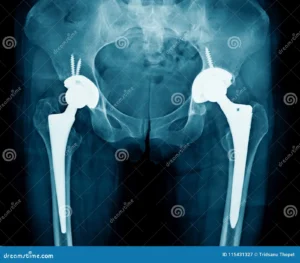
By approach:
- Posterior approach: The most commonly used surgical approach. Accesses the hip from the back, requiring posterior hip precautions (avoiding hip flexion beyond 90°, internal rotation, and adduction past midline) to prevent dislocation in the early recovery period
- Anterior approach: Accesses the hip from the front. Many surgeons using the anterior approach do not impose standard posterior hip precautions, which may allow faster functional recovery and less restrictive ADL performance
- Lateral approach: Accesses the hip from the side. Less commonly used for primary THA
By extent:
- Total hip arthroplasty (THA): Both the femoral head (ball) and acetabular cup (socket) are replaced. The most common procedure (Patel et al., 2023)
- Hemiarthroplasty: Only the femoral head is replaced, leaving the natural acetabular socket. Commonly performed for hip fractures in older adults
- Hip resurfacing: The femoral head is reshaped and capped rather than removed. Preserves more bone and may be suitable for younger, more active patients with good bone quality
For Patients & Families
- Ask your surgeon specifically which approach they will use — this directly determines which hip precautions apply to your recovery and how your OT will teach you to dress, bathe, and move safely
- Hip precautions are not optional in the early recovery period, violating them can cause prosthesis dislocation, which requires further surgery to correct
- The surgical approach and implant type do not change the fundamental rehabilitation principles — PT and OT are essential regardless of which approach was used (Konnyu et al., 2023)
4. Prehabilitation: Getting Ready for Surgery
Prehabilitation refers to rehabilitation interventions — exercise, education, or both — initiated before hip replacement surgery to improve preoperative fitness and optimize postoperative recovery (Widmer et al., 2022; Keogh et al., 2025).
A 2025 overview of systematic reviews and meta-analyses of RCTs confirmed that structured prehabilitation before THA and TKA reduces complication rates and improves strength, objective function, self-reported function, and quality of life, with effects generally strongest in the first 6 months after surgery (Keogh et al., 2025). A 2022 systematic review of prehabilitation specifically for THA confirmed that exercise and/or education before surgery improves postoperative physical functioning compared to no intervention (Widmer et al., 2022).
What prehabilitation includes:
- Strengthening exercises: Targeting the hip abductors, quadriceps, hamstrings, and core muscles that support the hip and drive postoperative functional recovery (Widmer et al., 2022)
- Aerobic fitness: Improving cardiorespiratory reserve to better tolerate surgery and anaesthesia and support faster recovery (Keogh et al., 2025)
- Education: Learning hip precautions, what to expect after surgery, pain management strategies, and how to use adaptive equipment before you need it, reducing anxiety and improving preparedness (Widmer et al., 2022)
- Home preparation: OT assessment and preparation of the home environment before surgery — installing grab bars, raising toilet height, arranging furniture to support safe movement with hip precautions
- Practice with adaptive equipment: Learning to use a long-handled shoehorn, sock aid, and reacher before surgery so these tools are familiar on day one of recovery
For Clinicians
- A 2025 overview of systematic reviews and meta-analyses confirmed that structured prehabilitation reduces complication rates and improves strength, objective function, and quality of life after THA and TKA, with effects strongest in the first 6 months postoperatively (Keogh et al., 2025). Prehabilitation referral should be standard pre-surgical practice.
- A 2022 systematic review of THA prehabilitation confirmed that preoperative exercise and/or education improves postoperative physical functioning (Widmer et al., 2022). Even a 4 to 6 week prehabilitation program before elective THA produces meaningful benefits.
- OT pre-surgical home assessment and adaptive equipment education reduces discharge complexity and improves patient confidence and safety in the immediate postoperative period.
5. Who Provides Hip Replacement Rehabilitation?
- Occupational therapy (OT): Hip precaution education, ADL training with precautions, adaptive equipment prescription and training, home assessment and modification, and discharge planning (Konnyu et al., 2023)
- Physical therapy (PT): Exercise prescription, strengthening, gait training, walking aid prescription, balance and fall prevention, and functional mobility training (Konnyu et al., 2023; Keogh et al., 2025)
- Orthopaedic surgeon: Surgical decision-making, implant selection, approach-specific precautions, postoperative medical management, and long-term follow-up
- Anaesthesiologist: Perioperative pain management including regional nerve blocks that significantly reduce postoperative pain and opioid requirements
- Nursing: Immediate postoperative care, wound management, medication administration, and early mobility support
- Social work: Discharge planning, home care coordination, equipment funding, and community support services
- Dietitian: Nutritional optimization before and after surgery to support wound healing, bone health, and recovery
For Clinicians
- A 2023 systematic review of rehabilitation after THA found large heterogeneity across evaluated rehabilitation programs but confirmed that diverse rehabilitation programs do not differ significantly in risk of harm — meaning that tailoring rehabilitation to patient preference and circumstance is appropriate and evidence-supported (Konnyu et al., 2023).
- Performance-based outcome measures including the Timed Up and Go (TUG), 6-Minute Walk Test, and 30-Second Chair Stand are the most clinically meaningful tools for assessing THA rehabilitation progress and should be routinely used (Karimijashni et al., 2025).
6. Occupational Therapy After Hip Replacement
Occupational therapy is essential after hip replacement, ensuring that patients can perform their daily activities safely while protecting the new hip joint from dislocation during the critical early recovery period. OT also addresses the home environment, adaptive equipment, and longer-term functional independence as recovery progresses (Konnyu et al., 2023).
Key areas of OT intervention after hip replacement include:
- Hip precaution education: Teaching patients and families the specific movement restrictions that apply after their surgical approach, including avoiding hip flexion beyond 90°, internal rotation, and crossing the legs (for posterior approach). OT provides practical, activity-specific guidance on how to follow precautions during every daily activity (Konnyu et al., 2023)
- Activities of daily living (ADLs) with precautions: OT teaches modified techniques for dressing, bathing and showering, toileting, bed mobility, and transfers that comply with hip precautions and protect the new joint (Konnyu et al., 2023)
- Adaptive equipment prescription and training: OT prescribes and trains patients in the essential adaptive equipment for hip replacement recovery, including a long-handled shoehorn, sock aid and stocking donner,
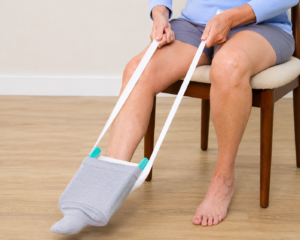 reacher/grabber, raised toilet seat or toilet safety frame, shower chair or bench, and long-handled bath sponge. This equipment allows independent self-care while maintaining hip precautions (Konnyu et al., 2023)
 - Home assessment and modification: OT assesses the home environment before or after surgery for hazards and barriers, including trip hazards, furniture height, bathroom access, and stair management. Recommendations may include removal of rugs, grab bar installation, raising chair and bed heights, and rearranging the home to minimize bending and reaching (Konnyu et al., 2023)
- Transfers and positioning: Teaching safe techniques for getting in and out of chairs, cars, beds, and baths that maintain hip precautions and reduce dislocation risk
- Return to meaningful activities: Guiding the gradual return to cooking, household tasks, driving, work, and recreational activities as hip precautions are lifted and strength and mobility return
- Discharge planning: OT works with the multidisciplinary team to ensure safe discharge, assessing whether the home environment is safe, equipment is in place, and the patient and family are confident in managing daily activities independently
For Patients & Families
- Get your adaptive equipment before surgery, your OT can advise on exactly what you need. Practising with a sock aid or reacher before surgery means you are confident using it on day one of recovery
- Hip precautions apply to every activity — not just exercises. Dressing, showering, getting out of bed, sitting down, and getting in a car all need to be done in ways that follow your precautions (Konnyu et al., 2023)
- If a pre-discharge home assessment is offered by OT, accept it. Identifying hazards and getting equipment in place before you arrive home significantly reduces your risk of falls and complications
- Ask your OT specifically about car transfers, getting in and out of a car safely with hip precautions is one of the most important practical skills you need before going home
For Clinicians
- OT-delivered hip precaution education, ADL training, and adaptive equipment provision are core components of THA rehabilitation that directly reduce dislocation risk and support safe discharge. These should be provided routinely to all THA patients regardless of surgical approach (Konnyu et al., 2023).
- Pre-surgical OT home assessment and adaptive equipment education reduces post-discharge falls risk and improves patient preparedness, particularly important given the trend toward shorter hospital stays after THA.
- Some surgeons using the anterior approach impose fewer or no standard hip precautions. OT should clarify the specific precaution protocol with the operating surgeon and tailor ADL training accordingly.
7. Physical Therapy After Hip Replacement
Physical therapy is the cornerstone of THA rehabilitation, addressing the strength deficits, gait abnormalities, and functional limitations that persist after surgery and that determine long-term outcomes. A 2023 systematic review of rehabilitation after THA confirmed that structured rehabilitation programs produce meaningful improvements in functional outcomes compared to no rehabilitation (Konnyu et al., 2023). A 2022 systematic review confirmed that home exercise programs produce outcomes equivalent to formal supervised PT for most THA patients (Chaudhry et al., 2022).
Key areas of PT intervention after hip replacement include:
- Early mobility and gait training: PT initiates walking with appropriate aids, initially a walker or crutches, progressing to a cane and then unsupported walking — as soon as medically safe after surgery. Early mobilisation reduces complications and supports faster functional recovery (Konnyu et al., 2023)
- Strengthening: Progressive strengthening of the hip abductors, extensors, and quadriceps — the primary muscle groups weakened by hip disease and surgery. Hip abductor strength is particularly important for gait symmetry and balance after THA (Konnyu et al., 2023)
- Gait retraining: Correcting the compensatory gait patterns, including the Trendelenburg gait (hip drop) — that develop from years of pain-avoidance walking before surgery. Normalising gait mechanics reduces long-term joint stress and improves functional walking ability (Konnyu et al., 2023)
- Balance and fall prevention: Hip replacement patients have elevated fall risk in the early recovery period due to muscle weakness, altered proprioception, and medication effects. PT provides balance training and fall prevention strategies (Konnyu et al., 2023)
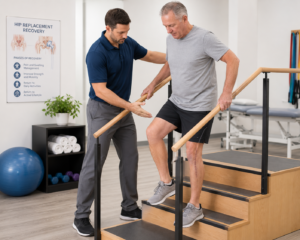
- Stair training: Teaching safe stair climbing and descending technique, essential for most home environments and return to community independence
- Range of motion: Gentle hip mobility exercises that progressively restore full range of motion within the constraints of hip precautions (Konnyu et al., 2023)
- Home exercise program: PT designs and teaches a progressive home exercise program that drives the majority of functional recovery between and after clinic visits. Adherence to home exercises is the strongest predictor of functional outcomes after THA (Chaudhry et al., 2022)
- Return to activity: Guiding the gradual return to walking distances, community activities, driving, sport, and recreational activities as strength and function return (Konnyu et al., 2023)
For Patients & Families
- Start moving as soon as your surgical team clears you — early mobilisation after THA reduces complications and speeds recovery (Konnyu et al., 2023)
- Your home exercise program is where most of your recovery happens. Doing your exercises daily, consistently, is more important than any single clinic PT session (Chaudhry et al., 2022)
- The limp you had before surgery will not disappear overnight. Gait retraining takes time and consistent PT — but most people achieve a normal walking pattern with appropriate rehabilitation (Konnyu et al., 2023)
- Report any sudden onset of groin pain, inability to bear weight, or leg length discrepancy to your surgical team immediately, these can be signs of dislocation or other complications requiring urgent evaluation
For Clinicians
- A 2023 systematic review found that diverse THA rehabilitation programs do not significantly differ in patient outcomes, meaning clinicians should prioritise patient preference and access when designing rehabilitation programs (Konnyu et al., 2023).
- A 2022 systematic review confirmed that home exercise programs produce outcomes equivalent to formal supervised PT for most THA patients. For appropriate patients, structured home-based rehabilitation is evidence-supported and significantly reduces healthcare costs (Chaudhry et al., 2022).
- Performance-based outcome measures — TUG, 6MWT, 30-second chair stand — are the most clinically meaningful tools for monitoring THA rehabilitation progress and should be routinely recorded at initial assessment and discharge (Karimijashni et al., 2025).
8. Telerehabilitation After Hip Replacement
Telerehabilitation — rehabilitation delivered via videoconference, telephone, or digital platforms, is an evidence-supported alternative to in-person rehabilitation after hip replacement, with significant implications for access, convenience, and adherence (Zhou et al., 2024; Ouendi et al., 2024; Zhang et al., 2024).
A 2024 systematic review and meta-analysis of 10 RCTs involving 632 THA patients confirmed that internet-based telerehabilitation produces equivalent outcomes to face-to-face rehabilitation after total hip replacement, with significantly better compliance in the telerehabilitation group (Zhou et al., 2024). A 2024 systematic review of telerehabilitation programs in elderly patients with hip or knee arthroplasty confirmed effectiveness across multiple functional outcomes (Ouendi et al., 2024).
Telerehabilitation is particularly suitable for:
- People in rural or remote areas with limited access to in-person PT and OT after THA (Zhou et al., 2024)
- People with transportation limitations, particularly older adults who have not yet returned to driving after surgery (Zhang et al., 2024)
- People who prefer the convenience of home-based rehabilitation and are motivated to follow a structured program independently (Zhang et al., 2024)
- Continuation of rehabilitation after in-person PT discharge, maintaining progress and addressing ongoing functional goals remotely
For Patients & Families
- If getting to in-person PT is difficult after surgery, due to transportation, fatigue, or distance — ask about telerehabilitation. Research confirms it produces equivalent outcomes to in-person PT after hip replacement (Zhou et al., 2024)
- Telerehabilitation patients show higher compliance with their exercise programs than in-person patients in most studies, the convenience of home-based sessions appears to support better adherence (Zhou et al., 2024)
- Many insurers and Medicare now cover telehealth PT and OT services, ask your care team or insurer about your coverage options
9. What to Expect During Recovery
Hip replacement recovery follows a broadly predictable timeline, though individual recovery varies based on age, preoperative function, fitness, surgical approach, and rehabilitation engagement (Konnyu et al., 2023; Patel et al., 2023).
Hospital stay (typically 1–3 days):
- PT initiates walking with a walking aid on the day of or day after surgery
- OT teaches hip precautions, ADL techniques, and adaptive equipment use before discharge
- Pain is managed with a multimodal approach including nerve blocks, anti-inflammatories, and as-needed opioids
- Discharge destination — home, inpatient rehabilitation, or subacute care, is determined based on support, home environment, and functional status (Konnyu et al., 2023)
First 6 weeks (hip precaution period):
- Hip precautions are strictly observed during all daily activities (posterior approach)
- Walking distance and independence gradually increase with a walker progressing to a cane
- Pain, swelling, and bruising gradually resolve
- Home PT and OT or outpatient sessions focus on mobility, strengthening, and ADL independence (Chaudhry et al., 2022)
6 weeks to 3 months:
- Hip precautions are typically lifted at the 6-week surgical review (confirm with your surgeon)
- PT progresses to more demanding strengthening, gait training, and functional activities
- Most people return to driving, light work, and community activities during this period (Konnyu et al., 2023)
3 to 12 months:
- Continued strength and functional gains, full recovery typically takes 6 to 12 months (Konnyu et al., 2023)
- Return to sport and higher-level recreational activities for appropriate patients
- Most patients achieve their maximum functional outcome within 12 months of surgery
10. What Patients and Families Can Do
- Prepare your home before surgery. Install grab bars, raise toilet height, remove trip hazards, and arrange your living space to comply with hip precautions before you arrive home from hospital. Your OT can advise specifically on what you need (Konnyu et al., 2023)
- Get your adaptive equipment before surgery. Practise with a long-handled shoehorn, sock aid, and reacher before surgery so you are confident using them from day one of recovery
- Do your exercises every day. Your home exercise program is the engine of your recovery. Consistent daily exercise produces significantly better outcomes than sporadic intensive sessions (Chaudhry et al., 2022)
- Follow your hip precautions strictly. Every single daily activity, not just exercises, must follow your precautions during the restricted period. Dislocation risk is real and consequences are serious (Konnyu et al., 2023)
- Optimise your health before surgery. Stopping smoking, managing blood sugar, achieving a healthy weight, and addressing anaemia before surgery all improve surgical and rehabilitation outcomes (Patel et al., 2023)
- Ask about prehabilitation. A structured exercise program before surgery consistently improves postoperative outcomes. Ask your surgical team for a prehabilitation referral (Keogh et al., 2025)
When to Request OT or PT Referral
- Before surgery — prehabilitation exercise and OT home preparation improve surgical and recovery outcomes (Keogh et al., 2025; Widmer et al., 2022)
- In hospital — OT for hip precaution education and ADL training before discharge (Konnyu et al., 2023)
- At discharge — PT for home exercise program and ongoing rehabilitation, OT for home assessment if not done pre-surgically (Chaudhry et al., 2022)
- When mobility is limited — PT for progressive strengthening, gait training, and walking aid progression (Konnyu et al., 2023)
- When daily activities remain difficult — OT for further ADL strategies and adaptive equipment (Konnyu et al., 2023)
- When balance problems or fall risk is present — PT for fall prevention and balance training (Konnyu et al., 2023)
- When in-person rehabilitation is difficult — ask about telerehabilitation options (Zhou et al., 2024)
- When returning to work, driving, or sport — PT and OT for functional assessment and graduated return-to-activity planning (Konnyu et al., 2023)
11. A Note for Clinicians
Total hip arthroplasty is one of the highest-volume elective surgical procedures in healthcare, and its incidence continues to rise. The rehabilitation evidence base has strengthened considerably, with systematic reviews confirming that both formal PT and structured home exercise programs produce meaningful functional improvements, and that diverse rehabilitation approaches do not differ significantly in outcomes, supporting individualized, patient-centered rehabilitation planning (Konnyu et al., 2023; Chaudhry et al., 2022).
Prehabilitation before THA is supported by an overview of systematic reviews and meta-analyses of RCTs confirming reduced complication rates and improved strength, objective function, and quality of life in the first 6 months postoperatively (Keogh et al., 2025). Prehabilitation referral, to both PT for exercise and OT for home preparation — should be standard pre-surgical practice for elective THA.
Telerehabilitation after THA is confirmed effective and equivalent to in-person rehabilitation by a 2024 systematic review and meta-analysis of 10 RCTs, with significantly higher compliance in the telerehabilitation group (Zhou et al., 2024). Telerehabilitation should be offered as a standard rehabilitation option for appropriate THA patients, particularly those with access barriers.
Performance-based outcome measures, including the TUG, 6-Minute Walk Test, and 30-Second Chair Stand — are the most clinically meaningful tools for assessing THA rehabilitation progress. A 2025 systematic review confirmed these cover the most relevant ICF activity categories in hip and knee arthroplasty rehabilitation and should be routinely collected at assessment and discharge (Karimijashni et al., 2025).
Related Pages on TherapyTopics
- Fall Prevention — Balance assessment and exercise programs for people with elevated fall risk after hip surgery
- Bathing & Shower Safety — Adaptive equipment and OT strategies for safe bathing with hip precautions
- Osteoarthritis — Conservative OT and PT management of hip OA before surgery becomes necessary
- Back Pain — Often co-occurring with hip OA; OT and PT management overlap significantly
- Parkinson’s Disease — Rehabilitation for neurological conditions that may coexist with hip replacement
12. References
- Chaudhry, Y. P., Hayes, H., Wells, Z., Papadelis, E., Arevalo, A., Horan, T., Khanuja, H. S., & Deirmengian, C. (2022). Unsupervised home exercises versus formal physical therapy after primary total hip arthroplasty: A systematic review. Cureus, 14(9), e29322. https://doi.org/10.7759/cureus.29322
- Clar, C., Leitner, L., Koutp, A., Hauer, G., Rasic, L., Leithner, A., & Sadoghi, P. (2024). The worldwide survival rate of total hip arthroplasties is improving: A systematic comparative analysis using worldwide hip arthroplasty registers. EFORT Open Reviews, 9(8), 745–750. https://doi.org/10.1530/EOR-23-0080
- Karimijashni, M., Abtahi, F., Abbasalipour, S., Dabbagh, A., Ranjbar, P., Westby, M., Ramsay, T., Beaulé, P., & Poitras, S. (2025). Performance-based outcome measures after hip or knee arthroplasty: A systematic review and content analysis using the ICF. Journal of Evaluation in Clinical Practice, 31(1), e14307. https://doi.org/10.1111/jep.14307
- Keogh, J. A. J., Keng, I., Dhillon, D. S., Bourgeault-Gagnon, Y., Simunovic, N., & Ayeni, O. R. (2025). The effects of structured prehabilitation on postoperative outcomes following total hip and total knee arthroplasty: An overview of systematic reviews and meta-analyses of randomized controlled trials. Journal of Orthopaedic & Sports Physical Therapy, 55(5), 344–365. https://doi.org/10.2519/jospt.2025.13075
- Konnyu, K. J., Pinto, D., Cao, W., Aaron, R. K., Panagiotou, O. A., Bhuma, M. R., Adam, G. P., Balk, E. M., & Thoma, L. M. (2023). Rehabilitation for total hip arthroplasty: A systematic review. American Journal of Physical Medicine & Rehabilitation, 102(1), 11–18. https://doi.org/10.1097/PHM.0000000000002007
- Ouendi, N., Avril, E., Dervaux, B., Pudlo, P., & Wallard, L. (2024). Effectiveness of telerehabilitation programs in elderly with hip or knee arthroplasty: A systematic review. Telemedicine and e-Health, 30(6), 1507–1521. https://doi.org/10.1089/tmj.2023.0622
- Patel, I., Nham, F., Zalikha, L., & El-Othmani, M. M. (2023). Epidemiology of total hip arthroplasty: Demographics, comorbidities and outcomes. Arthroplasty, 5(1), 2. https://doi.org/10.1186/s42836-022-00156-1
- Widmer, P., Oesch, P., & Bachmann, S. (2022). Effect of prehabilitation in form of exercise and/or education in patients undergoing total hip arthroplasty on postoperative outcomes: A systematic review. Medicina, 58(6), 742. https://doi.org/10.3390/medicina58060742
- Zhang, W., Ji, H., Wu, Y., Xu, Z., Li, J., Sun, Q., Wang, C., & Zhao, F. (2024). Patients’ needs and experiences of telerehabilitation after total hip and knee arthroplasty: A qualitative systematic review and meta-synthesis. Digital Health, 10, 20552076241256756. https://doi.org/10.1177/20552076241256756
- Zhou, Z., Zhou, X., Cui, N., Huang, H., Yang, F., Yang, G., Liu, D., Liu, K., Zhang, X., & Wang, J. (2024). Effectiveness of tele-rehabilitation after total hip replacement: A systematic review and meta-analysis of randomized controlled trials. Disability and Rehabilitation, 46(20), 4611–4616. https://doi.org/10.1080/09638288.2023.2280070
© TherapyTopics.com — All information is for educational purposes only and does not constitute medical or therapeutic advice. Consult a licensed therapist or physician for evaluation and treatment.