

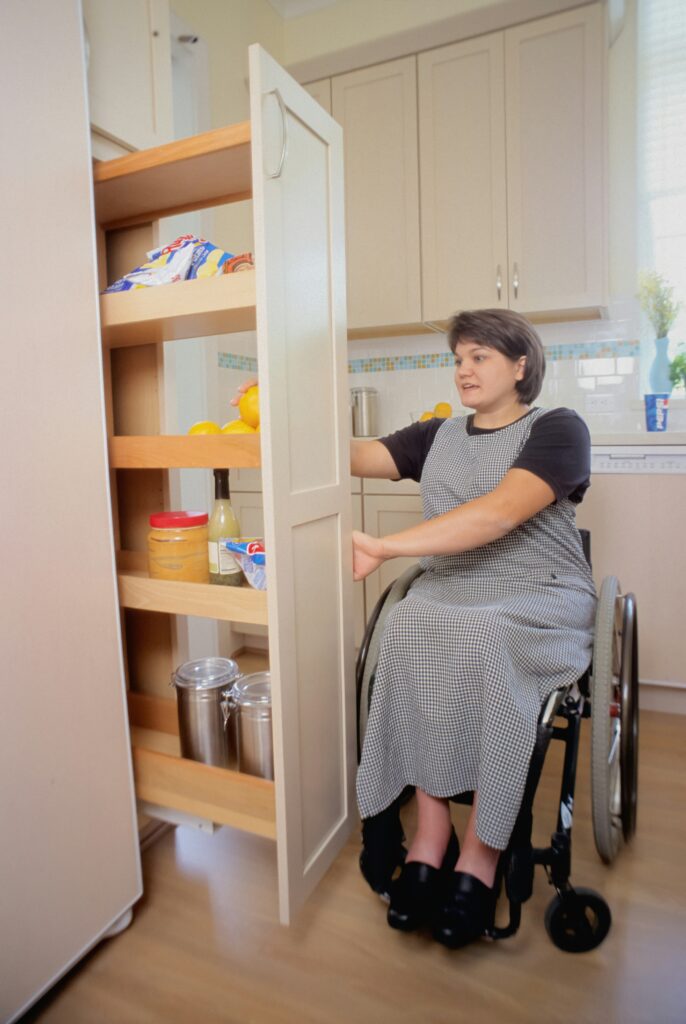
- Home modification means adapting a person’s living environment to support safety, independence, and the ability to age in place — rather than move to a care facility.
- Only 10% of U.S. homes are considered “aging ready,” yet more than 10,000 Americans turn 65 every day (Sheth & Cogle, 2023).
- Targeted home modifications reduce fall risk by a clinically meaningful 7%, with the strongest results seen when OT-led home assessment is combined with exercise and education (Lektip et al., 2023).
- Occupational therapists are the primary rehabilitation professionals for home modification assessment and recommendation, trained to match environmental changes to the specific person’s functional needs and goals.
- Common modifications include grab bars, ramp installation, bathroom adaptations, stair railings, lighting improvements, and removal of trip hazards — with bathroom modifications showing the greatest impact.
- Home modifications reduce falls, improve ADL independence, lower hospitalization rates, and reduce caregiver burden across a wide range of ages and conditions (Hutchinson et al., 2025).
Important
Most falls happen in the home, and most home environments were not designed with aging or disability in mind. An occupational therapist can conduct a home safety assessment, identify specific hazards matched to a person’s individual functional status, and recommend targeted modifications that reduce risk and support independence. This evaluation is covered by Medicare and most insurance plans when ordered by a physician as part of home health care.
Table of Contents
1. What Is Home Modification?
Home modification refers to structural changes, equipment additions, or environmental adaptations made to a person’s living space to improve safety, accessibility, and the ability to perform daily activities independently. The goal is to reduce the mismatch between a person’s functional abilities and the demands their home environment places on them.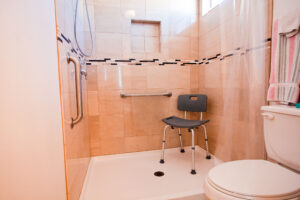
Modifications range in scale and cost. Low-cost modifications include removing area rugs, rearranging furniture, improving lighting, and adding non-slip mats. Moderate modifications include installing grab bars, raised toilet seats, handrails, and shower seats. Major modifications include installing stair lifts, widening doorways for wheelchair access, constructing ramps, creating roll-in showers, or adding first-floor bathrooms.
The term is sometimes used interchangeably with “home adaptation,” “environmental modification,” or “aging-in-place modification.” All refer to the same core concept: changing the environment to fit the person, rather than expecting the person to adapt to an environment that no longer meets their needs (Cha, 2025).
2. Why Home Modification Matters
The vast majority of older adults want to remain in their own homes as they age — a goal known as aging in place. Yet most homes were built without accessibility in mind. Only 10% of U.S. homes are considered “aging ready,” meaning they have features like a no-step entry, a bedroom and full bathroom on the main floor, and wide doorways (Sheth & Cogle, 2023). As functional limitations develop, an unmodified home quickly becomes a source of injury and dependency.
Falls are the leading cause of injury-related death in adults over 65, and the majority occur in the home — in bathrooms, on stairs, and during transitions between surfaces. A 2023 systematic review and meta-analysis of 12 randomized controlled trials found a clinically meaningful 7% reduction in falls among older adults who received targeted home hazard modification programs (Lektip et al., 2023). The strongest outcomes were seen in programs that combined home modification with exercise and education, consistent with occupational therapy’s multimodal approach (Caña-Pino & Pesado-Fernández, 2025).
Beyond fall prevention, the evidence for home modification is broad. A 2025 scoping review of 38 studies found 16 distinct positive outcomes of home modifications for adults aged 50 and over, including reduced fall risk, improved ADL independence, better quality of life, and reduced caregiver burden (Hutchinson et al., 2025). A separate 2025 systematic review confirmed that bathroom modifications, grab bars, and stair railings consistently produce the most impactful results (Cha, 2025).
The economic case is also strong. Home modifications that prevent a single fall-related hospitalization or delay nursing home admission by even a few months generate savings that far exceed the cost of the modifications themselves. OT-led home modification programs are consistently found to be cost-effective when evaluated in randomized controlled trials (Sheth & Cogle, 2023).
3. Who Benefits
Home modification is relevant across the lifespan and across virtually every condition that affects mobility, cognition, or the ability to perform daily tasks. The most common populations served include:
- Older adults — the largest group; modifications support aging in place, reduce fall risk, and maintain ADL independence as physical and cognitive function changes
- Stroke survivors — upper and lower extremity weakness, balance deficits, and cognitive changes create specific home hazards that require targeted assessment and modification
- People with Parkinson’s disease — freezing of gait, postural instability, and reduced arm swing increase fall risk in environments with uneven surfaces, narrow doorways, and inadequate lighting
- People with dementia and Alzheimer’s disease — cognitive and wayfinding modifications such as visual cues, simplified environments, and door alarms support safety at home
- People with multiple sclerosis (MS) — fatigue, spasticity, and balance changes necessitate energy-conserving layouts and mobility supports
- People with traumatic brain injury (TBI) — cognitive, visual, and physical sequelae create a range of home safety challenges
- People with orthopedic conditions — including osteoarthritis, hip or knee replacement, and fracture recovery, where temporary or permanent modifications support safe function during recovery
- People with spinal cord injury or physical disability — major structural modifications including ramp installation, doorway widening, and roll-in shower conversion are often required for full accessibility
- Children with developmental disabilities — including cerebral palsy and ASD, where home modifications support safe participation in daily routines
- Family caregivers — home modifications reduce the physical strain of providing care and lower the risk of caregiver injury during transfers and personal care assistance
Population-level data confirms the scale of need. Approximately one in four U.S. adults aged 65 and older experiences some form of functional limitation (Redzovic et al., 2023), and the global prevalence of ADL disability continues to rise as populations age (Amlak et al., 2025). Home modification is one of the most scalable and cost-effective interventions available to address this challenge.
4. Room-by-Room Modifications
An OT home assessment evaluates every area of the home where daily tasks occur. The following are the most common modification priorities by room.
Bathroom
The bathroom is the highest-risk area for falls and the most frequently modified room. Key modifications include grab bars at the toilet and inside the shower or tub, a shower chair or bench, a handheld showerhead, a raised toilet seat or comfort-height toilet, non-slip bath mats and floor surfaces, removal of glass shower doors in favor of a curtain, and a roll-in or walk-in shower for wheelchair users. Bathroom modifications are consistently identified as the most impactful single intervention across the home modification literature (Cha, 2025).
Bedroom
Bedroom modifications focus on safe transfers and nighttime mobility. Common changes include adjusting bed height (raising or lowering with risers or a lower-profile frame), installing a bed rail or grab rail, ensuring clear pathways to the bathroom at night, adding a bedside commode for people who cannot safely reach the bathroom, improved nighttime lighting with motion-activated night lights, and a hospital-style overbed trapeze bar for people with significant transfer difficulty.
Entryways and Exterior
Many older homes have steps at every entry, which is a significant barrier for people with mobility limitations. Key modifications include installing a ramp or portable threshold ramp at the main entry, adding handrails on both sides of exterior steps, improving exterior lighting, ensuring even and non-slip walkway surfaces, and widening doorways to a minimum of 32–36 inches for wheelchair or walker access.
Stairs
Stair modifications include adding handrails on both sides, improving stair lighting, applying non-slip treads to stair surfaces, and installing a stair lift for people who cannot safely climb stairs but wish to remain in a multi-story home. For people with significant limitations, the most effective intervention is often reorganizing daily activities to a single floor, eliminating the need to use stairs altogether.
Kitchen
Kitchen modifications support meal preparation and safe IADL performance. Common changes include reorganizing frequently used items to counter height (between hip and shoulder), adding a perch stool or high chair for people who cannot stand for prolonged tasks, installing lever-style faucet handles, adding pull-out shelving and lazy Susans in cabinets, ensuring adequate task lighting, and using contrasting colors on countertops and cabinet edges for people with low vision.
Living Areas and Throughout the Home
General home safety modifications include removing area rugs and loose floor coverings that create trip hazards, securing electrical cords, ensuring adequate lighting in all rooms and hallways, widening pathways for walker or wheelchair users, and replacing round door handles with lever handles throughout. For people with dementia, additional environmental supports such as visual labels, contrasting colors to distinguish surfaces, and simplified room layouts reduce confusion and support safe navigation.
5. Home Safety Assessment: OT and PT Roles
Both occupational therapists and physical therapists conduct home safety assessments, and in many home health episodes both disciplines evaluate the same patient. Each brings a distinct and complementary focus to the home environment.
Occupational Therapy
The OT home safety assessment evaluates the interaction between the person’s functional abilities and the physical demands of their home — specifically the ability to perform daily tasks safely and independently. The OT is assessing person-environment fit across all activities of daily living (ADLs) and instrumental ADLs (IADLs), not just fall risk. A comprehensive OT home assessment typically includes:
- Review of medical history, diagnosis, medications, and prior falls
- Functional assessment of strength, balance, mobility, vision, cognition, and ADL performance — observed in the actual home environment where tasks occur
- Room-by-room environmental hazard evaluation using validated tools such as the Westmead Home Safety Assessment or the Home Falls and Accidents Screening Tool (HOME FAST)
- Observation of the person performing high-risk tasks such as bathing, transferring, stair use, and kitchen tasks to identify specific points of difficulty
- Recommendations for modifications prioritized by safety risk and functional impact
- Adaptive equipment provision and training
- Caregiver training on safe assistance techniques
- Referral to home modification contractors or community programs when structural changes are needed
A 2025 scoping review confirmed that environmental modification and adaptive equipment provision were among the most frequently delivered and consistently effective OT interventions for home-based rehabilitation in community-dwelling older adults (Saito et al., 2025). The AOTA practice guidelines for stroke provide strong evidence-based recommendations for home modification as part of discharge planning and community reintegration (Hildebrand et al., 2023).
Physical Therapy
PT’s home safety assessment centers on mobility, fall risk, gait, balance, and the physical impairments that make the home environment dangerous. The PT evaluates how the person moves through the home with their current level of strength, balance, and mobility device use — and identifies both the environmental hazards and the underlying physical deficits that need to be addressed.
Key PT contributions to home safety include:
- Standardized fall risk assessment using validated tools such as the Timed Up and Go (TUG), Berg Balance Scale, and 30-Second Chair Stand
- Gait analysis in the actual home environment — on carpet, uneven surfaces, and through doorways the person uses daily
- Stair negotiation assessment and training for safe stair use with handrails and assistive devices
- Transfer training — bed, chair, toilet, tub — addressing both the person’s technique and the height and position of surfaces
- Mobility device recommendation and fitting — determining whether a cane, walker, or wheelchair is appropriate, which directly determines what home modifications are needed
- Multicomponent exercise programming — strength, balance, and gait training that makes the modified environment safer to use
The 2025 APTA clinical practice guideline for physical therapy management of fall risk in community-dwelling older adults recommends that PT assessment include environmental hazard review as part of a multifactorial fall prevention approach, explicitly recognizing the home environment as a modifiable fall risk factor (Kirk-Sanchez et al., 2025). The strongest fall prevention outcomes across the literature consistently come from programs combining home modification with exercise — the disciplines working together rather than separately (Caña-Pino & Pesado-Fernández, 2025; Lektip et al., 2023).
How OT and PT Work Together
In practice, OT and PT address different but overlapping dimensions of home safety. PT addresses the physical capacity of the person — strength, balance, gait — and helps determine what mobility supports are needed. OT addresses the environment and the daily task demands — what modifications and equipment allow the person to perform ADLs safely in that specific home. A person returning home after a hip fracture, for example, typically needs both: PT to restore mobility and safe stair use, and OT to assess bathroom safety, recommend equipment, and ensure the bedroom and kitchen are set up for the person’s current level of function. When both disciplines are involved, outcomes are consistently stronger than either alone.
For Clinicians
Home safety assessment is a covered service for both OT and PT under Medicare home health when ordered by a physician and delivered to a homebound patient. OT documentation should specify ADL-related functional limitations and how recommended modifications are linked to occupational performance goals. PT documentation should specify mobility and balance deficits, fall risk scores, and how environmental factors contribute to fall risk. For patients being discharged from inpatient or SNF settings, both OT and PT home modification recommendations should be incorporated into the discharge summary. The strongest evidence supports a multimodal program — combining home modification with exercise and education — rather than modification alone (Caña-Pino & Pesado-Fernández, 2025; Kirk-Sanchez et al., 2025).
6. Adaptive Equipment and Assistive Technology
Adaptive equipment encompasses tools, devices, and products that compensate for functional limitations and allow a person to perform daily tasks more safely or independently. In the context of home modification, adaptive equipment is often provided alongside or in place of structural changes, particularly for people who rent, live in shared housing, or face financial barriers to permanent modifications.
Common adaptive equipment for the home includes:
- Grab bars and suction-cup safety rails — for bathrooms and transfers; permanent grab bars require installation but provide the most reliable support
- Shower chairs, tub transfer benches, and shower seats — allow bathing in a seated position, dramatically reducing fall risk in the tub or shower
- Raised toilet seats and toilet safety frames — reduce the sit-to-stand demand at the toilet, especially important after hip or knee surgery
- Bed rails and bed assist handles — support safe transfers in and out of bed
- Handheld showerheads — allow bathing while seated and reduce the need to move within the shower
- Reacher grabbers and dressing aids — reduce bending and reaching for dressing and retrieval tasks
- Long-handled sponges and brushes — support lower extremity hygiene without bending
- Non-slip mats and grip tape — low-cost, immediately effective for wet surfaces and stair edges
- Lever door and faucet handles — replace round knobs, reducing grip demands for people with arthritis or reduced hand strength
- Portable ramps — threshold and modular ramps for single steps and entry barriers
Smart home and assistive technology is an emerging area with growing evidence. Voice-activated devices, automated lighting, medication management systems, and fall detection sensors can extend independence and provide safety monitoring for people living alone or with cognitive impairment. A 2025 systematic review highlighted the growing role of technology-driven home modifications in supporting long-term aging-in-place strategies (Cha, 2025).
OTs assess which equipment is appropriate for the individual’s specific functional profile, train the person and caregivers in safe use, and follow up to ensure the equipment is actually being used and is effective. Equipment that is prescribed without proper fitting and training is frequently abandoned — OT follow-up is a critical component of successful adaptive equipment provision (Fawkes et al., 2024).
7. Aging in Place Programs
Several evidence-based programs combine home modification with OT intervention, nursing, exercise, and community support to comprehensively address the factors that determine whether an older adult can safely remain at home.
CAPABLE (Community Aging in Place — Advancing Better Living for Elders) is the most well-studied of these programs. CAPABLE combines OT home visits, nursing assessment, and up to $1,300 in home modifications to address the person’s own functional goals. Participants identify their own priorities — bathing, mobility, pain management — and the interdisciplinary team works together to address them through skill building, equipment, and environmental changes. Implementations of CAPABLE have consistently shown significant improvements in ADL performance, health status, depressive symptoms, and pain, with high participant satisfaction (Saito et al., 2025).
Reablement is a time-limited, goal-directed home-based program used widely in the UK and Australia. It focuses on helping people regain the skills and confidence to perform daily tasks after illness, injury, or hospital discharge, using a combination of OT, PT, nursing, and carer support with home modification as a core component.
Lifestyle Redesign is an OT-developed preventive program that addresses activity patterns, social engagement, and health behaviors for community-dwelling older adults. It has demonstrated improvements in health outcomes and quality of life in randomized controlled trials.
The common thread across these programs is that home modification alone — without the person-centered assessment, goal-setting, skill training, and follow-up that OT provides — produces weaker outcomes. The environmental change must be matched to the individual’s abilities, goals, and daily routine to be effective (Sheth & Cogle, 2023).
8. Supporting Caregivers
Home modifications benefit not only the person receiving care but also the family members and caregivers who assist them. When the environment is set up to support safe transfers, bathing, and mobility, caregivers can assist more safely and with less physical strain — reducing the risk of caregiver musculoskeletal injury and burnout.
A 2025 scoping review identified five positive outcomes of home modifications specifically for family carers, including reduced caregiver burden, increased confidence in providing care, and reduced anxiety about the person’s safety at home (Hutchinson et al., 2025).
OT caregiver training as part of a home modification visit typically includes:
- Safe body mechanics for assisting with transfers, bathing, and dressing in the modified environment
- How to use adaptive equipment correctly alongside the person rather than taking over tasks
- When to call for professional assessment if function changes or new safety concerns arise
- Community resources for home modification funding, repair programs, and respite care
For Patients and Families
You do not need to wait for a fall or a hospitalization to request a home safety assessment. If daily tasks are becoming harder, or if you or a family member has had a near-miss or is afraid of falling, that is a signal to get an evaluation. An OT can often identify and address multiple risk factors in a single home visit, and many modifications are inexpensive or can be done with basic tools. For people returning home after a hospital stay or rehabilitation, a home visit before or shortly after discharge is one of the most effective ways to prevent readmission.
Related pages on TherapyTopics:
- Fall Prevention — Balance assessment, home hazard reduction, and evidence-based exercise programs for older adults
- Bathing and Shower Safety — Grab bar placement, adaptive equipment, and safe bathing techniques
- Activities of Daily Living — ADL and IADL assessment, intervention strategies, and independence across all ages
- Osteoarthritis — Joint protection, adaptive equipment, and home strategies for knee, hip, and hand OA
- Dementia and Alzheimer’s Disease — Environmental modifications and safety strategies for people living with dementia
9. When to Seek Help
Home modification is most effective when addressed proactively — before a serious fall or functional decline — rather than reactively. The following situations indicate that a home safety evaluation by an occupational therapist is warranted.
When to Request a Home Safety Assessment
- A recent fall at home, even without injury — a first fall significantly increases the risk of a second
- Fear of falling that is limiting activity or causing the person to avoid moving around the home
- Discharge from a hospital, rehabilitation facility, or skilled nursing facility where new functional limitations are present
- A new diagnosis (stroke, Parkinson’s, hip fracture, dementia, MS) that affects mobility, balance, or cognition
- Increasing difficulty with bathing, dressing, toileting, or moving safely through the home
- Use of a new mobility device (walker, cane, wheelchair) that requires environmental adjustments
- A caregiver reporting difficulty assisting safely, or concern about the person’s safety when alone
- Planning ahead for aging in place before limitations develop, particularly for adults over 65
Home health OT evaluations are typically ordered by a physician and covered by Medicare Part A for homebound patients. Outpatient OT home visits are covered under Medicare Part B in many circumstances. Community-based programs, Area Agencies on Aging, and some state and local programs provide home modification funding for low-income older adults and people with disabilities.
For Clinicians: Referral Guidance
Order a home health OT evaluation when discharging a patient with new mobility limitations, fall history, or a condition affecting home safety. Include the diagnosis, functional status, and specific concerns in the referral — for example: “patient using walker post-hip fracture, home has multiple stairs and no handrail, caregiver available part-time.” For outpatient patients who are not homebound, refer to a community OT or home modification specialist. When structural modifications such as ramps or bathroom renovation are needed, the OT can provide specifications and connect the patient with certified aging-in-place (CAPS) contractors or community funding sources. A single well-timed home modification visit at discharge can prevent a readmission that costs orders of magnitude more than the assessment itself.
References
Amlak, B. T., Getinet, M., Getie, A., Kebede, W. M., Tarekegn, T. T., & Belay, D. G. (2025). Functional disability in basic and instrumental activities of daily living among older adults globally: A systematic review and meta-analysis. BMC Geriatrics, 25(1), 413. https://doi.org/10.1186/s12877-025-06056-8
Caña-Pino, A., & Pesado-Fernández, L. (2025). Occupational therapy interventions for fall prevention in older adults: A systematic review of multimodal strategies. Physiologia, 5(3), 33. https://doi.org/10.3390/physiologia5030033
Cha, S. M. (2025). A systematic review of home modifications for aging in place in older adults. Healthcare, 13(7), 752. https://doi.org/10.3390/healthcare13070752
Fawkes, T., Croft, C. S., Peters, C. M., & Mortenson, W. B. (2024). Exploring the sustainability of home modifications and adaptations in occupational therapy. Canadian Journal of Occupational Therapy, 91(2), 116–123. https://doi.org/10.1177/00084174231222310
Hildebrand, M. W., Geller, D., & Proffitt, R. (2023). Occupational therapy practice guidelines for adults with stroke. American Journal of Occupational Therapy, 77(5), 7705397010. https://doi.org/10.5014/ajot.2023.077501
Hutchinson, C., Block, H., Dymmott, A., Gough, C., Laver, K., Walker, R., Xiao, L., & George, S. (2025). Home modification outcomes for adults aged 50 years and over and their relatives: A scoping review. OTJR: Occupation, Participation and Health. https://doi.org/10.1177/15394492251361086
Kirk-Sanchez, N., McDonough, C., Avin, K. G., Blackwood, J., & Hanke, T. A. (2025). Physical therapy management of fall risk in community-dwelling older adults: An evidence-based clinical practice guideline from the American Physical Therapy Association — Geriatrics. Journal of Geriatric Physical Therapy, 48(2), 62–87. https://doi.org/10.1519/JPT.0000000000000454
Lektip, C., Chaovalit, S., Wattanapisit, A., Lapmanee, S., Nawarat, J., & Yaemrattanakul, W. (2023). Home hazard modification programs for reducing falls in older adults: A systematic review and meta-analysis. PeerJ, 11, e15699. https://doi.org/10.7717/peerj.15699
Redzovic, S., Vereijken, B., & Bonsaksen, T. (2023). Aging at home: Factors associated with independence in activities of daily living among older adults in Norway — a HUNT study. Frontiers in Public Health, 11, 1215417. https://doi.org/10.3389/fpubh.2023.1215417
Saito, Y., Kikuchi, Y., Sawada, T., & Tomori, K. (2025). Occupational therapy intervention for improvement of activity and participation in home rehabilitation for community-dwelling older adults: A scoping review. American Journal of Occupational Therapy, 79(6), 7906205070. https://doi.org/10.5014/ajot.2025.051190
Sheth, S., & Cogle, C. R. (2023). Home modifications for older adults: A systematic review. Journal of Applied Gerontology, 42(5), 1151–1164. https://doi.org/10.1177/07334648231151669
© TherapyTopics.com — All information is for educational purposes only and does not constitute medical or therapeutic advice. Consult a licensed therapist or physician for evaluation and treatment.