

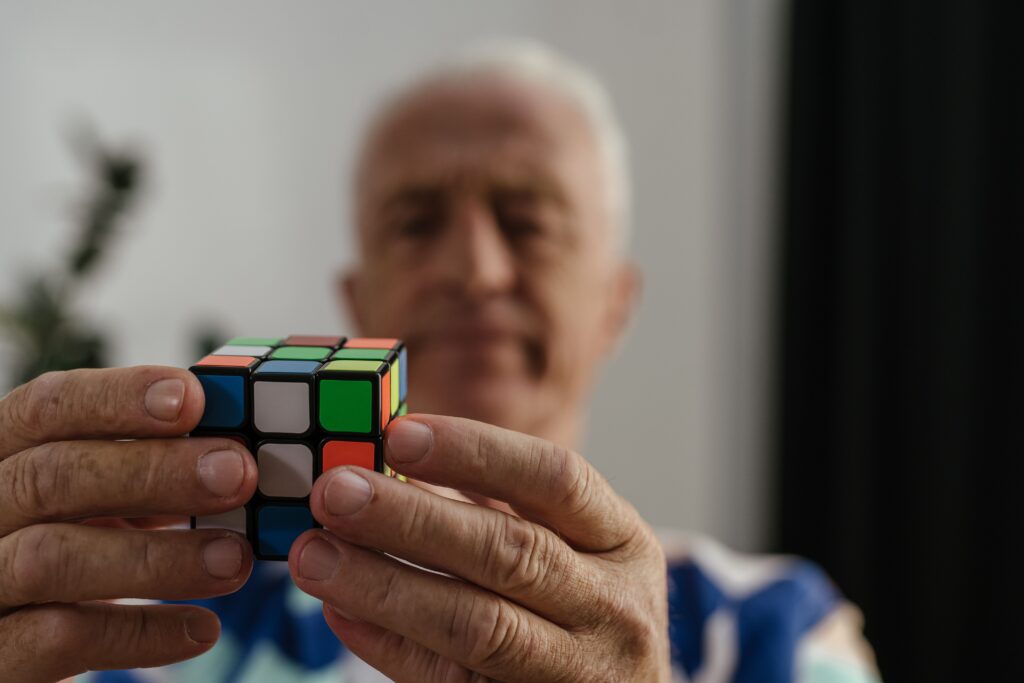
Key Takeaways
- Cognitive rehabilitation is a structured, evidence-based approach to helping people with brain injuries, neurological conditions, or age-related decline restore or compensate for deficits in memory, attention, executive function, and processing speed.
- Occupational therapy, physical therapy, and speech-language pathology each have distinct and complementary roles in cognitive rehabilitation — OT addresses functional cognition and daily tasks, PT addresses cognitive-motor function and exercise-based brain health, and SLP addresses cognitive-communication disorders and language.
- Cognitive rehabilitation is effective across a wide range of conditions including stroke, traumatic brain injury (TBI), dementia, Parkinson’s disease, multiple sclerosis (MS), mild cognitive impairment (MCI), and long COVID.
- Combined physical exercise and cognitive training produces synergistic benefits that exceed those of either intervention alone, with significant improvements in memory, attention, and executive function in people with MCI (Muñoz-Perete et al., 2025).
- Telerehabilitation for cognitive dysfunction is as effective as in-person treatment for key cognitive domains and significantly better than usual care (Jeon et al., 2025).
- Early cognitive rehabilitation produces the best outcomes. Waiting until impairment becomes severe limits the brain’s neuroplastic response to intervention.
Important
Cognitive difficulties after a stroke, brain injury, or with a progressive neurological condition are not simply part of the diagnosis to be accepted — they are treatable. Occupational therapists, physical therapists, and speech-language pathologists all provide evidence-based cognitive rehabilitation. If you or someone you care for is experiencing memory problems, difficulty concentrating, or trouble managing daily tasks, ask your physician for a referral to cognitive rehabilitation.
Table of Contents
- What Is Cognitive Rehabilitation?
- Who Benefits
- Key Cognitive Domains Addressed in Rehabilitation
- The Role of Occupational Therapy
- The Role of Physical Therapy
- The Role of Speech-Language Pathology
- Intervention Approaches and Techniques
- Telerehabilitation and Technology
- Supporting Caregivers
- When to Seek Help
- References
1. What Is Cognitive Rehabilitation?
Cognitive rehabilitation is a structured, goal-directed intervention designed to help people who have experienced changes in cognitive function due to brain injury, neurological disease, or age-related decline. It draws on neuroscience, psychology, and rehabilitation medicine to help individuals restore lost abilities where possible, or develop compensatory strategies and environmental supports where full restoration is not achievable.
Cognitive rehabilitation is not a single technique or therapy, it is a broad clinical framework that includes direct cognitive training, functional skill retraining, metacognitive strategy instruction, environmental modification, assistive technology, and caregiver education. The specific approach depends on the person’s diagnosis, the cognitive domains affected, their functional goals, and the stage of their recovery or disease.
The term is sometimes used interchangeably with “cognitive remediation,” “neurocognitive rehabilitation,” or “cognitive therapy.” In rehabilitation settings, it most often refers to the systematic application of evidence-based techniques to improve real-world functioning, not just test scores, across domains such as memory, attention, executive function, processing speed, and language (Gibson et al., 2022).
2. Who Benefits
Cognitive rehabilitation is appropriate across a wide range of conditions and age groups. Any diagnosis that affects brain structure or function has the potential to impair cognition, and most of those impairments are at least partially responsive to rehabilitation.
The most common populations served include:
- Stroke survivors — cognitive impairment affects 50% or more of stroke survivors and includes deficits in attention, memory, executive function, language, and visuospatial processing; OT-led cognitive rehabilitation significantly improves both cognitive outcomes and ADL performance post-stroke (Vásquez-Carrasco et al., 2025; Gibson et al., 2022)
- Traumatic brain injury (TBI) — cognitive deficits are among the most disabling and persistent sequelae of TBI; cognitive rehabilitation is the primary treatment approach for post-injury attention, memory, and executive function deficits
- Dementia and Alzheimer’s disease — cognitive rehabilitation improves daily functioning and quality of life even in diagnosed dementia, with the strongest effects in earlier stages; SLP language interventions and OT-based occupational performance approaches both show positive outcomes (Ren et al., 2024; Dimitriou et al., 2024)
- Mild cognitive impairment (MCI) — the stage between normal aging and dementia where intervention has the greatest potential to slow progression; combined OT, PT, and SLP approaches produce the best outcomes (Muñoz-Perete et al., 2025; Vásquez-Carrasco et al., 2024)
- Parkinson’s disease — cognitive changes including slowed processing speed, executive dysfunction, and visuospatial deficits are common and treatable with structured cognitive rehabilitation
- Multiple sclerosis (MS) — cognitive fatigue, processing speed deficits, and memory impairment are among the most common and disabling MS symptoms; cognitive rehabilitation addresses these directly
- Long COVID — cognitive dysfunction (commonly called “brain fog”) is one of the most prevalent long COVID symptoms; OT-led cognitive interventions are emerging as a primary rehabilitation approach (Weix et al., 2025)
- Cancer-related cognitive impairment — sometimes called “chemo brain,” this affects attention, memory, and processing speed and is increasingly recognized as a rehabilitation target
- Older adults with age-related cognitive decline — preventive and restorative cognitive rehabilitation for community-dwelling older adults improves brain health outcomes and delays functional decline
3. Key Cognitive Domains Addressed in Rehabilitation
Cognitive rehabilitation targets specific domains of cognitive function. Understanding which domains are affected guides assessment tool selection, intervention planning, and goal setting across OT, PT, and SLP.
Attention is the ability to focus, sustain concentration, divide attention between tasks, and filter irrelevant information. Attention deficits affect virtually every other cognitive domain and nearly every daily activity. Rehabilitation targets sustained attention (maintaining focus over time), selective attention (filtering distractions), divided attention (managing two tasks simultaneously), and alternating attention (shifting between tasks).
Memory encompasses working memory (holding information in mind while using it), short-term and long-term memory, and prospective memory (remembering to do things in the future). Memory rehabilitation uses both restorative strategies (spaced retrieval, errorless learning) and compensatory strategies (notebooks, calendars, alarms, medication organizers).
Executive function refers to the higher-order cognitive processes that govern planning, organization, problem-solving, initiation, inhibition, and flexible thinking. Executive function deficits profoundly affect IADL performance — managing finances, preparing meals, managing medications, and navigating complex tasks all rely heavily on executive function.
Processing speed is the rate at which the brain takes in and responds to information. Slowed processing speed is one of the most common effects of acquired brain injury, MS, and aging, and affects safety in activities such as driving, navigating busy environments, and responding to rapidly changing situations.
Language and communication — addressed primarily by SLP — includes aphasia (language loss after stroke or brain injury), dysarthria (motor speech impairment), cognitive-communication disorders (the language and communication effects of TBI, dementia, or right hemisphere stroke), and pragmatic communication (social language use).
Visuospatial processing affects the ability to perceive, judge, and navigate spatial relationships. Neglect (inattention to one side of space) and visuospatial deficits are common after stroke and affect safety, mobility, and ADL performance.
4. The Role of Occupational Therapy
Occupational therapists are uniquely positioned in cognitive rehabilitation because they address the direct impact of cognitive deficits on daily function, not just cognitive performance on tests. OT’s focus is on enabling the person to perform the meaningful occupations (activities of daily living, IADLs, work, and leisure) that cognitive impairment has disrupted.
OT cognitive rehabilitation assessment evaluates how cognitive deficits affect real-world performance. Rather than administering only standardized neuropsychological tests, OTs observe people performing actual tasks — cooking, managing medications, navigating the home, to identify where cognitive breakdowns occur in daily life. Validated OT tools include the Cognitive Performance Test (CPT), the Assessment of Motor and Process Skills (AMPS), the Canadian Occupational Performance Measure (COPM), and the Allen Cognitive Level Screen (ACLS).
OT interventions for cognitive rehabilitation include:
- Functional cognition training — practicing specific IADLs that have been disrupted by cognitive impairment, with graded complexity and cueing support
- Metacognitive strategy training — teaching people to monitor, plan, and self-regulate their own cognitive performance; particularly effective for TBI and executive function deficits
- Errorless learning — a technique in which tasks are structured to prevent errors during learning, capitalizing on intact implicit memory systems; effective in dementia and severe amnesia
- External memory aids and compensatory strategies — notebooks, calendars, smartphones, medication organizers, whiteboards, and structured routines that reduce reliance on impaired memory systems
- Environmental modification — organizing the home and workspace to reduce cognitive demands, support safety, and enable independent daily function
- Cognitive-functional intervention — structured programs such as the Cognitive Orientation to daily Occupational Performance (CO-OP) approach that use goal setting and strategy discovery
A 2025 systematic review with meta-analysis confirmed that OT interventions significantly improve cognitive function alongside ADL and physical outcomes in middle-aged and older adults with chronic stroke (Vásquez-Carrasco et al., 2025). A Cochrane review of 24 RCTs found that OT for cognitive impairment in stroke patients improved ADL performance and functional outcomes compared to usual care or no treatment (Gibson et al., 2022).
OT also plays a central role in long COVID cognitive rehabilitation. A 2025 OTJR systematic review identified cognitive interventions provided by occupational therapists as a primary rehabilitation approach for long COVID brain fog, addressing functional cognition, energy management, and return to meaningful activity (Weix et al., 2025).
5. The Role of Physical Therapy
Physical therapy’s role in cognitive rehabilitation is grounded in the well-established relationship between physical exercise and brain health. Exercise is one of the most robustly supported non-pharmacological interventions for cognitive function across the lifespan — it promotes neuroplasticity, increases cerebral blood flow, supports hippocampal neurogenesis, and reduces neuroinflammation.
A 2025 systematic review and meta-analysis of 21 studies involving 2,256 participants found that combined physical exercise and cognitive stimulation produced significant improvements in memory, attention, and executive function in older adults with MCI, exceeding the benefits of either intervention alone (Muñoz-Perete et al., 2025). This synergistic effect is the scientific rationale for interdisciplinary cognitive rehabilitation programs that integrate PT exercise with OT and SLP cognitive intervention.
PT contributions to cognitive rehabilitation include:
- Aerobic exercise programming — structured cardiorespiratory exercise has the strongest evidence base for improving cognitive function, particularly memory and executive function, in older adults and people with neurological conditions
- Resistance training — progressive resistance exercise improves executive function and attention; particularly relevant for older adults with MCI and early dementia
- Dual-task training — combining physical tasks (walking, balance activities) with concurrent cognitive tasks (counting, naming, memory retrieval) directly targets the cognitive-motor integration that is disrupted in many neurological conditions
- Balance and gait rehabilitation — balance and cognitive function share neural substrates; improving
 postural stability also improves attention, processing speed, and safety in complex environments
 - Mind-body exercise — tai chi, yoga, and similar practices combine physical movement with attentional focus and have strong evidence for cognitive benefits in older adults
The 2025 APTA clinical practice guideline for fall risk management explicitly recommends multicomponent exercise including dual-task training as an evidence-based intervention that addresses both physical and cognitive-motor fall risk factors (Kirk-Sanchez et al., 2025). PT’s role in cognitive rehabilitation is not incidental — it is a direct and essential component of comprehensive brain health intervention.
6. The Role of Speech-Language Pathology
Speech-language pathologists are the primary rehabilitation specialists for cognitive-communication disorders — the language, communication, and cognitive impairments that arise from acquired brain injury, neurological disease, and dementia. SLP’s role in cognitive rehabilitation is both direct (treating the impairment itself) and functional (restoring the person’s ability to communicate and participate in daily life).
SLP cognitive rehabilitation assessment uses standardized tools including the Cognitive-Linguistic Quick Test (CLQT), the Ross Information Processing Assessment (RIPA), the Functional Assessment of Communication Skills (FACS), and condition-specific batteries for aphasia and dementia. Assessment identifies the specific cognitive-communication profile that guides intervention.
SLP interventions for cognitive rehabilitation include:
- Aphasia treatment — intensive language intervention for people with aphasia following stroke or brain injury; approaches include constraint-induced language therapy, semantic feature analysis, and script training
- Cognitive-communication treatment — addressing attention, memory, and executive function as they affect communication in people with TBI, right hemisphere stroke, or dementia
- Memory strategy training — teaching external and internal memory strategies (visual imagery, spaced retrieval, use of technology) to compensate for memory impairment affecting communication and daily function
- Language intervention in dementia — structured language and communication programs have demonstrated improvements in verbal fluency, memory, and occupational performance in people with Alzheimer’s disease (Dimitriou et al., 2024)
- Augmentative and alternative communication (AAC) — for people with severe communication disorders, AAC devices and strategies restore functional communication and social participation
- Caregiver communication training — teaching family members and care partners how to communicate effectively with people with aphasia, dementia, or cognitive-communication disorders
A 2024 systematic review of language and communication interventions in Alzheimer’s disease found consensus across studies that language rehabilitation — alone or combined with cognitive training — improved verbal fluency, memory, and attention in people with Alzheimer’s disease (Dimitriou et al., 2024). SLP’s contribution to cognitive rehabilitation in dementia is both underutilized clinically and increasingly well-supported by evidence.
For Clinicians
Cognitive rehabilitation is most effective when delivered as an interdisciplinary program with coordinated goals across OT, PT, and SLP. Each discipline should assess cognitive function within its own scope, share findings, and align intervention goals. OT focuses on functional cognition and occupational performance, PT addresses cognitive-motor function and exercise-based brain health, and SLP addresses cognitive-communication disorders. Refer early — cognitive neuroplasticity is greatest in the first weeks to months after injury, but evidence supports ongoing benefit from rehabilitation even in chronic phases of stroke, TBI, and dementia.
7. Intervention Approaches and Techniques
Cognitive rehabilitation draws on several well-established frameworks and techniques. The choice of approach depends on the person’s diagnosis, cognitive profile, severity of impairment, and functional goals.
Restorative approaches aim to directly improve the impaired cognitive function through targeted practice and training. Computerized cognitive training programs, paper-based attention and memory drills, and structured cognitive stimulation therapy are examples. These approaches are most effective in the early post-injury phase when neuroplasticity is highest, and in conditions such as MCI where some restorative capacity remains.
Compensatory approaches teach people to use strategies, tools, and environmental supports to work around cognitive deficits rather than restore them directly. External memory aids (notebooks, phones, calendars), structured routines, checklists, and visual cues all reduce the cognitive demand of daily tasks. Compensatory approaches are particularly important in progressive conditions such as dementia, where restoration is not the goal, and in severe or chronic impairments where restorative capacity is limited.
Metacognitive strategy training teaches people to monitor, evaluate, and regulate their own cognitive performance. The Goal Management Training (GMT) and CO-OP (Cognitive Orientation to daily Occupational Performance) approaches are examples, both of which have strong evidence for improving executive function and IADL performance after TBI and stroke.
Cognitive stimulation therapy (CST) is a group-based psychosocial intervention with strong evidence for dementia, combining structured activities, discussion, and social engagement to stimulate cognitive function and improve quality of life. It is one of the most widely implemented evidence-based dementia interventions internationally.
Combined physical and cognitive training is increasingly recognized as producing synergistic benefits. Programs that pair aerobic or resistance exercise with cognitive training tasks significantly outperform single-modality interventions across memory, attention, and executive function in people with MCI and early dementia (Muñoz-Perete et al., 2025). This finding directly supports interdisciplinary models where PT and OT or SLP deliver coordinated programs.
A 2025 systematic review and meta-analysis found that cognitive rehabilitation combined with transcranial direct current stimulation (tDCS) — a form of non-invasive brain stimulation, significantly improved both cognitive function and ADL performance in people with post-stroke cognitive impairment, suggesting that adjunctive neurostimulation can enhance the effects of behavioral cognitive rehabilitation (Luo et al., 2025).
8. Telerehabilitation and Technology
Telerehabilitation — delivering rehabilitation services remotely using video, apps, and digital platforms, has emerged as a viable and effective delivery model for cognitive rehabilitation, particularly for people with transportation barriers, fatigue, or conditions limiting community access.
A 2025 systematic review and meta-analysis of 16 RCTs found that cognitive telerehabilitation was significantly more effective than usual care for global cognition, and not inferior to face-to-face treatment for global cognition, attention, and visuospatial function (Jeon et al., 2025). These findings support telerehabilitation as a clinically appropriate option for many patients, not a lesser substitute for in-person care.
Technology-based cognitive rehabilitation tools include:
- Computerized cognitive training platforms — structured programs targeting attention, memory, processing speed, and executive function; delivered via computer, tablet, or smartphone
- Video-based therapy sessions — real-time OT, PT, and SLP sessions conducted via secure video platforms, with the therapist guiding the person through cognitive exercises and functional task practice
- Smartphone apps and digital memory aids — calendar reminders, medication management apps, GPS navigation, and note-taking tools that serve as compensatory cognitive supports in daily life
- Smart home technology — voice-activated devices, automated lighting and medication reminders, and fall detection systems that reduce cognitive demands and support independent function
- Virtual reality (VR) — immersive cognitive training in simulated real-world environments; emerging
 evidence supports VR for attention, memory, and functional task training after stroke and TBI
OT plays a particular role in technology-based cognitive rehabilitation by assessing which tools are appropriate for the individual’s cognitive profile, training the person and caregivers in their use, and integrating digital supports into the person’s actual daily routines and environment. A tool that is not used is not helpful, OT follow-up and training are essential components of successful technology adoption for cognitive support.
9. Supporting Caregivers
Cognitive impairment profoundly affects not only the individual but also the family members and caregivers who support them. Understanding the nature of cognitive deficits, why they occur, how they manifest, and how they can be managed is essential for caregivers to provide effective support without creating dependency or frustration.
Across all three disciplines, caregiver education is a core component of cognitive rehabilitation. Key areas include:
- Understanding the cognitive profile — which domains are affected, which are intact, and what this means for daily life
- Communication strategies — how to communicate clearly and effectively with someone with aphasia, dementia, or cognitive-communication disorders
- Cueing techniques — how to provide the right level of prompting without over-assisting, preserving the person’s participation and dignity
- Memory support strategies — how to set up environmental memory aids (whiteboards, calendars, medication organizers) and maintain consistent routines
- Managing behavioral and emotional changes that accompany cognitive impairment — including frustration, apathy, and disinhibition
- Self-care for caregivers — recognizing caregiver burden and accessing respite and support resources
For Patients and Families
Cognitive difficulties after a stroke, brain injury, or with aging are not simply something to accept and live with. Occupational therapists, physical therapists, and speech-language pathologists all provide evidence-based cognitive rehabilitation that can meaningfully improve daily function, independence, and quality of life. Ask your physician for a referral to cognitive rehabilitation if you or a family member is experiencing memory problems, difficulty concentrating, trouble managing daily tasks, or changes in communication. The earlier rehabilitation begins, the better the outcomes.
Related pages on TherapyTopics:
- Stroke Recovery — Rehabilitation after stroke including cognitive, motor, and communication recovery
- Traumatic Brain Injury (TBI) — Cognitive, behavioral, and functional rehabilitation after TBI
- Dementia and Alzheimer’s Disease — Memory care, daily function, and caregiver strategies
- Parkinson’s Disease — OT, PT, and SLP for Parkinson’s including cognitive and communication changes
- Activities of Daily Living — ADL and IADL assessment, adaptive strategies, and independence
- Home Modification and Safety — Environmental supports for people with cognitive impairment
10. When to Seek Help
Cognitive rehabilitation is most effective when started early. The following situations indicate that a referral to OT, PT, SLP, or an interdisciplinary cognitive rehabilitation program is appropriate.
When to Request a Cognitive Rehabilitation Referral
- Recent stroke, TBI, or acquired brain injury with any cognitive symptoms — attention, memory, executive function, language, or processing speed changes
- Diagnosis of mild cognitive impairment (MCI) — early intervention has the greatest potential to slow progression
- Early to moderate dementia or Alzheimer’s disease — cognitive rehabilitation improves daily function and quality of life even after diagnosis
- Parkinson’s disease, MS, or other progressive neurological conditions with cognitive symptoms
- Long COVID with cognitive symptoms (brain fog, memory difficulties, concentration problems) persisting beyond 4 weeks
- Cancer-related cognitive impairment affecting daily function after chemotherapy or radiation
- Difficulty managing medications, finances, cooking, or other IADLs that previously posed no problem
- Family or caregiver concern about changes in memory, decision-making, communication, or daily task performance
Cognitive rehabilitation can be delivered in inpatient rehabilitation, outpatient clinics, home health, and via telehealth. Referrals may be made to OT, PT, SLP, or directly to an interdisciplinary cognitive rehabilitation program depending on the person’s needs and the available services. Neuropsychological evaluation can complement rehabilitation assessment by providing a detailed cognitive profile to guide treatment planning.
For Clinicians: Referral Guidance
Refer to OT for functional cognition assessment and IADL-focused cognitive rehabilitation. Refer to SLP for cognitive-communication disorders, aphasia, and language-based cognitive deficits. Refer to PT for exercise-based cognitive rehabilitation, dual-task training, and cognitive-motor integration — particularly in older adults with MCI or fall risk. When cognitive impairment is the primary concern across multiple domains, refer to an interdisciplinary cognitive rehabilitation program or a neuropsychologist for comprehensive assessment. Include the specific cognitive symptoms and functional impact in the referral — for example: “patient post-stroke with attention deficits affecting medication management and meal preparation” — to help the receiving clinician prioritize the assessment and intervention focus.
References
Dimitriou, N. K., Nousia, A., Georgopoulou, E. N., Martzoukou, M., Liampas, I., Dardiotis, E., & Nasios, G. (2024). Language and communication interventions in people with Alzheimer’s disease: A systematic review. Healthcare, 12(7), 741. https://doi.org/10.3390/healthcare12070741
Gibson, E., Koh, C. L., Eames, S., Bennett, S., Scott, A. M., & Hoffmann, T. C. (2022). Occupational therapy for cognitive impairment in stroke patients. Cochrane Database of Systematic Reviews, 2022(3), CD006430. https://doi.org/10.1002/14651858.CD006430.pub3
Jeon, H., Kim, D. Y., Park, S. W., Lee, B. S., Han, H. W., Jeon, N., Kim, M., Kang, M., & Kim, S. (2025). A systematic review of cognitive telerehabilitation in patients with cognitive dysfunction. Frontiers in Neurology, 15, 1450977. https://doi.org/10.3389/fneur.2024.1450977
Kirk-Sanchez, N., McDonough, C., Avin, K. G., Blackwood, J., & Hanke, T. A. (2025). Physical therapy management of fall risk in community-dwelling older adults: An evidence-based clinical practice guideline from the American Physical Therapy Association — Geriatrics. Journal of Geriatric Physical Therapy, 48(2), 62–87. https://doi.org/10.1519/JPT.0000000000000454
Luo, N., Zhao, B., Wang, H., Wu, J., Luo, Y., Yuan, M., & Xu, C. (2025). Effect of transcranial direct current stimulation combined with cognitive rehabilitation on cognitive function and activities of daily living in patients with post-stroke cognitive impairment: A systematic review and meta-analysis. Frontiers in Neurology, 16, 1523001. https://doi.org/10.3389/fneur.2025.1523001
Muñoz-Perete, J. M., Carcelén-Fraile, M. D. C., Cano-Sánchez, J., Aibar-Almazán, A., Castellote-Caballero, Y., Mesas-Aróstegui, M. A., García-Gutiérrez, A., & Hita-Contreras, F. (2025). Combined physical and cognitive therapies for the health of older adults with mild cognitive impairment: A systematic review and meta-analysis. Healthcare, 13(6), 591. https://doi.org/10.3390/healthcare13060591
Ren, S., Pan, F., & Jin, J. (2024). The effect of cognitive rehabilitation on daily functioning of patients with Alzheimer’s disease: A systematic review and meta-analysis of clinical trials. Frontiers in Neurology, 15, 1371298. https://doi.org/10.3389/fneur.2024.1371298
Vásquez-Carrasco, E., Huenchuquen, C., Ferrón, C., Hernandez-Martinez, J., Landim, S. F., Helbig, F., Carmine, F., Valdés-Badilla, P., Sandoval, C., Sánchez Gómez, C., & Moruno-Miralles, P. (2024). Effectiveness of leisure-focused occupational therapy interventions in middle-aged and older people with mild cognitive impairment: A systematic review. Healthcare, 12(24), 2521. https://doi.org/10.3390/healthcare12242521
Vásquez-Carrasco, E., Jamett-Oliva, P., Hernandez-Martinez, J., Riquelme-Hernández, C., Villagrán-Silva, F., Branco, B. H. M., Sandoval, C., & Valdés-Badilla, P. (2025). Effectiveness of occupational therapy interventions on activities of daily living, cognitive function, and physical function in middle-aged and older people with chronic stroke: A systematic review with meta-analysis. Journal of Clinical Medicine, 14(7), 2197. https://doi.org/10.3390/jcm14072197
Weix, N. M., Shake, H. M., Duran Saavedra, A. F., Clingan, H. E., Hernandez, V. C., Johnson, G. M., DeVries Hansen, A., Collins, D. M., Pryor, L. E., Kitchens, R., Armstead, A., & Hilton, C. (2025). Cognitive interventions and rehabilitation to address long-COVID symptoms: A systematic review. OTJR: Occupation, Participation and Health, 46(1), 74–95. https://doi.org/10.1177/15394492251328310
© TherapyTopics.com — All information is for educational purposes only and does not constitute medical or therapeutic advice. Consult a licensed therapist or physician for evaluation and treatment.