

Key Takeaways
- Pelvic floor rehabilitation uses exercise, manual therapy, biofeedback, and electrical stimulation to treat bladder, bowel, sexual, and musculoskeletal dysfunction (Alouini et al., 2022).
- Pelvic floor muscle training (PFMT) is the first-line conservative treatment for urinary incontinence in both women and men (Bø et al., 2022; Novais et al., 2025).
- Occupational therapists address how pelvic floor dysfunction affects daily activities including toileting, sexual activity, work, and social participation (Peinado Molina et al., 2023).
- Physical therapists lead assessment, manual therapy, PFMT, biofeedback, and electrical stimulation across a broad range of pelvic floor conditions (Bø et al., 2022).
- Telerehabilitation has demonstrated comparable effectiveness to in-person pelvic floor training, expanding access for patients who face geographic or mobility barriers (Hao et al., 2024).
- Pelvic floor disorders significantly reduce quality of life across physical, mental, and social dimensions (Peinado Molina et al., 2023).
Contents
- What Is Pelvic Floor Rehabilitation?
- Who Can Benefit?
- Occupational Therapy’s Role
- Physical Therapy’s Role
- Speech-Language Pathology’s Role
- Pelvic Floor Muscle Training
- Biofeedback and Electrical Stimulation
- Pelvic Organ Prolapse
- Chronic Pelvic Pain
- Telerehabilitation for Pelvic Health
- When to Refer
- References
1. What Is Pelvic Floor Rehabilitation?
The pelvic floor is a group of muscles, ligaments, and connective tissues that form the base of the pelvis. These structures support the bladder, bowel, and uterus (or prostate), coordinate urinary and bowel control, contribute to sexual function, and provide core stability during movement (Bø et al., 2022). When these muscles become weak, tight, uncoordinated, or injured, a range of symptoms can develop that significantly interfere with daily life (Peinado Molina et al., 2023).
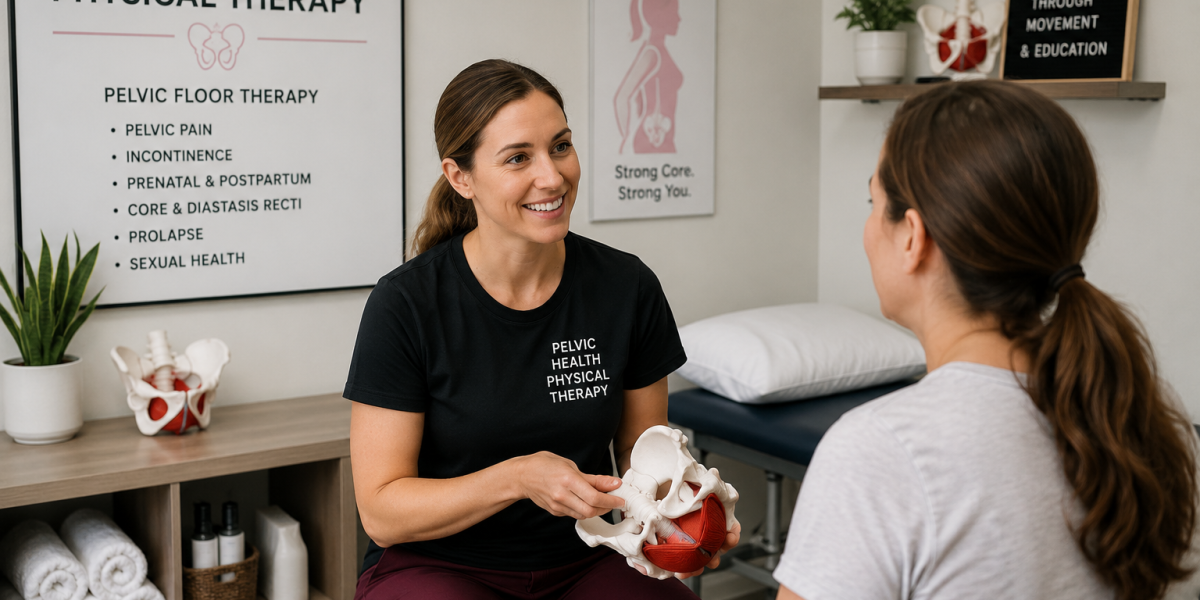
Pelvic floor rehabilitation is a specialized area of therapy that uses evidence-based interventions — including therapeutic exercise, manual therapy, biofeedback, electrical stimulation, and education — to address dysfunction in these structures (Alouini et al., 2022). It is delivered by trained occupational therapists and physical therapists with advanced certification in pelvic health, often as part of a multidisciplinary team.
Pelvic floor disorders affect people of all genders and ages. They include urinary incontinence, fecal incontinence, pelvic organ prolapse, chronic pelvic pain, and sexual dysfunction. These conditions are underreported and undertreated, yet highly responsive to rehabilitation when identified early (Peinado Molina et al., 2023).
🟢 For Patients and Families
- The pelvic floor is a group of muscles at the base of your pelvis that supports your bladder, bowel, and uterus and controls bladder, bowel, and sexual function (Bø et al., 2022).
- Pelvic floor problems are common — affecting an estimated 25–50% of women over their lifetime — but they are not a normal part of aging and are highly treatable (Peinado Molina et al., 2023).
- A trained therapist can assess your pelvic floor and create a personalized program to help you regain control and reduce symptoms (Alouini et al., 2022).
- Treatment is usually non-surgical and may include exercises, hands-on therapy, biofeedback, and lifestyle changes (Bø et al., 2022).
🟣 For Clinicians
- Pelvic floor disorders affect an estimated 25–50% of women over their lifetime and are associated with significant decrements in physical, psychological, and social quality of life (Peinado Molina et al., 2023).
- Conservative rehabilitation — including PFMT, manual therapy, biofeedback, and education — is recommended as first-line management before surgical referral across urinary incontinence and pelvic organ prolapse guidelines (Bø et al., 2022).
- PFMT with or without biofeedback is supported by systematic review evidence as the primary conservative intervention for both stress and urge urinary incontinence in women (Alouini et al., 2022).
2. Who Can Benefit?
Pelvic floor rehabilitation is appropriate for a wide range of individuals. Women experiencing urinary leakage during coughing or exercise (stress urinary incontinence), urgency with difficulty reaching the toilet (urge incontinence), or a sensation of pelvic heaviness or bulging (prolapse) are among the most common referrals (Alouini et al., 2022; Bø et al., 2022). Postpartum women frequently present with incontinence or pelvic pain related to delivery, and supervised PFMT has demonstrated positive outcomes in this population (Höder et al., 2023).
Men also benefit significantly. Post-prostatectomy urinary incontinence affects up to 80% of men immediately following surgery, and pelvic floor rehabilitation is the established first-line intervention to accelerate continence recovery (Novais et al., 2025). Men with chronic pelvic pain syndrome or bladder urgency are also appropriate candidates for pelvic floor PT.
Other populations who benefit include older adults managing incontinence and fall risk, individuals with neurological conditions such as multiple sclerosis or Parkinson’s disease affecting bladder control, and anyone with chronic pelvic pain or dyspareunia (painful intercourse) (Starzec-Proserpio et al., 2025). Patients recovering from pelvic or abdominal surgery, cancer treatment, or hip replacement also frequently require pelvic floor intervention (Peinado Molina et al., 2023).
🟢 For Patients and Families
- You do not have to be a woman or be postpartum to benefit from pelvic floor therapy — men, older adults, and people with neurological conditions are also commonly treated (Novais et al., 2025).
- If you are leaking urine, experiencing pelvic pressure or pain, having difficulty with bowel control, or noticing changes in sexual function, a pelvic health therapist can evaluate and treat your symptoms (Alouini et al., 2022).
- Pelvic floor disorders are underreported — many people wait years before seeking treatment, yet these conditions respond well to conservative rehabilitation (Peinado Molina et al., 2023).
🟣 For Clinicians
- Screen for pelvic floor symptoms across all patient populations, including men, older adults, and those with neurological diagnoses — these groups are frequently undertreated despite high prevalence (Peinado Molina et al., 2023).
- Post-prostatectomy urinary incontinence affects up to 80% of men immediately following surgery; EMG biofeedback-assisted PFMT shows a relative risk of 1.78 (95% CI: 1.29–2.45) for achieving continence compared to no intervention (Novais et al., 2025).
- Postpartum pelvic floor dysfunction is common but underscreened; PFMT with physiotherapist feedback has demonstrated positive effects on urinary and anal incontinence outcomes after childbirth (Höder et al., 2023).
3. Occupational Therapy’s Role
Occupational therapists (OTs) in pelvic health practice take an occupation-based approach, examining how pelvic floor dysfunction affects a person’s ability to participate in meaningful activities. This includes toileting, personal hygiene, sexual activity, work, caregiving, exercise, and social participation. Pelvic floor disorders are associated with significant limitations across these domains and reduce quality of life in both physical and psychosocial dimensions (Peinado Molina et al., 2023).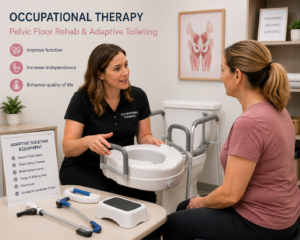
OTs with pelvic health training conduct functional assessments, provide adaptive equipment recommendations (such as toilet aids, commodes, and absorbent padding systems), and develop individualized bowel and bladder management programs for individuals with traumatic brain injury, stroke, MS, or dementia. OTs also address sexual activity as an occupation, supporting adaptive positioning, energy conservation, and psychosocial factors that affect intimacy (Jorge et al., 2024).
For older adults, urgency-related falls are a significant safety concern — the need to rush to the toilet increases fall risk substantially, making OT’s role in fall prevention and activities of daily living directly relevant to pelvic health management (Peinado Molina et al., 2023). OTs collaborate with PT and SLP to ensure that pelvic health interventions are integrated into the full context of a person’s daily roles and routines.
🟢 For Patients and Families
- An occupational therapist can help you manage incontinence in your daily routine — including urgency strategies, bladder scheduling, and adaptive equipment — to support independence and participation (Peinado Molina et al., 2023).
- OT addresses sexual activity as a meaningful occupation, helping you adapt positioning or pacing to manage pelvic pain or discomfort (Jorge et al., 2024).
- If a family member has a neurological condition affecting bladder or bowel control, OT can help establish safe, manageable routines and recommend adaptive equipment to support independence.
🟣 For Clinicians
- OT referral is indicated when pelvic floor dysfunction is limiting ADL performance, work, or social participation, particularly in neurological or complex medical populations where functional impact extends beyond musculoskeletal symptoms (Peinado Molina et al., 2023).
- Urgency-related falls are a clinically important consequence of pelvic floor dysfunction in older adults — OT addresses toilet access, home modification, and urgency management strategies as part of comprehensive fall prevention.
- Sexual activity is a recognized area of occupational performance; OT involvement in pelvic pain and sexual dysfunction supports occupation-centered outcomes alongside PT-led PFMT (Jorge et al., 2024).
4. Physical Therapy’s Role
Physical therapists (PTs) with pelvic health specialization lead the clinical assessment and treatment of pelvic floor musculoskeletal dysfunction. PT evaluation includes external and internal assessment of pelvic floor muscle tone, strength, endurance, and coordination, as well as lumbopelvic alignment, breathing mechanics, and functional movement (Bø et al., 2022). This comprehensive approach allows PTs to identify both underactive (weak) and overactive (hypertonic) pelvic floor presentations, which require distinctly different treatment strategies.
PT interventions include therapeutic exercise (PFMT), manual therapy (including myofascial release and trigger point therapy), biofeedback, electrical stimulation, neuromuscular re-education, and patient education in bladder and bowel habits (Alouini et al., 2022). PTs also address the relationship between pelvic floor function and low back pain — the pelvic floor is part of the deep core stabilizing system, and PFMT added to standard PT significantly reduces lumbopelvic pain with a standardized mean difference of -0.73 across 19 RCTs (Lim et al., 2024).
Physical therapy is effective across the full spectrum of pelvic floor conditions: stress urinary incontinence, urge incontinence, mixed incontinence, pelvic organ prolapse, chronic pelvic pain, post-prostatectomy incontinence, and postpartum pelvic floor dysfunction (Bø et al., 2022; Novais et al., 2025; Starzec-Proserpio et al., 2025). For older adults at risk of falls, PT addresses the interaction between urgency and balance and integrates pelvic floor training into comprehensive programs such as those on the Fall Prevention page.
🟢 For Patients and Families
- A pelvic floor PT will assess the strength, coordination, and tension of your pelvic floor muscles to design a targeted treatment plan (Bø et al., 2022).
- PT can help with leaking, urgency, pelvic heaviness, pain during sex, and low back or hip pain related to pelvic floor dysfunction (Lim et al., 2024).
- Treatment is individualized — the approach for muscle weakness causing leakage is very different from the approach for muscle tightness causing pain (Alouini et al., 2022).
🟣 For Clinicians
- PFMT added to standard PT significantly reduces pain in lumbopelvic conditions, with a standardized mean difference of -0.73 for pain reduction in a meta-analysis of 19 RCTs (Lim et al., 2024).
- PT assessment must differentiate hypotonicity (common in urinary incontinence and prolapse) from hypertonicity (common in chronic pelvic pain and dyspareunia) — these presentations require opposite treatment strategies (Starzec-Proserpio et al., 2025).
- PFMT is supported as first-line conservative treatment for urinary incontinence, pelvic organ prolapse, and post-prostatectomy incontinence by multiple international guidelines and systematic reviews (Bø et al., 2022; Novais et al., 2025).
5. Speech-Language Pathology’s Role
Speech-language pathologists (SLPs) contribute to pelvic floor rehabilitation in several important ways. In patients with dysphagia or airway management concerns, SLPs and PTs may collaborate to address how chronic coughing or throat clearing — which significantly increase intra-abdominal pressure — interact with pelvic floor integrity and worsen stress urinary incontinence (Alouini et al., 2022).
SLPs also play a central role when pelvic floor dysfunction co-occurs with neurological conditions affecting communication and cognition — such as stroke, TBI, Parkinson’s disease, or dementia. In these patients, SLPs help ensure that therapy instructions, home exercise programs, and behavioral strategies are presented in formats the patient can understand and follow consistently. Adherence to PFMT programs is a critical determinant of outcome, and cognitive-communication support from SLP directly strengthens the ability to maintain consistent practice (Villa-Del-Pino et al., 2025).
In pediatric populations, SLPs work alongside OTs and PTs to address toilet training, bowel and bladder routines, and the relationship between sensory processing and pelvic floor function in children with autism spectrum disorder or cerebral palsy. Communication-supported intervention frameworks in these populations draw on SLP’s expertise in both language and behavior (Villa-Del-Pino et al., 2025).
🟢 For Patients and Families
- If you or a family member has a condition affecting communication or memory, an SLP can help ensure that pelvic health instructions are understandable and easier to follow consistently (Villa-Del-Pino et al., 2025).
- Frequent coughing or throat-clearing related to swallowing problems increases pressure in the abdomen and can worsen urinary leakage — SLP and PT can address both together (Alouini et al., 2022).
- For children with developmental conditions, SLP and OT often collaborate to support toileting routines, bladder awareness, and pelvic health using communication-based strategies.
🟣 For Clinicians
- SLP involvement is indicated when cognitive-communication barriers limit a patient’s ability to learn, recall, or perform PFMT programs — adherence above 80% is directly associated with improved quality of life outcomes (Villa-Del-Pino et al., 2025).
- Chronic cough secondary to laryngopharyngeal reflux or swallowing dysfunction increases intra-abdominal pressure and perpetuates stress urinary incontinence — treating the underlying cause through SLP management reduces this contributing factor (Alouini et al., 2022).
- In pediatric pelvic health, SLP-OT-PT collaboration is essential for children with ASD or CP where sensory, motor, and communication factors all interact with toileting and continence outcomes.
6. Pelvic Floor Muscle Training
Pelvic floor muscle training (PFMT) — also known as Kegel exercises — is the cornerstone of conservative pelvic floor rehabilitation. PFMT involves repeatedly contracting and relaxing the pelvic floor muscles to improve strength, endurance, and coordination. When performed correctly and consistently, PFMT reduces urinary leakage, improves prolapse symptoms, enhances sexual function, and reduces pelvic pain (Bø et al., 2022; Alouini et al., 2022; Jorge et al., 2024).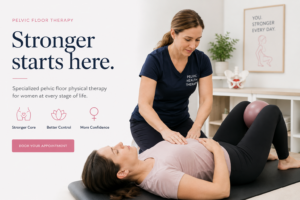
Correct technique is critical. Research shows that many patients are unable to correctly identify or isolate their pelvic floor muscles without guided instruction, and performing incorrect technique — such as bearing down rather than lifting — can worsen symptoms (Alouini et al., 2022). Physical therapists confirm correct muscle activation through verbal cuing, biofeedback, real-time ultrasound, or internal assessment. Teaching patients to contract the pelvic floor just before a rise in abdominal pressure — a strategy known as the knack maneuver — is an evidence-supported technique for reducing stress urinary incontinence during coughing and sneezing (Bø et al., 2022).
PFMT programs are progressive, moving from isolated contractions to functional integration during activities such as lifting, walking, and exercise. Adherence is one of the strongest predictors of PFMT effectiveness — patients who maintain adherence rates above 80% show statistically significant improvements in quality of life (p = 0.036) in a meta-analysis of 2,190 participants (Villa-Del-Pino et al., 2025). Structured education, goal setting, and individualized home programs are essential to sustaining adherence (Villa-Del-Pino et al., 2025).
🟢 For Patients and Families
- Kegel exercises are the most evidence-based treatment for bladder leakage, but many people perform them incorrectly without knowing it — a therapist can confirm you are doing them right (Alouini et al., 2022).
- Consistency matters more than intensity — patients who stick with their program above 80% of the time show the strongest quality of life improvements (Villa-Del-Pino et al., 2025).
- Your therapist may use biofeedback or internal assessment to help you identify exactly which muscles to activate, especially if you are unsure whether you are doing the exercise correctly (Alouini et al., 2022).
🟣 For Clinicians
- PFMT is the first-line conservative treatment for urinary incontinence and pelvic organ prolapse, supported by multiple international guidelines and systematic reviews (Bø et al., 2022; Alouini et al., 2022).
- Adherence above 80% is associated with statistically significant quality of life improvement (p = 0.036) in a meta-analysis of 2,190 participants across 29 studies (Villa-Del-Pino et al., 2025).
- PFMT prescriptions must include specific dosing parameters — sets, repetitions, hold duration, rest intervals, and weekly frequency — and should be progressed systematically; a generic instruction to do Kegel exercises is insufficient for meaningful outcomes (Bø et al., 2022).
7. Biofeedback and Electrical Stimulation
Biofeedback uses sensors to provide real-time visual or auditory information about muscle activity, helping patients learn to accurately activate or relax pelvic floor muscles. Electromyographic (EMG) biofeedback is the most widely used form in pelvic health and is particularly valuable for patients who have difficulty identifying the correct muscles, who inadvertently bear down during attempted contractions, or who require enhanced visual feedback to sustain motivation and adherence (Alouini et al., 2022).
Systematic review evidence shows that PFMT with biofeedback is effective for reducing urinary incontinence in women, though biofeedback does not consistently outperform PFMT alone in high-quality trials (Alouini et al., 2022). Clinical selection matters — biofeedback is most beneficial when patients struggle with correct muscle identification or need enhanced cueing, rather than as a routine addition for all patients (Alouini et al., 2022).
For men recovering from radical prostatectomy, EMG biofeedback-assisted PFMT significantly accelerates return of urinary continence and is associated with reduced pad weight and improved quality of life, with a relative risk of 1.78 (95% CI: 1.29–2.45) for achieving continence compared to no intervention (Novais et al., 2025). Electrical stimulation delivers low-level current via an internal or external probe to passively activate pelvic floor muscles and is used when voluntary contraction is too weak to initiate independent PFMT (Alouini et al., 2022).
🟢 For Patients and Families
- Biofeedback is a safe, painless tool that shows you on a screen exactly when and how strongly your pelvic floor muscles are contracting — making it easier to learn the correct technique (Alouini et al., 2022).
- Electrical stimulation uses a small, gentle current to activate pelvic floor muscles passively — especially helpful when muscles are too weak to contract independently (Alouini et al., 2022).
- For men recovering from prostate surgery, biofeedback-assisted exercise has been shown to speed up the return of bladder control significantly compared to no treatment (Novais et al., 2025).
🟣 For Clinicians
- EMG biofeedback-assisted PFMT in post-prostatectomy patients shows a relative risk of 1.78 (95% CI: 1.29–2.45) for achieving continence compared to no intervention (Novais et al., 2025).
- Biofeedback as a routine addition to PFMT in women with uncomplicated stress urinary incontinence is not consistently superior to PFMT alone across high-quality RCTs — reserve for patients demonstrating difficulty with correct muscle activation (Alouini et al., 2022).
- Electrical stimulation is a useful adjunct when voluntary contraction cannot be initiated due to severe weakness, neurogenic bladder, or post-surgical deconditioning, and may be combined with PFMT as function improves (Alouini et al., 2022).
8. Pelvic Organ Prolapse
Pelvic organ prolapse (POP) occurs when one or more pelvic organs descend from their normal position, often causing a sensation of pelvic pressure, fullness, or a visible or palpable vaginal bulge (Bø et al., 2022). Bladder prolapse (cystocele), rectal prolapse (rectocele), and uterine prolapse are the most common types. POP is prevalent among women who have had vaginal deliveries, and prevalence increases with age and cumulative intra-abdominal pressure loading over time (Bø et al., 2022).
PFMT is the recommended first-line conservative treatment for POP. An international consensus review of RCTs confirmed that PFMT improves prolapse-related symptoms, reduces prolapse severity in some cases, improves pelvic floor muscle strength, and enhances quality of life in women with POP stages I through III (Bø et al., 2022). PFMT is recommended both as a prevention strategy for at-risk women and as conservative management before surgical referral (Bø et al., 2022).
Occupational therapists support women with prolapse by addressing the functional implications of symptoms — including modifying lifting technique, activity pacing, posture during daily tasks, and adaptive strategies for managing symptoms at work or during caregiving. Physical therapists lead the PFMT program, optimize body mechanics for intra-abdominal pressure management, and provide pessary education in collaboration with the medical team (Bø et al., 2022). For patients managing prolapse alongside conditions such as osteoarthritis or hip replacement recovery, therapy must account for activity restrictions and strength deficits that affect pelvic floor loading.
🟢 For Patients and Families
- Prolapse does not always require surgery — pelvic floor exercises and lifestyle changes can significantly reduce symptoms and prevent worsening, especially in earlier stages (Bø et al., 2022).
- A pessary is a removable device inserted into the vagina to support prolapsed organs and relieve symptoms — your healthcare provider or therapist can discuss whether this is appropriate for you (Bø et al., 2022).
- Managing constipation, avoiding heavy lifting without proper technique, and maintaining a healthy weight all help reduce the forces that worsen prolapse symptoms over time (Bø et al., 2022).
🟣 For Clinicians
- International urogynecology consultation guidelines recommend supervised PFMT as the primary conservative intervention for POP stages I–III, with evidence supporting improvements in patient-reported outcomes, prolapse severity, and pelvic floor muscle function (Bø et al., 2022).
- PFMT for POP should be supervised and progressed systematically — self-directed exercise without professional guidance produces lower adherence and less consistent outcomes (Villa-Del-Pino et al., 2025).
- When POP coexists with urinary incontinence, assessment must distinguish whether the primary impairment is muscle weakness, coordination deficit, or both, as treatment goals and exercise parameters differ between presentations (Bø et al., 2022; Alouini et al., 2022).
9. Chronic Pelvic Pain
Chronic pelvic pain (CPP) is defined as persistent pain perceived to originate in the pelvic region lasting three months or longer (Starzec-Proserpio et al., 2025). It is common, often underdiagnosed, and associated with substantial reductions in physical function, emotional well-being, and sexual quality of life (Peinado Molina et al., 2023). Common contributing factors include pelvic floor hypertonicity (excessive muscle tension), myofascial trigger points, endometriosis, interstitial cystitis, and central pain sensitization (Starzec-Proserpio et al., 2025).
Physical therapy plays a central role in CPP management. A systematic review and meta-analysis of 57 RCTs found that multimodal PT significantly reduces pain, improves sexual function, and improves quality of life in women with CPP (Starzec-Proserpio et al., 2025). Pelvic floor physiotherapy was identified as the strongest individual modality, with electrotherapy providing additional benefit for pain reduction (Starzec-Proserpio et al., 2025). PT techniques include internal and external myofascial release, trigger point therapy, joint mobilization, and neuromuscular re-education.
Occupational therapy addresses the impact of CPP on occupational performance — including sexual activity, work productivity, sleep, and daily routines (Peinado Molina et al., 2023). OT interventions include energy conservation, activity pacing, environmental modifications, and psychosocial support that complements PT-led pain management. A biopsychosocial team approach has demonstrated the strongest outcomes for CPP, as the condition involves physical, psychological, and social dimensions simultaneously (Starzec-Proserpio et al., 2025).
🟢 For Patients and Families
- Chronic pelvic pain is real, common, and treatable — a specialized pelvic floor therapist can identify muscle tightness, trigger points, or coordination problems contributing to your pain (Starzec-Proserpio et al., 2025).
- Treatment for pelvic pain is different from treatment for incontinence — it may include gentle hands-on therapy to release tight muscles, breathing techniques, and strategies to reduce central pain sensitization over time (Starzec-Proserpio et al., 2025).
- Pelvic pain commonly affects intimacy, sleep, and daily activity — a team that includes OT, PT, and behavioral health will address all of these dimensions together (Peinado Molina et al., 2023).
🟣 For Clinicians
- Multimodal PT — including pelvic floor physiotherapy and electrotherapy — significantly reduces pain and improves quality of life and sexual function in CPP across a meta-analysis of 57 RCTs (Starzec-Proserpio et al., 2025).
- CPP presentations with hypertonicity require relaxation-based protocols — diaphragmatic breathing, muscle downtraining, and manual release — rather than strengthening exercise; misidentifying the presentation leads to symptom exacerbation (Starzec-Proserpio et al., 2025).
- Screening for depression and anxiety is essential in CPP — these conditions are highly comorbid with chronic pelvic pain and worsen outcomes when untreated; a biopsychosocial team approach yields the strongest results (Starzec-Proserpio et al., 2025).
10. Telerehabilitation for Pelvic Health
Telerehabilitation — the delivery of therapy services via video or digital platforms — is an established and evidence-supported option for pelvic floor rehabilitation. Access barriers including geographic distance, transportation limitations, postpartum mobility constraints, and stigma around in-person pelvic examination have historically limited pelvic health care, and remote delivery models address many of these barriers directly (Hao et al., 2024).
A systematic review and meta-analysis of telerehabilitation-based PFMT found that remote delivery is both feasible and effective, producing improvements in urinary incontinence severity, pelvic floor muscle strength, and quality of life comparable to in-person care (Hao et al., 2024). Patient satisfaction and adherence in telerehabilitation programs were also favorable, suggesting that remote delivery does not compromise the therapeutic relationship necessary for PFMT outcomes (Hao et al., 2024).
Occupational therapists leverage telerehabilitation to support functional goal setting, home program coaching, and adaptive equipment guidance for pelvic health patients who cannot attend in person, particularly those managing complex neurological or medical conditions alongside pelvic floor dysfunction (Peinado Molina et al., 2023). Physical therapists can deliver PFMT instruction, functional movement coaching via video, and behavioral strategies for bladder and bowel management through secure telehealth platforms. Initial in-person assessment remains preferable when internal pelvic examination is clinically indicated (Hao et al., 2024).
🟢 For Patients and Families
- You may be able to receive pelvic floor therapy from home through secure video appointments — research shows remote PFMT is just as effective as in-person care for many conditions (Hao et al., 2024).
- Telehealth pelvic health therapy is especially helpful for new mothers, people with limited transportation, or anyone who feels uncomfortable attending in-person appointments (Hao et al., 2024).
- Ask your therapist whether telerehabilitation is appropriate for your specific situation — some conditions, such as those needing hands-on internal assessment, may still require at least one in-person visit first (Hao et al., 2024).
🟣 For Clinicians
- Telerehabilitation-based PFMT is supported by systematic review evidence as feasible, effective, and associated with good patient satisfaction for urinary incontinence management (Hao et al., 2024).
- Initial in-person pelvic floor assessment remains preferable when internal examination is clinically indicated — telerehabilitation is most appropriate for follow-up, home program coaching, and patients for whom in-person care is inaccessible (Hao et al., 2024).
- Digital biofeedback devices and app-guided PFMT programs are emerging adjuncts that can support adherence between supervised sessions, addressing the adherence challenge identified as a primary predictor of PFMT outcomes (Villa-Del-Pino et al., 2025).
📋 When to Refer for Pelvic Floor Rehabilitation
Refer to Occupational Therapy (OT) when:
- Pelvic floor dysfunction is limiting ADL performance, toileting independence, sexual activity, or return to work (Peinado Molina et al., 2023).
- The patient has a neurological condition (TBI, stroke, MS, Parkinson’s, dementia) affecting bladder or bowel management and daily routines.
- Urgency-related falls or difficulty accessing the toilet safely are present — OT addresses adaptive strategies, home modification, and fall prevention (Peinado Molina et al., 2023).
- Cognitive or behavioral barriers are limiting the patient’s ability to manage pelvic symptoms or adhere to a home program (Villa-Del-Pino et al., 2025).
Refer to Physical Therapy (PT) when:
- Any type of urinary or fecal incontinence is present — PT-led PFMT is the first-line treatment (Alouini et al., 2022; Bø et al., 2022).
- Pelvic organ prolapse has been diagnosed or is suspected — supervised PFMT is recommended before surgical evaluation (Bø et al., 2022).
- Chronic pelvic pain, dyspareunia, or vulvodynia is limiting quality of life — pelvic floor PT is the strongest nonpharmacological intervention (Starzec-Proserpio et al., 2025).
- Post-prostatectomy or postpartum pelvic floor dysfunction is present — early PT referral improves continence recovery outcomes (Novais et al., 2025; Höder et al., 2023).
- Low back or lumbopelvic pain is not responding to standard PT — adding PFMT significantly reduces pain (Lim et al., 2024).
Refer to Speech-Language Pathology (SLP) when:
- Cognitive-communication barriers limit the patient’s ability to learn or adhere to a PFMT program — adherence is a primary determinant of outcome (Villa-Del-Pino et al., 2025).
- Dysphagia or chronic cough is contributing to increased intra-abdominal pressure and worsening stress urinary incontinence (Alouini et al., 2022).
- Pediatric patients with ASD, CP, or developmental delays have toileting and continence challenges requiring communication-supported intervention.
Also See
Related pages on TherapyTopics.com:
- Fall Prevention
- Activities of Daily Living (ADLs)
- Cognitive Rehabilitation and Brain Health
- Hip Replacement Rehabilitation
- Back Pain
- Multiple Sclerosis
- Cancer Rehabilitation
- Dysphagia
References
Alouini, S., Memic, S., & Couillandre, A. (2022). Pelvic floor muscle training for urinary incontinence with or without biofeedback or electrostimulation in women: A systematic review. International Journal of Environmental Research and Public Health, 19(5), 2789. https://doi.org/10.3390/ijerph19052789
Bø, K., Anglès-Acedo, S., Batra, A., Brækken, I. H., Chan, Y. L., Jorge, C. H., Kruger, J., Yadav, M., & Dumoulin, C. (2022). International urogynecology consultation chapter 3 committee 2; conservative treatment of patient with pelvic organ prolapse: Pelvic floor muscle training. International Urogynecology Journal, 33(10), 2633–2667. https://doi.org/10.1007/s00192-022-05324-0
Hao, J., Yao, Z., Remis, A., Huang, B., Li, Y., & Yu, X. (2024). Pelvic floor muscle training in telerehabilitation: A systematic review and meta-analysis. Archives of Gynecology and Obstetrics, 309(5), 1753–1764. https://doi.org/10.1007/s00404-024-07380-x
Höder, A., Stenbeck, J., Fernando, M., & Lange, E. (2023). Pelvic floor muscle training with biofeedback or feedback from a physiotherapist for urinary and anal incontinence after childbirth: A systematic review. BMC Women’s Health, 23, 618. https://doi.org/10.1186/s12905-023-02765-7
Jorge, C. H., Bø, K., Chiazuto Catai, C., Oliveira Brito, L. G., Driusso, P., & Kolberg Tennfjord, M. (2024). Pelvic floor muscle training as treatment for female sexual dysfunction: A systematic review and meta-analysis. American Journal of Obstetrics and Gynecology, 231(1), 51–66.e1. https://doi.org/10.1016/j.ajog.2024.01.001
Lim, Y., Do, Y., Lee, S. H., & Lee, H. (2024). Efficacy of pelvic floor muscle training with physical therapy for low back pain: A systematic review and meta-analysis. Clinical Rehabilitation, 38(12), 1590–1608. https://doi.org/10.1177/02692155241287766
Novais, C. C. S., Santana, A. R. O. R., Paz, A. R. M., Carnaúba, A. T. L., Andrade, K. C. L., & Menezes, P. L. (2025). The impact of using electromyographic biofeedback on pelvic floor rehabilitation in men with post-prostatectomy urinary incontinence: A meta-analysis. Clinics, 80, 100687. https://doi.org/10.1016/j.clinsp.2025.100687
Peinado Molina, R. A., Hernández Martínez, A., Martínez Vázquez, S., & Martínez Galiano, J. M. (2023). Influence of pelvic floor disorders on quality of life in women. Frontiers in Public Health, 11, 1180907. https://doi.org/10.3389/fpubh.2023.1180907
Starzec-Proserpio, M., Frawley, H., Bø, K., & Morin, M. (2025). Effectiveness of nonpharmacological conservative therapies for chronic pelvic pain in women: A systematic review and meta-analysis. American Journal of Obstetrics and Gynecology, 232(1), 42–71. https://doi.org/10.1016/j.ajog.2024.08.006
Villa-Del-Pino, I., Jiménez-Rejano, J.-J., Rebollo-Salas, M., Rodríguez-Domínguez, Á.-J., & Suárez-Serrano, C.-M. (2025). Compliance and adherence to pelvic floor exercise therapy in people with pelvic floor disorders: A systematic review and meta-analysis. Life, 15(4), 613. https://doi.org/10.3390/life15040613