

Key Takeaways
- Chronic pain affects 24.3% of U.S. adults and is the leading cause of disability worldwide, with the global burden continuing to rise through 2035 (Zhu et al., 2025).
- Interdisciplinary multimodal pain treatment (IMPT) — combining PT, OT, psychology, and medicine — improves pain, physical functioning, and emotional well-being across all follow-up periods (Turvill et al., 2026).
- Exercise therapy, particularly tai chi, yoga, and Pilates, outperforms conventional rehabilitation for chronic pain relief (Li et al., 2023).
- Cognitive behavioral therapy (CBT) significantly reduces pain catastrophizing (SMD −0.77), pain intensity (SMD −0.41), and functional disability (SMD −0.20) in chronic musculoskeletal pain (Liu et al., 2026).
- Occupational therapy addresses how chronic pain limits daily activities, work, and meaningful participation, and is a core component of interdisciplinary pain programs (Nielsen et al., 2022).
- Telerehabilitation for chronic musculoskeletal pain is as effective as in-person care and costs significantly less per patient (Molina-Garcia et al., 2024).
 Important: The information on this page is educational only and does not replace individualized medical or therapeutic evaluation. Chronic pain is a complex condition that often requires a multidisciplinary team. If you are experiencing uncontrolled pain, new or worsening symptoms, or pain significantly limiting your daily activities, consult your physician or a qualified rehabilitation provider.
Contents
- What Is Chronic Pain?
- Who Is Affected by Chronic Pain?
- The Rehabilitation Team in Pain Management
- Occupational Therapy’s Role
- Physical Therapy’s Role
- Speech-Language Pathology’s Role
- Exercise Therapy for Chronic Pain
- Manual Therapy
- Pain Neuroscience Education
- Cognitive Behavioral Therapy and Psychological Approaches
- Telerehabilitation for Chronic Pain
- When to Refer
- References
1. What Is Chronic Pain?
Chronic pain is defined by the International Association for the Study of Pain (IASP) as pain that persists or recurs for more than three months. Unlike acute pain, which serves as a warning signal of injury or illness, chronic pain frequently outlasts the original tissue injury and involves changes in the nervous system that sustain pain perception even in the absence of ongoing damage (Zhu et al., 2025). This distinction is critical for treatment, approaches effective for acute pain often fail in chronic pain, and rehabilitation must address the biological, psychological, and social dimensions of the experience simultaneously.
Common chronic pain conditions seen across rehabilitation settings include low back pain, neck pain, osteoarthritis, fibromyalgia, headache disorders, cancer-related pain, and neuropathic pain from conditions such as multiple sclerosis, stroke, or traumatic brain injury. Pain is also highly prevalent across other chronic diseases — in some conditions, pain is more disabling than the cardinal symptoms of the disease itself (Viderman et al., 2023).
Chronic pain is associated with anxiety, depression, sleep disturbance, activity limitation, reduced quality of life, and significant socioeconomic burden. The global burden of chronic pain increased substantially from 1990 to 2019 and projections indicate continued growth through 2035, underscoring the need for effective, accessible rehabilitation interventions (Zhu et al., 2025).
 For Patients and Families
- Chronic pain lasting more than three months is a medical condition, not a character flaw, exaggeration, or normal part of aging, and it deserves proper assessment and treatment (Zhu et al., 2025).
- Chronic pain often involves changes in how the nervous system processes signals, which is why it can persist even after an injury has healed. Understanding this can help reduce fear and improve recovery (Sánchez-Robalino et al., 2025).
- Pain that significantly limits daily activities, work, or social life should prompt a referral to a rehabilitation team, not just pain medication management (Turvill et al., 2026).
 For Clinicians
- The global burden of chronic pain increased significantly from 1990 to 2019, with projections indicating continued growth through 2035, particularly in high-SDI (Socio-demographic Index) regions (Zhu et al., 2025).
- Pain is highly prevalent across chronic diseases — often exceeding the prevalence of the cardinal symptoms of conditions including neurodegenerative diseases, COPD, chronic kidney disease, and cancer (Viderman et al., 2023).
- A biopsychosocial framework is essential for chronic pain assessment and treatment planning, biomedical-only approaches consistently underperform multimodal interdisciplinary programs (Turvill et al., 2026).
2. Who Is Affected by Chronic Pain?
Chronic pain is one of the most prevalent health conditions in the United States. In 2023, 24.3% of U.S. adults — approximately 60 million people, reported chronic pain, and 8.5% reported high-impact chronic pain that frequently limited their life or work activities (Zhu et al., 2025). Both figures represent increases from 2019, when 20.4% reported chronic pain and 7.4% reported high-impact chronic pain, indicating a growing public health burden.
Chronic pain affects people of all ages, genders, and backgrounds, but prevalence increases with age and is disproportionately high among older adults, women, people with lower socioeconomic status, and rural communities. It frequently co-occurs with anxiety, depression, and sleep disorders, creating complex presentations that require coordinated care across disciplines (Viderman et al., 2023).
Populations frequently seen in rehabilitation settings with significant chronic pain burdens include older adults with osteoarthritis or back pain, cancer survivors, individuals with MS, Parkinson’s disease, TBI, or cerebral palsy, post-surgical patients, and children and adolescents with complex regional pain syndrome or other pediatric chronic pain conditions (Suder et al., 2023).
For Patients and Families
- Chronic pain is extremely common — roughly 1 in 4 U.S. adults lives with it, so you are not alone, and effective treatments exist (Zhu et al., 2025).
- Chronic pain frequently occurs alongside depression or anxiety. Treating both together produces better outcomes than treating either one alone (Liu et al., 2026).
- Children and adolescents can also develop chronic pain conditions. Occupational therapy and psychology-led programs for pediatric chronic pain have demonstrated significant reductions in pain and disability (Suder et al., 2023).
For Clinicians
- In 2023, 24.3% of U.S. adults reported chronic pain and 8.5% reported high-impact chronic pain limiting life or work activities, both are increases from 2019 (Zhu et al., 2025).
- Pain prevalence across chronic diseases is high and underrecognized: in cancer patients, neurodegenerative diseases, and nursing home populations, pain prevalence often exceeds 50–70% (Viderman et al., 2023).
- Pediatric chronic pain is associated with significant functional disability and school absence; OT-led interdisciplinary programs demonstrate meaningful reductions in pain and disability in this population (Suder et al., 2023).
3. The Rehabilitation Team in Pain Management
Chronic pain is best managed through an interdisciplinary multimodal approach that addresses its biological, psychological, and social dimensions simultaneously. Single-discipline treatment consistently underperforms compared to programs that integrate medicine, psychology, physical therapy, occupational therapy, and social support (Turvill et al., 2026). Interdisciplinary multimodal pain treatment (IMPT) is the standard of care for complex or persistent chronic pain.
A systematic review and meta-analysis of 41 articles including 6,613 participants found that IMPT produces small but positive effects on physical functioning, pain, general health, and emotional functioning compared to treatment as usual — with benefits maintained across short, intermediate, and long-term follow-up (Turvill et al., 2026). The team typically includes:
- Occupational therapy (OT): Addresses how pain limits daily activities, work, leisure, and social participation; prescribes activity pacing, adaptive strategies, and meaningful occupation as a therapeutic tool (Nielsen et al., 2022).
- Physical therapy (PT): Leads exercise prescription, manual therapy, pain neuroscience education, and movement-based rehabilitation (Conde-Vázquez et al., 2025; Li et al., 2023).
- Psychology/CBT: Addresses pain catastrophizing, fear-avoidance, depression, anxiety, and maladaptive coping (Liu et al., 2026).
- Speech-language pathology (SLP): Addresses cognitive-communication barriers, dysphagia, and voice changes that co-occur with pain conditions or affect participation in pain rehabilitation.
- Medicine: Oversees pharmacological management, diagnostic workup, and medical comorbidities.
- Social work: Addresses vocational rehabilitation, insurance navigation, housing, and psychosocial support.
For Patients and Families
- A team approach to chronic pain produces better outcomes than any single provider working alone — this is why comprehensive pain programs involve OT, PT, psychology, and medicine together (Turvill et al., 2026).
- If you have been seeing only one provider for chronic pain without improvement, ask for a referral to an interdisciplinary pain program or rehabilitation clinic (Turvill et al., 2026).
- Pain affects every aspect of daily life — work, relationships, sleep, and activities — which is why OT involvement is so important alongside medical and physical therapy management (Nielsen et al., 2022).
For Clinicians
- IMPT outperforms treatment as usual for pain, physical functioning, general health, and emotional functioning across short, intermediate, and long-term follow-up — meta-analysis of 41 articles, 6,613 participants (Turvill et al., 2026).
- Despite strong evidence for interdisciplinary approaches, single-discipline pain management remains common in practice — identify patients with complex or refractory chronic pain and refer to comprehensive programs (Turvill et al., 2026).
- OT, PT, and psychology should be integrated from the start of chronic pain management, not added only after pharmacological interventions fail (Turvill et al., 2026).
4. Occupational Therapy’s Role
Occupational therapy brings a distinctive perspective to pain management by focusing on how chronic pain limits a person’s ability to engage in the activities that give life meaning and structure. This includes work, caregiving, self-care, leisure, sleep, and social participation. When pain restricts these occupations, quality of life and identity are affected — and addressing occupation directly is both therapeutic and evidence-based (Nielsen et al., 2022).
A systematic review and meta-analysis found that including occupational engagement in chronic pain interventions produces significant improvements in lifestyle factors including physical activity, stress, and sleep compared to interventions without OT involvement (Nielsen et al., 2022). Core OT interventions in pain management include activity pacing — a strategy for balancing activity and rest to prevent the boom-bust cycle that worsens chronic pain — energy conservation, home modification, ergonomic assessment for return to work, adaptive equipment, and meaningful goal setting.
For pediatric populations, OT plays a central role in interdisciplinary chronic pain programs. A systematic review of 23 studies found that OT-inclusive interprofessional management, including psychological, telehealth, and biomechanical interventions, produced significant decreases in pain and disability in children and adolescents with chronic pain (Suder et al., 2023). OT also supports patients whose pain co-occurs with neurological conditions such as TBI, stroke, or MS, where functional limitations compound pain-related disability.
For Patients and Families
- An OT can help you find ways to do the activities that matter most to you — work, hobbies, caregiving — even while managing chronic pain, by modifying how, when, and where you do them (Nielsen et al., 2022).
- Activity pacing means planning your day to avoid doing too much and then crashing — OT can teach you how to stay consistently active without triggering pain flares.
- For children with chronic pain, OT is part of the treatment team and focuses on getting kids back to school, play, and daily routines as functional goals alongside pain reduction (Suder et al., 2023).
For Clinicians
- Occupational engagement as an intervention component in chronic pain programs produces significant lifestyle improvements including physical activity, stress, and sleep outcomes compared to programs without OT (Nielsen et al., 2022).
- Activity pacing is a multidimensional OT strategy addressing boom-bust cycling, avoidance, and overactivity, not simply resting more. It should be distinguished from activity avoidance in clinical communication with patients.
- OT is particularly indicated when chronic pain is limiting ADL performance, work capacity, sleep, sexual activity, or caregiving roles — refer proactively, not only when all else fails (Nielsen et al., 2022).
5. Physical Therapy’s Role
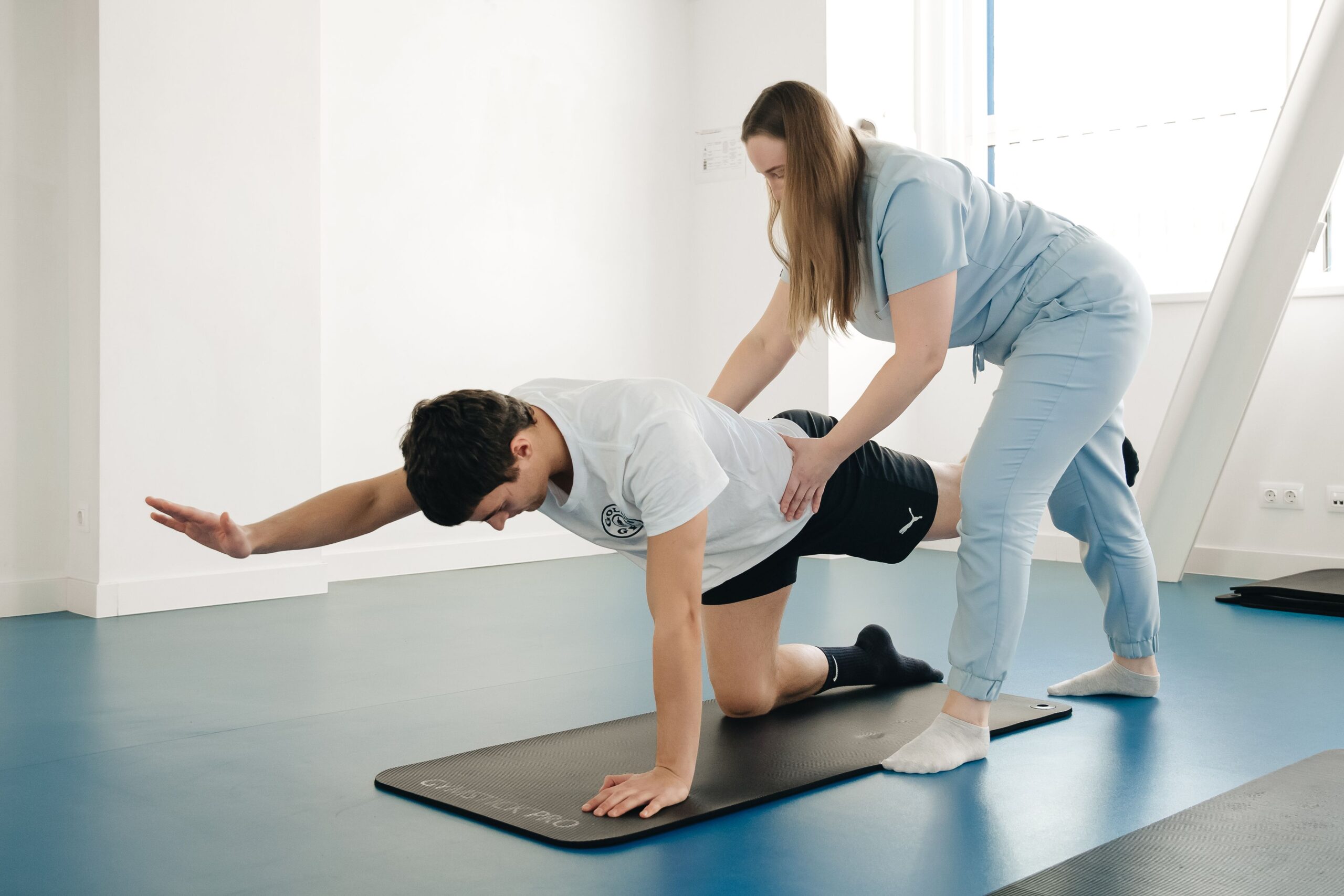
Physical therapy is the cornerstone of rehabilitation-based chronic pain management. PT assessment includes examination of movement patterns, strength, flexibility, posture, and neurological contributions to pain, allowing the PT to identify the specific physical impairments contributing to each patient’s presentation. Treatment is then individualized across a range of evidence-based modalities (Conde-Vázquez et al., 2025).
Exercise prescription, manual therapy, pain neuroscience education, and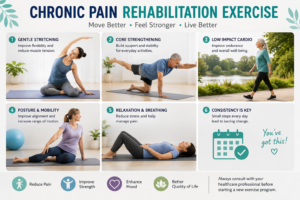 functional movement rehabilitation are the primary PT tools for chronic pain. PT also addresses the fear-avoidance cycle, a pattern in which fear of pain leads to inactivity, which leads to deconditioning and worsened pain, through graded exposure to movement and activity. For patients with back pain, osteoarthritis, post-surgical pain, or fall risk driven by pain and reduced mobility, PT is the lead discipline in functional recovery.
The evidence for PT-led interventions in chronic pain is robust. Manual therapy produces clinically meaningful short-term reductions in pain (MD −10.52) and disability (SMD −0.60) compared to other interventions (Conde-Vázquez et al., 2025). Exercise therapy — particularly tai chi, yoga, and Pilates, outperforms conventional rehabilitation for pain relief, and pain neuroscience education combined with PT significantly reduces both pain intensity and functional disability (Li et al., 2023; Sánchez-Robalino et al., 2025).
For Patients and Families
- Physical therapy for chronic pain is not just exercises — it includes education about how pain works, hands-on treatment, and strategies for moving safely and confidently again (Sánchez-Robalino et al., 2025).
- Avoiding movement because of pain often makes chronic pain worse over time. A PT can guide you through gradual, safe increases in activity that reduce pain rather than worsen it (Li et al., 2023).
- Hands-on manual therapy from a PT can significantly reduce pain and disability in the short term, especially when combined with exercise (Conde-Vázquez et al., 2025).
For Clinicians
- Manual therapy outperforms other interventions for short-term pain (MD −10.52; 95% CI −13.71 to −7.33) and disability (SMD −0.60; 95% CI −0.80 to −0.40) in chronic non-specific low back pain — effects diminish over time, supporting combination with exercise (Conde-Vázquez et al., 2025).
- Tai chi (SMD −2.11), yoga (SMD −1.76), and Pilates (SMD −1.52) outperform conventional rehabilitation for pain relief in chronic low back pain across 75 RCTs with 5,254 participants (Li et al., 2023).
- PNE combined with PT reduces mean pain scores from 5.89 to 3.03 across 19 RCTs — pain education should be integrated into PT programs for chronic pain, not delivered as a separate add-on (Sánchez-Robalino et al., 2025).
6. Speech-Language Pathology’s Role
Speech-language pathologists (SLPs) contribute to pain management in several specific clinical contexts. Chronic pain conditions and their treatments frequently affect communication, cognition, and swallowing — creating intersecting needs that require SLP expertise alongside PT and OT. In patients with TBI, stroke, MS, Parkinson’s disease, or dementia, chronic pain co-occurs with cognitive-communication impairments that make it harder for patients to describe pain, follow treatment plans, and advocate for their needs with the care team.
SLPs support patients in chronic pain programs by ensuring that pain education, home exercise instructions, and coping strategies are delivered in formats the patient can understand and retain (Sánchez-Robalino et al., 2025). Adherence to pain rehabilitation programs, including CBT components, home exercise, and behavioral pacing strategies — requires the cognitive and communication capacities that SLP directly addresses. In patients with opioid use disorder or pain-related fatigue affecting voice and swallowing, SLP assessment may also be clinically indicated.
In pediatric pain programs, SLPs work alongside OTs and PTs to ensure children can communicate their pain experience, participate in group pain education, and access the school re-entry goals that are central to functional recovery (Suder et al., 2023). For patients with dysphagia whose swallowing difficulty is pain-related, for example, from oropharyngeal pain, head and neck cancer treatment, or neurological conditions — SLP is the primary discipline.
For Patients and Families
- If chronic pain or its treatment is affecting your memory, concentration, or ability to communicate clearly with your care team, an SLP evaluation may help identify and address these barriers.
- For patients with neurological conditions and pain, SLP can help you describe and track your pain more effectively, which leads to better treatment decisions by your team.
- For children with chronic pain, SLP supports communication in pain programs and helps with school re-entry — a critical functional goal for pediatric chronic pain recovery (Suder et al., 2023).
For Clinicians
- SLP referral is indicated when cognitive-communication barriers limit a patient’s ability to engage with, retain, or apply pain neuroscience education, CBT components, or home program instructions, adherence is a core outcome driver (Sánchez-Robalino et al., 2025).
- In neurological populations with chronic pain (TBI, stroke, MS, Parkinson’s, dementia), SLP-OT-PT collaboration ensures that rehabilitation is accessible to patients regardless of communication or cognitive impairment.
- Pain-related dysphagia, voice changes from oropharyngeal pain, or swallowing dysfunction in cancer rehabilitation are direct SLP indications within pain management programs.
7. Exercise Therapy for Chronic Pain
Exercise is one of the most evidence-supported interventions for chronic pain across conditions and age groups. Regular exercise reduces pain through multiple mechanisms, including exercise-induced hypoalgesia (pain reduction triggered by physical activity), anti-inflammatory effects, improved muscular support of painful joints, and psychological benefits including reduced anxiety, depression, and catastrophizing (Li et al., 2023).
A network meta-analysis of 75 RCTs including 5,254 participants compared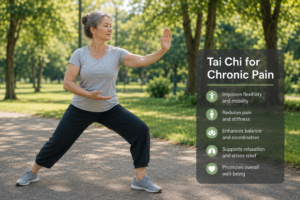 20 different exercise modalities for chronic low back pain. Tai chi (SMD −2.11), yoga (SMD −1.76), Pilates (SMD −1.52), and sling exercise (SMD −1.19) produced significantly greater pain improvements than conventional rehabilitation (Li et al., 2023). Both tai chi and yoga also outperformed no intervention, with tai chi showing the largest effect size for pain reduction of any modality studied.
Physical therapists design and progress individualized exercise programs based on each patient’s presentation, fitness level, and goals. Programs are typically progressive — beginning with gentle movement and building toward functional strengthening, cardiovascular fitness, and activity-specific training. Consistent adherence to exercise is a stronger predictor of outcome than any individual modality, making patient education, goal setting, and accessible formats — including telerehabilitation — essential components of any exercise program for chronic pain (Molina-Garcia et al., 2024).
For Patients and Families
- Exercise is one of the best treatments for chronic pain, it is not about pushing through pain, but about moving in ways that gradually calm the nervous system and build strength (Li et al., 2023).
- Mind-body exercises like tai chi and yoga have the strongest evidence for pain relief and are accessible to most fitness levels, ask your PT whether these are appropriate for your condition (Li et al., 2023).
- Starting small and being consistent matters more than intensity, even gentle daily movement produces meaningful reductions in chronic pain over time (Li et al., 2023).
For Clinicians
- Tai chi (SMD −2.11; 95% CI −3.62 to −0.61) and yoga (SMD −1.76; 95% CI −2.72 to −0.81) are the strongest exercise modalities for chronic low back pain — significantly outperforming conventional rehabilitation in network meta-analysis of 75 RCTs (Li et al., 2023).
- Exercise prescriptions for chronic pain should specify type, intensity, frequency, duration, and progression, generic “be more active” instructions are insufficient and unlikely to produce meaningful outcomes.
- Fear-avoidance behavior is a strong predictor of poor outcomes; PT exercise programs should incorporate graded exposure principles alongside physical exercise to address movement-related fear directly.
8. Manual Therapy
Manual therapy encompasses a range of hands-on techniques delivered by trained physical therapists, including spinal manipulation, joint mobilization, soft tissue techniques, myofascial release, and massage. These techniques address musculoskeletal contributors to pain, including joint stiffness, muscle tension, trigger points, and movement dysfunction, and work through both mechanical and neurophysiological mechanisms to reduce pain and improve function (Conde-Vázquez et al., 2025).
An umbrella review and meta-analysis of 21 systematic reviews including 35,711 participants found that manual therapy outperforms other interventions for short-term pain (MD −10.52; 95% CI −13.71 to −7.33) and disability (SMD −0.60; 95% CI −0.80 to −0.40) in chronic non-specific low back pain. These effects are meaningful in the short term but diminish over time, which supports the use of manual therapy as part of a multimodal program that includes exercise rather than as a standalone long-term treatment (Conde-Vázquez et al., 2025).
Manual therapy is most effective when combined with exercise therapy and pain education rather than used alone. For patients with back pain, osteoarthritis, post-surgical pain, or chronic neck pain, a multimodal PT program including manual therapy alongside exercise produces superior outcomes to either modality in isolation (Conde-Vázquez et al., 2025).
For Patients and Families
- Manual therapy — hands-on joint and soft tissue work from your PT, can provide meaningful short-term pain relief, especially when combined with exercise (Conde-Vázquez et al., 2025).
- Manual therapy works best as part of a broader program that includes exercise and pain education, it is not a long-term standalone solution, but a useful bridge while you build strength and confidence in movement (Conde-Vázquez et al., 2025).
- Ask your PT about whether manual therapy is appropriate for your condition and what combination of treatments is most likely to help you reach your functional goals.
For Clinicians
- Manual therapy produces significant short-term improvements in pain (MD −10.52) and disability (SMD −0.60) for chronic non-specific low back pain across 21 systematic reviews and 35,711 participants, effects diminish over time (Conde-Vázquez et al., 2025).
- Manual therapy is most valuable as a component of multimodal rehabilitation, not a standalone treatment, combine with exercise and pain neuroscience education for sustained outcomes (Conde-Vázquez et al., 2025).
- Spinal manipulative therapy application procedures (target, thrust, region) do not significantly affect pain or disability outcomes, technique selection may be guided by patient preference and clinical presentation rather than dogma.
9. Pain Neuroscience Education
Pain neuroscience education (PNE) is a therapeutic approach that teaches patients about the biology of pain — how the nervous system processes and modulates pain signals, how central sensitization develops, and why pain does not always correspond to tissue damage. By reconceptualizing pain as a protective response of the nervous system rather than a direct measure of injury, PNE helps reduce fear of movement, pain catastrophizing, and disability (Sánchez-Robalino et al., 2025).
A systematic review and meta-analysis of 19 RCTs found that PNE combined with physical therapy significantly reduces pain intensity and improves functional disability, with mean pain scores decreasing from 5.89 before treatment to 3.03 after treatment, a clinically meaningful reduction (Sánchez-Robalino et al., 2025). PNE is most effective when delivered in combination with exercise or physical therapy rather than as a standalone intervention, and its effects on disability are supported across diverse chronic pain populations.
PNE is delivered by physical therapists, occupational therapists, and psychologists within interdisciplinary pain programs. It complements CBT by addressing the cognitive model of pain from a neuroscience perspective, and it complements exercise by reducing the fear of movement that limits participation in physical rehabilitation. Patients with high pain catastrophizing, kinesiophobia (fear of movement), or strong beliefs linking pain to damage benefit most from PNE early in the rehabilitation process (Sánchez-Robalino et al., 2025).
For Patients and Families
- Learning about how pain works in the nervous system is itself a treatment, understanding that chronic pain is not always a sign of ongoing damage can reduce fear, improve movement, and lower pain intensity (Sánchez-Robalino et al., 2025).
- Pain neuroscience education is not about telling you your pain is not real, it is about explaining why the nervous system can amplify or sustain pain signals even after an injury has healed.
- When combined with exercise, pain education produces significantly better outcomes than exercise alone, ask your PT whether pain education sessions are part of your program (Sánchez-Robalino et al., 2025).
For Clinicians
- PNE combined with PT reduces mean pain scores from 5.89 to 3.03 across 19 RCTs, a clinically meaningful reduction supported across diverse chronic pain populations (Sánchez-Robalino et al., 2025).
- PNE is most effective in combination with exercise or PT — standalone PNE without a movement component produces smaller and less consistent effects (Sánchez-Robalino et al., 2025).
- Prioritize PNE for patients with high pain catastrophizing, kinesiophobia, or strong biomedical beliefs linking pain to structural damage, these are the patients most likely to respond and least likely to engage with exercise otherwise.
10. Cognitive Behavioral Therapy and Psychological Approaches
Cognitive behavioral therapy (CBT) is the most evidence-supported psychological intervention for chronic pain. CBT addresses the thoughts, beliefs, and behaviors that maintain and worsen chronic pain, including pain catastrophizing (the tendency to magnify and ruminate on pain), fear-avoidance, passive coping, and depression. By restructuring maladaptive pain-related beliefs and building active coping skills, CBT helps patients regain a sense of control and improve function even when pain cannot be fully eliminated (Liu et al., 2026).
A systematic review and meta-analysis of 14 high-quality RCTs including 2,677 patients found that CBT significantly reduces pain catastrophizing (SMD −0.77; 95% CI −1.10 to −0.43), pain intensity (SMD −0.41; 95% CI −0.62 to −0.20), and functional disability (SMD −0.20; 95% CI −0.36 to −0.03) in chronic musculoskeletal pain (Liu et al., 2026). Both CBT and pain coping skills training (PCST) produced significant reductions in catastrophizing, with SMDs of −0.74 and −0.89 respectively.
CBT in pain management is typically delivered by psychologists or trained pain program therapists, but its principles are embedded across interdisciplinary pain programs. OTs and PTs apply cognitive-behavioral principles through activity pacing, graded exposure, and motivational strategies. Acceptance and commitment therapy (ACT) and mindfulness-based approaches are emerging as effective CBT variants for chronic pain, particularly for improving quality of life and psychological flexibility in patients for whom pain cannot be fully resolved (Liu et al., 2026).
For Patients and Families
- CBT for chronic pain is not about telling you the pain is in your head — it is about changing thoughts and behaviors that inadvertently make pain worse, such as catastrophizing or avoiding all activity (Liu et al., 2026).
- CBT significantly reduces pain intensity and disability and is most effective when combined with physical therapy and OT in a comprehensive pain program (Turvill et al., 2026).
- If depression, anxiety, or overwhelming fear about your pain is present, CBT or psychological support should be part of your treatment, not an afterthought (Liu et al., 2026).
For Clinicians
- CBT significantly reduces pain catastrophizing (SMD −0.77), pain intensity (SMD −0.41), and functional disability (SMD −0.20) in 14 high-quality RCTs with 2,677 chronic musculoskeletal pain patients (Liu et al., 2026).
- Pain catastrophizing is a significant mediator of pain intensity and disability outcomes — screen for catastrophizing using the Pain Catastrophizing Scale and prioritize CBT or PCST for high scorers.
- ACT and mindfulness-based CBT are effective alternatives for patients who do not respond to standard CBT or who have primarily acceptance and quality-of-life goals rather than pain reduction goals (Liu et al., 2026).
11. Telerehabilitation for Chronic Pain
Telerehabilitation — the delivery of PT, OT, and psychology services via digital platforms, videoconference, or mobile applications, is an evidence-supported and cost-effective option for chronic pain management. Geographic barriers, transportation limitations, work constraints, pain-related mobility restrictions, and stigma around pain management have historically limited access to rehabilitation. Digital delivery models address these barriers directly (Molina-Garcia et al., 2024).
A systematic review and meta-analysis found that telerehabilitation is as effective as or superior to conventional in-person rehabilitation for reducing pain and improving function in musculoskeletal disorders, and costs significantly less, approximately USD 89.55 cheaper per patient — than conventional care (Molina-Garcia et al., 2024). Patient satisfaction with telerehabilitation is favorable, and adherence is comparable to in-person care, suggesting that the therapeutic relationship and program quality are maintained through remote delivery.
Occupational therapists can leverage telerehabilitation for activity pacing coaching, home assessment, adaptive equipment guidance, and meaningful occupation planning for patients with chronic pain who cannot attend in person. Physical therapists deliver exercise instruction, movement analysis, and manual therapy planning via telehealth. Psychologists provide CBT, ACT, and pain coping skills training through video platforms. For patients with limited digital literacy, including older adults or those with cognitive impairment — OT and SLP support with technology setup may be needed before telerehabilitation begins (Molina-Garcia et al., 2024).
For Patients and Families
- You can receive effective chronic pain rehabilitation from home via video appointment, research shows telerehabilitation produces outcomes equivalent to in-person care and costs less (Molina-Garcia et al., 2024).
- Telerehabilitation is especially valuable if getting to a clinic is difficult due to pain, distance, work, or transportation — do not let access barriers prevent you from starting rehabilitation.
- Ask your provider about telerehabilitation options — OT, PT, and CBT are all available through many telehealth platforms and are often covered by insurance (Molina-Garcia et al., 2024).
For Clinicians
- Telerehabilitation for musculoskeletal pain is non-inferior to conventional care for pain and function outcomes and costs approximately USD 89.55 less per patient — systematic review and meta-analysis (Molina-Garcia et al., 2024).
- Telerehabilitation is appropriate for follow-up, home program coaching, exercise progression, and CBT delivery, initial in-person assessment is preferred for complex presentations requiring hands-on examination (Molina-Garcia et al., 2024).
- For patients with limited technological access or digital literacy, OT and SLP can provide support to ensure telerehabilitation is accessible before and during the program.
 When to Refer for Pain Management Rehabilitation
Refer to Occupational Therapy (OT) when:
- Chronic pain is limiting ADL performance, work, leisure, sleep, or social participation (Nielsen et al., 2022).
- Activity pacing, ergonomic assessment, home modification, or adaptive equipment are needed to support daily function.
- Pain co-occurs with a neurological condition (TBI, stroke, MS, Parkinson’s, dementia) affecting independence in daily activities.
- Pediatric chronic pain is limiting school attendance, play, or developmental participation (Suder et al., 2023).
- Return to work or meaningful roles is a treatment goal requiring functional assessment and adaptive planning.
Refer to Physical Therapy (PT) when:
- Chronic musculoskeletal pain, back pain, neck pain, or joint pain is present, PT-led exercise and manual therapy are first-line rehabilitation treatments (Conde-Vázquez et al., 2025; Li et al., 2023).
- Fear-avoidance, deconditioning, or movement-related fear is limiting activity — PT addresses graded exposure alongside exercise (Sánchez-Robalino et al., 2025).
- Pain neuroscience education has not been provided, PNE combined with PT significantly reduces pain intensity and disability (Sánchez-Robalino et al., 2025).
- Pain is co-occurring with back pain, osteoarthritis, post-surgical recovery, or elevated fall risk — PT leads musculoskeletal rehabilitation across all of these presentations.
Refer to Speech-Language Pathology (SLP) when:
- Cognitive-communication barriers limit the patient’s ability to engage with, retain, or apply pain education and rehabilitation program instructions.
- The patient has a neurological condition affecting communication, cognition, or swallowing alongside chronic pain.
- Pain-related dysphagia or oropharyngeal pain from cancer treatment, neurological disease, or other causes requires direct SLP assessment and management.
- Pediatric patients with chronic pain have communication needs that affect their participation in therapy and school re-entry goals (Suder et al., 2023).
Refer to Psychology or Interdisciplinary Pain Program when:
- Pain catastrophizing, kinesiophobia, or depression and anxiety co-occur with chronic pain — CBT is indicated (Liu et al., 2026).
- Pain has persisted despite single-discipline treatment, escalate to interdisciplinary multimodal pain treatment (Turvill et al., 2026).
- High-impact chronic pain is limiting work, relationships, and quality of life across multiple domains (Turvill et al., 2026).
Also See
- Back Pain — OT and PT management of acute and chronic low back pain
- Osteoarthritis — Conservative pain management for joint degeneration
- Activities of Daily Living (ADLs) — Adaptive strategies when pain limits daily function
- Cognitive Rehabilitation and Brain Health — Cognitive contributions to pain and rehabilitation
- Fall Prevention — Pain-related fall risk and balance rehabilitation
- Cancer Rehabilitation — Pain management in cancer survivorship
- Multiple Sclerosis — Neuropathic pain and rehabilitation in MS
- Dysphagia — Swallowing difficulties in pain and neurological conditions
- Home Modification and Safety — Adaptive strategies for managing pain at home
References
Conde-Vázquez, O., García-Cancela, J., Navarro-Ledesma, S., & Pruimboom, L. (2025). The effectiveness of manual therapy in people with chronic non-specific low back pain: An umbrella review with meta-analysis. Annals of Physical and Rehabilitation Medicine, 69(2), 102049. https://doi.org/10.1016/j.rehab.2025.102049
Li, Y., Yan, L., Hou, L., Zhang, X., Zhao, H., Yan, C., Li, X., Li, Y., Chen, X., & Ding, X. (2023). Exercise intervention for patients with chronic low back pain: A systematic review and network meta-analysis. Frontiers in Public Health, 11, 1155225. https://doi.org/10.3389/fpubh.2023.1155225
Liu, X., Yuan, W., Gao, X., Zhao, Z., Leng, R., & Xia, Y. (2026). Efficacy of cognitive behavioral therapy for musculoskeletal pain: A systematic review and meta-analysis. Frontiers in Psychology, 16, 1705679. https://doi.org/10.3389/fpsyg.2025.1705679
Molina-Garcia, P., Mora-Traverso, M., Prieto-Moreno, R., Díaz-Vásquez, A., Antony, B., & Ariza-Vega, P. (2024). Effectiveness and cost-effectiveness of telerehabilitation for musculoskeletal disorders: A systematic review and meta-analysis. Annals of Physical and Rehabilitation Medicine, 67(1), 101791. https://doi.org/10.1016/j.rehab.2023.101791
Nielsen, S. S., Skou, S. T., Larsen, A. E., Bricca, A., Søndergaard, J., & Christensen, J. R. (2022). The effect of occupational engagement on lifestyle in adults living with chronic pain: A systematic review and meta-analysis. Occupational Therapy International, 2022, 7082159. https://doi.org/10.1155/2022/7082159
Sánchez-Robalino, A., Sinchi-Sinchi, H., & Ramírez, A. (2025). Effectiveness of pain neuroscience education in physical therapy: A systematic review and meta-analysis. Brain Sciences, 15(6), 658. https://doi.org/10.3390/brainsci15060658
Suder, R., DeBoth, K. K., Carrick, A., Davis, J., & Farrar, B. (2023). A systematic review of occupational therapy-related interventions for pediatric chronic pain. OTJR: Occupational Therapy Journal of Research, 43(1), 61–73. https://doi.org/10.1177/15394492221110544
Turvill, A., Maratos, F., & Sheffield, D. (2026). Assessing the impact of interdisciplinary multimodal pain treatment on health-related quality of life in chronic pain: A systematic review and meta-analyses. European Journal of Pain, 30(1), e70176. https://doi.org/10.1002/ejp.70176
Viderman, D., Tapinova, K., Aubakirova, M., & Abdildin, Y. G. (2023). The prevalence of pain in chronic diseases: An umbrella review of systematic reviews. Journal of Clinical Medicine, 12(23), 7302. https://doi.org/10.3390/jcm12237302
Zhu, M., Zhang, J., Liang, D., Qiu, J., Fu, Y., Zeng, Z., Han, J., Zheng, J., & Lin, L. (2025). Global and regional trends and projections of chronic pain from 1990 to 2035: Analyses based on global burden of disease study 2019. British Journal of Pain, 19(2), 125–137. https://doi.org/10.1177/20494637241310697
© TherapyTopics.com — All information is for educational purposes only and does not constitute medical or therapeutic advice. Consult a licensed therapist or physician for evaluation and treatment.